
 en.bitcoinsistemi.com
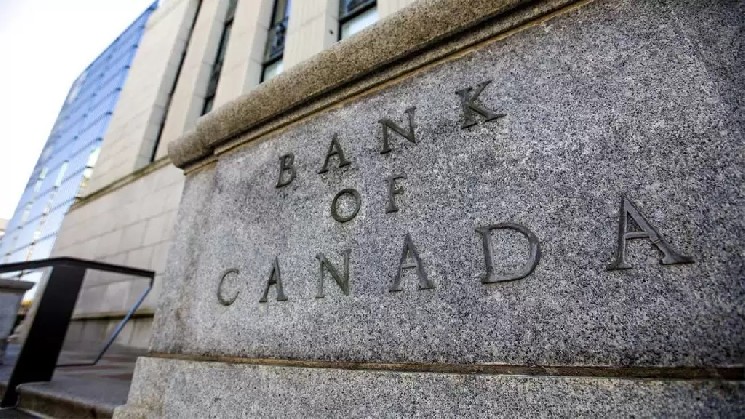
The Bank of Canada has published a noteworthy new study on the decentralized finance (DeFi) space. The report comprehensively analyzes the operation, risks, and sustainability of the DeFi lending market, particularly through the Aave V3 protocol.
The study examined transaction-level data from Aave V3, one of the largest DeFi lending protocols in terms of total value locked (TVL), detailing the platform’s revenue model, user behavior, and liquidation dynamics. The findings revealed that the DeFi lending market has the potential to be an alternative to the traditional financial system, but also pointed to significant structural risks.
According to the report, the majority of revenue on Aave is generated from a limited number of tokens. This indicates that the platform’s revenue structure is dependent on specific assets and points to a limited diversification. The research also revealed that a significant portion of users employ “recursive leverage” strategies. In this method, investors borrow money using collateral, then borrow again using that borrowed money as collateral, thus growing their positions. Although the system requires excessive collateralization, this behavior is particularly common among large and professional investors.
The findings regarding the liquidation mechanism were also noteworthy. The report added that liquidations generally occur in “waves” during sudden price drops, and that large investors are disproportionately affected by these processes. It was stated that losses incurred during liquidation, including penalty fees and missed price recoveries, can reach between 10% and 30% of the liquidated assets.
The study also compared DeFi lending systems with traditional banking. While DeFi protocols offer the advantages of low operational costs and high automation, they are noted for their limited lending flexibility and the strict regulations governing risk management. The lack of identity verification and regulatory oversight, in particular, was identified as a factor that could increase the system’s vulnerability.
*This is not investment advice.