The announcement comes as crypto derivatives continue to be a major source of fee generation across decentralized finance. Data from analytics platform DefiLlama shows DeFi protocols have generated more than $1 billion in quarterly revenue in recent periods, with derivatives exchanges contributing a large portion.
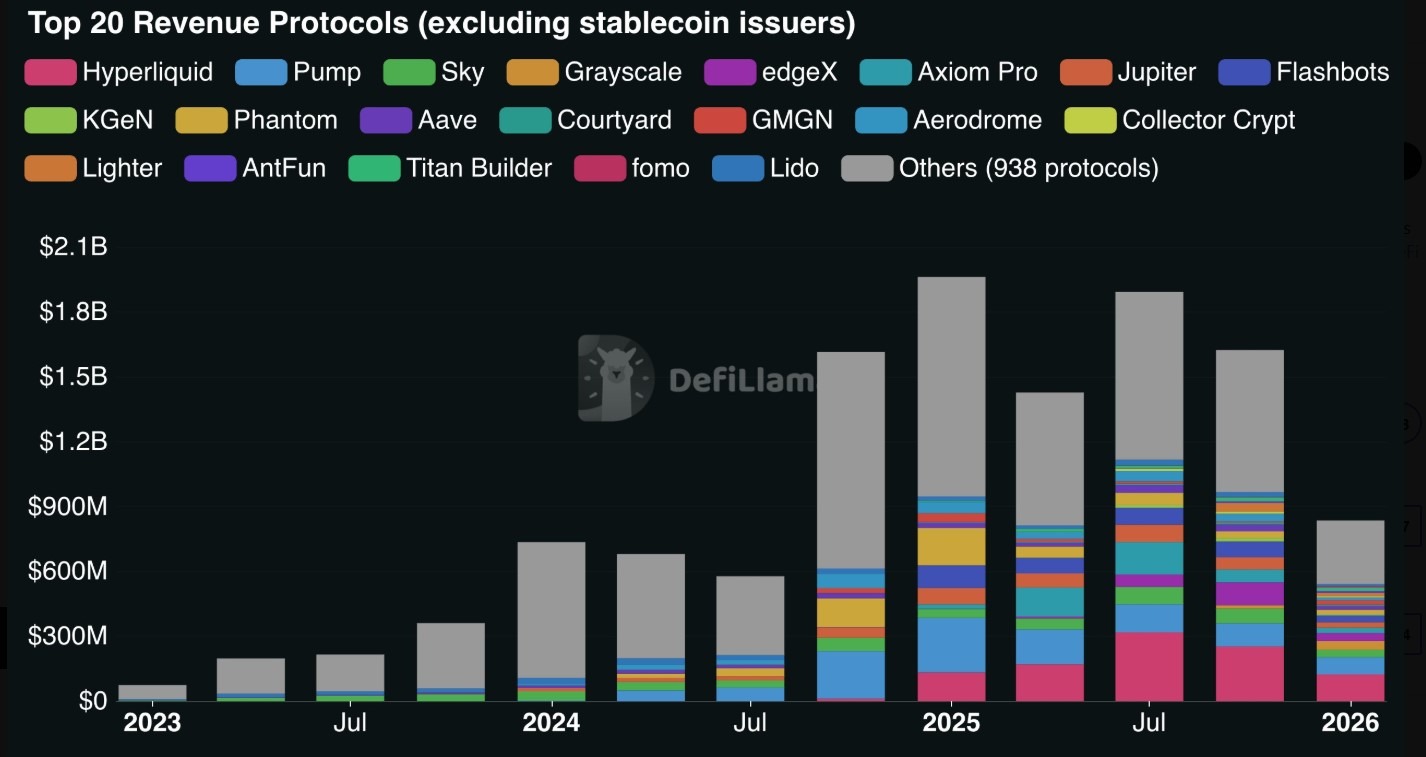
Top 20 revenue protocols excluding stablecoin issuers. Source: DefiLlama
On X, DefiLlama’s head of revenue and growth, Patrick Scott, wrote that onchain businesses are finding their product-market fit.
Related: DeFi perps volume explodes past $1T in record month so far
Capital efficiency becomes a competitive focus
Perpetual futures traders typically post stablecoins as collateral and leave them parked to meet margin requirements. At launch, Grvt said the feature applies to USDt ($USDT) collateral, which is tokenized 1:1 against deposits deployed into Aave’s lending pools.
“When liquidation happens, we take over their positions and liquidate just like it would happen with $USDT,” Yea told Cointelegraph. He said that funds can be withdrawn from Aave within about 10 minutes to service redemptions.
Related: Aave surpasses $1T in lending volume amid institutional expansion
Returns are sourced from Aave’s variable lending markets and fluctuate based on borrowing demand. Yea said Grvt does not capture any portion of the Aave yield “as of now,” adding that users may receive both lending returns and a share of platform fees.
On Monday, Curve founder Michael Egorov said DeFi protocols “cannot live without real revenues flowing,” arguing that sustainable returns must be tied to actual economic activity rather than token emissions.
Magazine: 6 weirdest devices people have used to mine Bitcoin and crypto

 cointelegraph.com