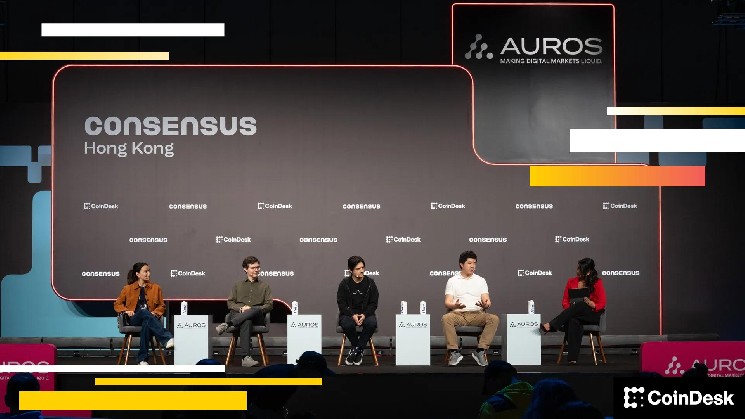
Yet despite the shock, Solana retained its technical base.
“Solana lost no technical teams,” said Austin Federa, co-founder of DoubleZero and former head of strategy at the Solana Foundation. “It’s the developers that keep building throughout these markets.”
While Solana became known during the last cycle for memecoin mania and speculative trading, the next chapter will center on bringing more traditional finance onchain, the panellists argued.
“The single most important thing happening right now across any blockchain,” is all of finance coming onchain, Ferrante said. Crypto, he added, remains small relative to global markets. “We have a proof of concept. That’s it.”
Builders emphasized that growth will depend on improving both infrastructure and user-facing products. Xiao Xiao Zhu, president of decentralized exchange aggregator Jupiter, said value is increasingly accruing to the application layer.
“Users absolutely do not care whether an application is built on Solana or Ethereum. It’s just about the user-experience,” he said.
Upcoming upgrades aimed at reducing latency and improving confirmation times are expected to strengthen Solana’s pitch as a high-performance, general-purpose execution layer. But the panel cautioned against complacency.
“The worst thing you can feel in blockchain is comfortable,” Federa said. “If you think you’ve got a moat, that means someone's about to knife you in the back and take your lunch.”
Read more: Ethereum and Solana set the stage for 2026’s DeFi reboot

 coindesk.com