Perp DEXs open interest attempts a recovery
Perpetual DEXs were the most affected, losing over 50% of their open interest on liquidations. Open interest on all perp DEXs was at $25.75B before the crash, later dipping to lows of $13.71B.
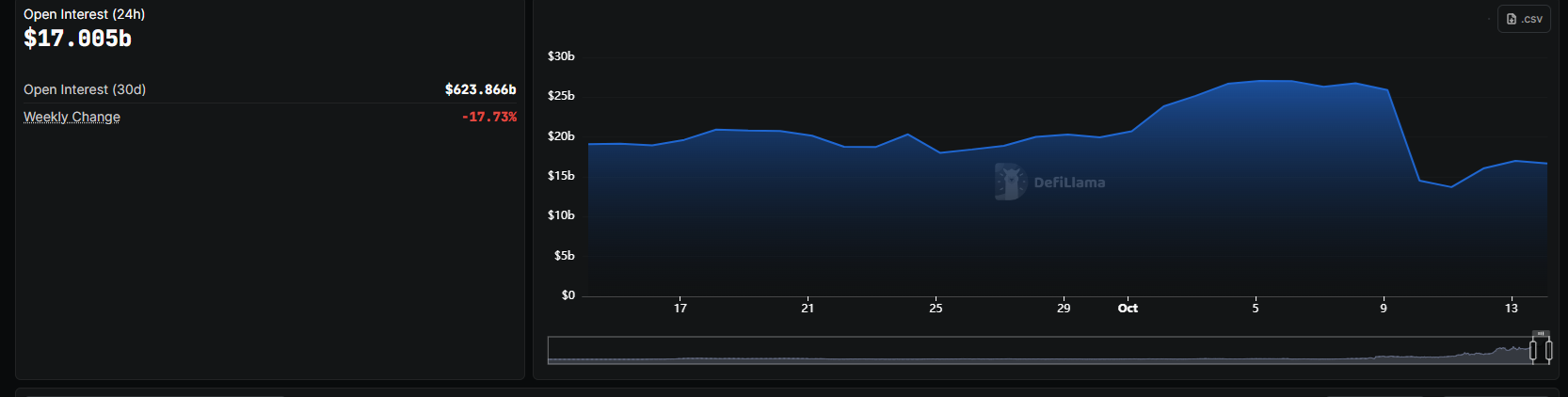
Perp DEXs value locked started recovering, bouncing from lows of $13B up to $17B. Despite this, the liquidations hurt the trust in perpetual DEXs, after many traders were liquidated and lost their entire positions. | Source: DeFiLlama.
Within days, open interest recoveded to over $17B in total, where Hyperliquid still held over $8.24B in open interest, based on DeFiLlama data. Hyperliquid itself reported a delayed drop to $6.24B, down from $15B during regular trading times. Perpetual DEXs still carry over $33B in daily volumes, with record activity for the past week. Over $264B were traded during the week of October 6-12, matching the weekly record for DEXs activity.
The perp DEXs liquidations came in the middle of a highly competitive narrative, where old and new perp DEXs attracted peak activity. The crash and on-chain liquidations were especially harmful, as more retail traders attempted to hold leveraged positions, getting exposed to outsized risk.
Top perpetual DEX tokens also took a hit, with weekly losses between 16% and 45% for the leading protocols. HYPE sank to $38.71, as the sector is still attempting a recovery of value locked, open positions, and token valuations.
Lending protocols, DEXs benefit from higher fees
DEX trading saw its biggest weekly activity of over $177B in the week of 6-12 October. The outlier result followed a general trend of DEXs activity expansion.
Uniswap and PancakeSwap remained the biggest activity hubs, with no signs of distress. The recent DEXs activity also coincided with a wave of meme token trading on the Binance ecosystem.
Lending protocols had a bigger shock due to their underlying structure. Total value locked remained at over $83B, with Aave at the lead. However, total amount borrowed fell below $50B for the first time since August, as users avoided the risk of opening loans.
Briefly, the annualized yield of Lido’s stETH jumped to 7.05%, later returning to its usual range. Overall, DeFi lending decreased its outsized yields during previous market downturns, offering more conservative earnings for a lower risk of liquidations.

 cryptopolitan.com