
 cryptoslate.com
The following is a guest post and opinion from Slavik Baranov, CEO at STON.fi Dev.
From Gaming Phenomenon to Financial Ambition
In 2024, the $TON blockchain became one of the most talked-about ecosystems in crypto — not because of a groundbreaking DeFi protocol, but thanks to the meteoric rise of viral tap-to-earn games on Telegram. Titles like Hamster Kombat and Notcoin drew millions virtually overnight, pushing daily active wallets to nearly 2 million by September.
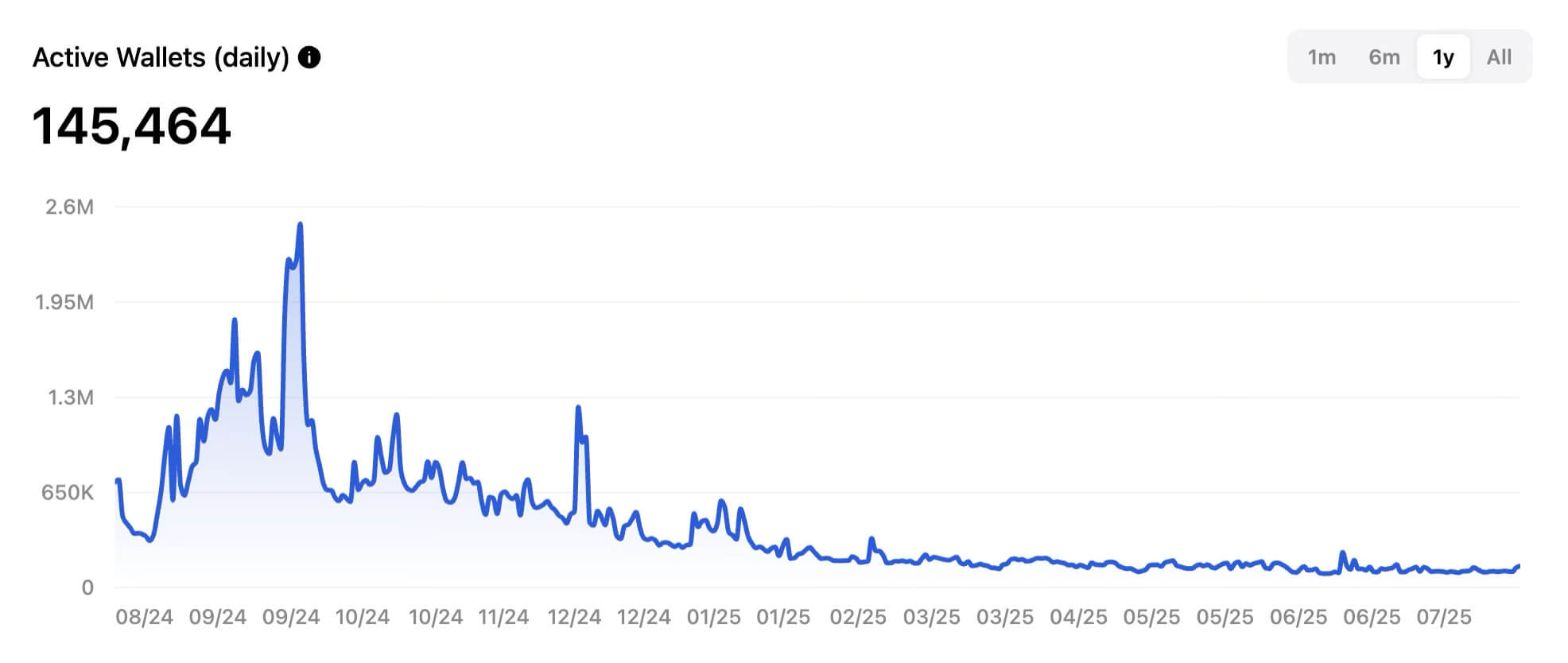
The surge proved $TON can onboard users at a pace few blockchains can match. But it also exposed the fragility of hype-driven adoption: many players came for quick rewards and left when incentives ended. Speculative capital — fluid and opportunistic by nature — followed the same path.
Games showed $TON’s reach. But they were never meant to be the foundation of a financial revolution.
The Lasting Impact of the Hype Cycle
The post-game cooldown wasn’t a collapse; it was a reset. In January 2024, before the gaming boom, $TON averaged 26,000 daily active wallets. After the dust settled, activity stabilized at 100,000–200,000 — a multiple of its pre-hype base.
Even more importantly, developer and user inflows seeded growth across the ecosystem. The number of DeFi protocols on $TON rose from 35 to 67 in 2024 — a 91% increase. This expansion reflects a gradual shift in focus from short-lived promotions to enduring financial infrastructure.
Building $TON’s DeFi Landscape
$TON’s DeFi sector now spans token swaps, staking, and lending. In early 2024, EVAA launched as the first lending protocol. By late summer, AMM protocol STON.fi had reached nearly $400 million in liquidity. Today, the leaders by total value locked (TVL) are the liquid staking protocol Tonstakers and the swap protocol STON.fi, reflecting user preference for core, high-liquidity services.
Fueled by gaming-related excitement, total value locked (TVL) across the network peaked at $1.1 billion in July 2024. But as incentive programs ended, TVL declined to around $600 million by early 2025 and now stands near $400 million.
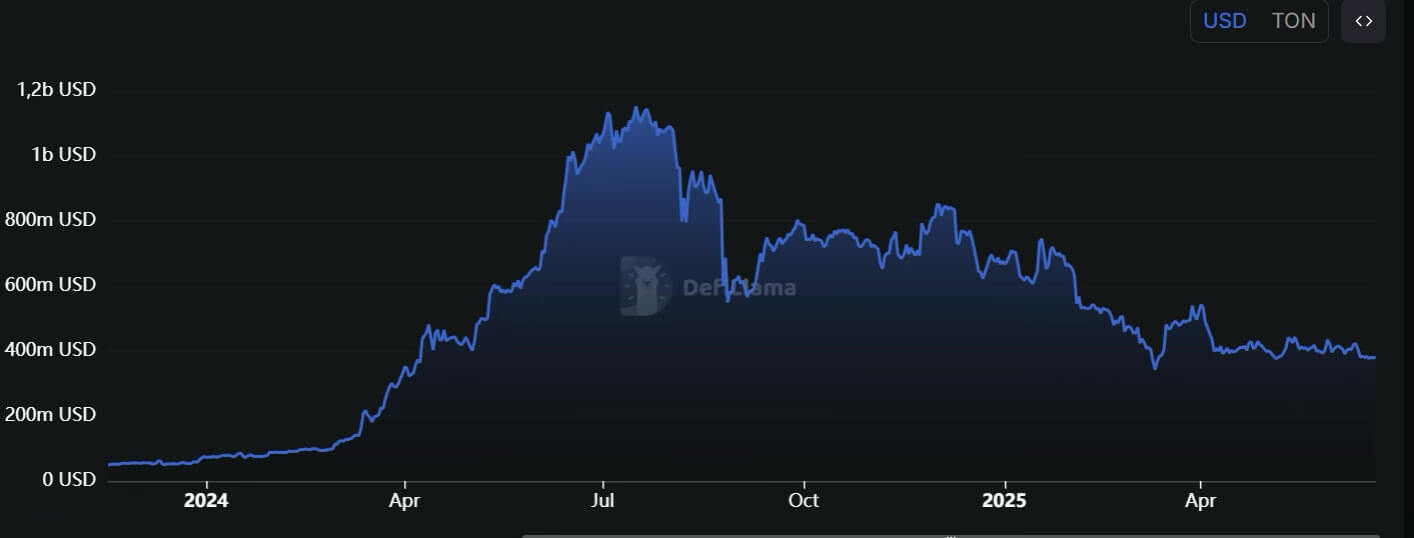
These movements suggest that part of $TON’s liquidity was influenced by short-term market dynamics. Funds tended to flow in during periods of attractive yields and gradually taper off as those opportunities diminished.
By the end of 2024, $TON had nearly 38 million addresses, yet new wallet creation fell sharply — from 724,000 daily in autumn to just 33,000 in early 2025. Meanwhile, staking emerged as a safe haven: around 790 million $TON are currently staked, concentrating liquidity in lower-risk, base-layer protocols.
Why the Revolution Hasn’t Happened Yet
Compared with Ethereum or Solana, $TON’s liquidity depth and range of products are still developing. Part of this difference stems from its underlying design. $TON’s architecture was created with massive scalability in mind, leading to technically elegant but more complex infrastructure for developers.
Smart contracts on $TON use a low-level language, and many core components require building from the ground up, which may have contributed to a more gradual pace of DeFi development in its early years.
The trade-off? Low-level development can produce more efficient, resilient solutions over time. $TON’s core team is actively reducing friction for builders, paving the way for faster growth.
Another factor is ecosystem dependence on Telegram. On one hand, this integration gives $TON direct access to over 1 billion users and tangible utility — since 2024, Telegram channel owners have been able to receive ad revenue payouts in $TON. On the other hand, it creates a single point of exposure: any disruption in Telegram instantly impacts $TON.
For now, many average users still see Telegram mini-apps as casual games rather than financial tools. Without broadening beyond entertainment use cases, $TON’s appeal to institutional capital remains constrained.
Unlocking $TON’s DeFi Potential
The path forward is clear: expand beyond hype cycles and deliver mass-market financial services seamlessly integrated into the Telegram experience.
This could mean:
- Frictionless payments — sending crypto in a Telegram chat as easily as a text message.
- Everyday utility — paying for goods, services, or restaurant bills in $TON-based tokens.
- Accessible lending — offering microloans and credit solutions in regions underserved by banks.
If executed well, these use cases could transform $TON from a viral gaming phenomenon into a primary interface for global crypto adoption.
Signals of Institutional Confidence
Institutional investment is already validating $TON’s potential. In March 2024, major players including Sequoia Capital, Draper Associates, Kingsway, CoinFund, Ribbit, and Skybridge invested in Toncoin.
In January 2025, Zodia Custody (a subsidiary of Standard Chartered) announced support for $TON’s Jetton token standard, enabling banks and large investors to securely hold and manage $TON assets. And in July 2025, The Open Platform — a developer of Telegram-based protocols and apps built on $TON — secured $28.5 million at a $1 billion valuation from leading funds Ribbit Capital and Pantera Capital.
Conclusion: From Potential to Reality
The explosive growth of 2024 proved that pairing Telegram’s reach with blockchain’s capabilities can move markets. But true transformation will come only when $TON evolves from a hype-fueled onramp into a robust financial ecosystem.
The fundamentals are in place: a growing developer base, improving infrastructure, and unprecedented distribution through Telegram. If $TON’s DeFi sector can simplify the user experience and deliver essential, in-demand services where users already are, it won’t just participate in the future of digital finance — it could help define it.