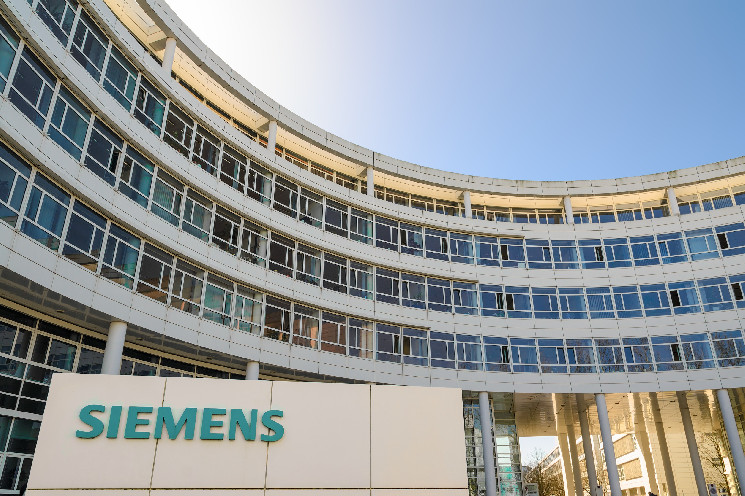
Siemens’ Chief Financial Officer, Ralf P. Thomas, stated that the company’s success in supporting its customers’ digital transformation made it only “logical that we test and utilize the latest digital solutions in finance.”
“We are proud to be one of the first German companies to have successfully issued a blockchain-based bond. This makes Siemens a pioneer in the ongoing development of digital solutions for the capital and securities markets.”
– Ralf P. Thomas, Siemens CFO said in the press release.
Siemens said the introduction of the Electronic Securities Act in June 2021 made it possible to issue digital bonds on blockchain in Germany and allowed the company to sell securities directly to investors without hiring established central securities depositories. Payments for the securities were carried out using conventional methods since the digital euro was not yet available at the transaction time. The entire transaction was completed within two days, Siemens added in the release.
“By moving away from paper and toward public blockchains for issuing securities, we can execute transactions significantly faster and more efficiently than when issuing bonds in the past. “
– said Peter Rathgeb, Corporate Treasurer at Siemens AG.
The Importance and Growth of Tokenization
Siemens’s foray into blockchain and tokenized bonds comes amid an essential period for real-world asset (RWA) tokenization. This process involves representing physical and traditional financial assets as digital tokens on a blockchain. RWA is turning out to be a promising growth area for the digital asset industry in 2023, as it allows for a more secure, inclusive, and efficient investment environment for investors.
This is because blockchain and distributed ledger technology (DLT) have many potential benefits beyond cryptocurrencies, one of them being tokenization. This concept has the potential to unlock several benefits, including increased liquidity and accessibility of assets, reduced transaction costs, and improved transparency and security.
By representing assets as digital tokens on a blockchain, investors can trade and exchange them more efficiently and at a lower cost than traditional methods. Recent research by global consulting firm BC showed that the cumulative size of tokenized assets globally could reach a staggering $16 trillion by 2030.
Have you ever invested in digital bonds? Let us know in the comments below.

 tokenist.com