
 coinedition.com
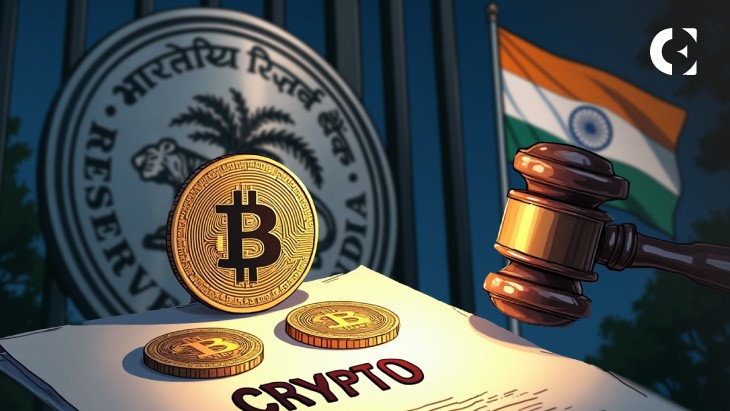
Indian banks are increasingly integrating blockchain into core banking operations to speed up payments, trade finance, and securities settlement while the country continues to keep cryptocurrencies at arm’s length. Instead of building around public crypto networks, lenders have largely focused on permissioned blockchain networks developed for regulated financial services.
The shift comes as banks gain practical experience from the RBI’s Digital Rupee pilot and expand the use of distributed ledger technology across more financial services. While blockchain is finding wider acceptance inside the banking system, policymakers continue to take a cautious approach to cryptocurrencies because of concerns over financial stability and regulation.
Banks Separate Blockchain From Cryptocurrency
Indian banks are using blockchain to solve practical business problems instead of expanding into cryptocurrencies. The technology is helping lenders cut paperwork, speed up trade finance and reduce the risk of document fraud or duplicate financing. Inland letters of credit, which have traditionally taken more than a week to process, can now move much faster on shared digital networks while giving all participants a clearer view of each stage of the transaction.
The RBI has consistently drawn a clear line between distributed ledger technology and cryptocurrencies. While supporting blockchain in regulated financial services, the central bank has warned that cryptocurrencies could threaten financial stability, weaken monetary policy and increase the risks of money laundering. It has also maintained support for policies “leaning towards prohibition” on banks’ exposure to crypto assets and privately issued stablecoins.
That cautious approach extends beyond the central bank. Reuters reported that government officials continue to favor tighter oversight of virtual digital assets even though India has yet to introduce a comprehensive crypto law. Cryptocurrencies have operated in a regulatory grey area since the Supreme Court overturned the RBI’s banking restrictions in 2020, but policymakers continue to weigh the potential benefits of innovation against concerns over financial stability.
Digital Rupee Gives Banks Practical Experience
The RBI’s Digital Rupee (e₹) pilot has become one of the country’s largest real-world tests of distributed ledger technology in payments. It introduced the wholesale pilot in October 2022 and rolled out the retail version a month later. Since then, the project has expanded steadily. By 2025 and into 2026, about 19 banks were participating in the retail pilot, which had attracted an estimated six to seven million users.
Customers of major lenders such as SBI, ICICI Bank, HDFC Bank, Axis Bank and Bank of Baroda can use e₹ wallets to load, redeem and spend the digital currency. Beyond basic transactions, banks have experimented with programmable payments, offline transfers and government benefit disbursements. Those trials have helped banks understand how distributed ledger technology could support everyday banking.
The wholesale program has followed a different path. Instead of focusing on consumer payments, it has examined how banks settle transactions with one another and whether tokenized financial assets can be exchanged more efficiently.
Some of the work has also explored cross-border payment scenarios. As the trials have progressed, banks have built technical experience that can be applied to blockchain projects outside the Digital Rupee initiative, including future settlement and tokenization efforts.
Consortium Model Expands Enterprise Blockchain
India’s adoption of blockchain in banking has also expanded through industry-wide collaboration. In 2021, 15 major lenders formed the Indian Banks’ Blockchain Infrastructure Company (IBBIC) to develop shared digital networks for financial services. The organization was later renamed the Indian Banks’ Digital Infrastructure Company (IBDIC) as it expanded its work to trade finance, payments, lending and compliance.
One of its flagship projects digitizes the entire trade finance process, from issuing letters of credit and verifying documents to financing and settlement. Early pilot programs reduced processing times by as much as 75%, cutting transactions that once took eight or nine days to as little as two or three days. The platform has also lowered messaging costs while reducing fraud by assigning every transaction a unique digital identity.
ICICI Bank was among the first Indian lenders to deploy blockchain for trade finance. It further developed the TradeChain technology as a paperless platform for handling the Indian letter of credit process. Other big banks, like SBI, HDFC Bank, Axis Bank and Bank of Baroda, still support IBDIC initiatives while being participants of the RBI Digital Rupee program.
However, the IBDIC consortium has moved forward beyond trade finance. In 2025, its financing system based on blockchain technology successfully passed the RBI Regulatory Sandbox. The platform transforms invoices issued by approved suppliers into digital tokens and enables the banks to offer better financing to micro, small and medium-sized enterprises working with larger companies.
Tokenization Emerges as the Next Phase
As banks gain experience with distributed ledger systems, attention is gradually shifting from payments toward tokenized versions of traditional financial assets. As part of that work, the RBI is testing tokenized certificates of deposit alongside wholesale Digital Rupee settlements. The trials are designed to examine how digital versions of traditional financial instruments could function within the country’s regulated banking system without depending on public cryptocurrencies.
Government officials have also recognized that the global financial system is changing. Speaking at the Kautilya Economic Conclave in October last year, Finance Minister Nirmala Sitharaman said stablecoins “are transforming the landscape of money and capital flows,” adding that countries may soon have “to make binary choices: adapt to new monetary architectures or risk exclusion.”
The RBI has taken a more guarded view. Reuters reported that internal documents prepared by the central bank warned that stablecoins could create parallel payment networks and weaken India’s financial system. The documents also recommended against introducing legislation that would legitimize cryptocurrencies. Union Minister Piyush Goyal has echoed that cautious approach, saying, “While there is no ban [on crypto], we don’t encourage it.”
Together, those positions illustrate India’s approach to financial innovation. Banks are moving ahead with blockchain, tokenization and central bank digital currency projects under regulatory oversight, while policymakers continue to keep cryptocurrencies outside the core of the country’s financial system.
Related: India’s Gen Z Is Fueling Record Crypto Adoption; Here’s How They’re Investing