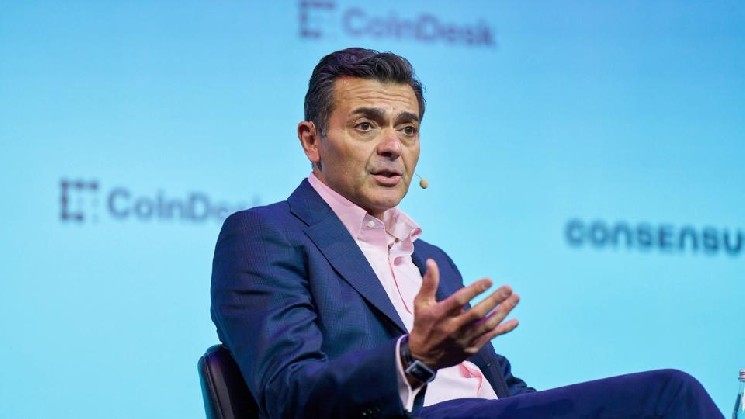
Currently, the bottleneck is that on most blockchain networks could take a few days to process corporate actions, he pointed out.
"We process millions of dividend payments a day to feed to the industry," Le Salla said. "We need high-performance L1s to do that."
DTCC sits at the center of U.S. capital markets infrastructure, processing roughly $20 trillion in Treasury and corporate securities trades each day. The clearinghouse has spent nearly a decade exploring blockchain applications, but La Salla said the technology only became commercially meaningful once real-world use cases began to emerge in the pst few years.
Recently, the firm accelerated its push to modernize market infrastructure with tokenization and blockchain tech. This week, DTCC announced to begin testing its tokenized securities platform in July ahead of a broader rollout in October.
La Salla said collateral movement may become blockchain's first large-scale institutional use case. Tokenized collateral could allow firms outside U.S. market hours to access liquidity in real time without relying on legacy settlement windows. He described a scenario where firms in Asia could access U.S. dollar on a Sunday in New York by posting tokenized collateral onchain in real-time.
"That is incredibly powerful," La Salla said.
But he cautioned that blockchain systems still face major hurdles around scalability, liquidity fragmentation and risk management.
One challenge, for example, is netting transactions. Traditional market infrastructure compresses massive trading activity into smaller settlement obligations, reducing capital requirements across the system.
“Blockchain is decentralized," La Salla said. "Many of the efficiencies that we get in our industry are through concentration of liquidity."

 coindesk.com