Solana Shines With Velocity
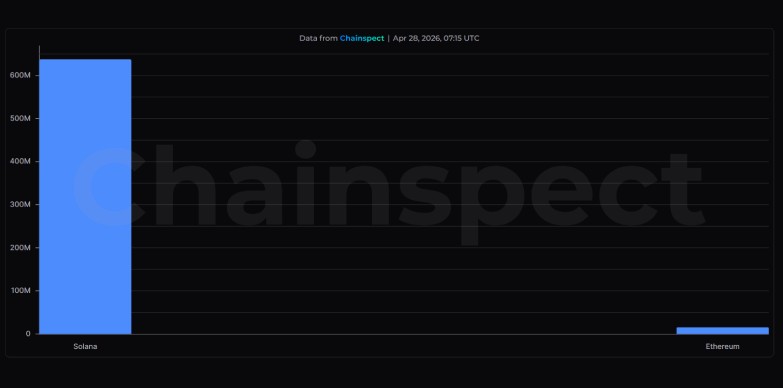
The credit for Solana’s mind-blowing transaction count is the sustained “agent economy” and the 2026 memecoin frenzy. Projects like PUNCH and WIF have evolved beyond mere jokes into high-frequency trading assets, with $SOL’s hybrid Proof-of-History (PoH) mechanism allowing the network to handle thousands of transactions per second. This low-barrier entry has turned Solana into the “primary settlement layer” for retail speculators who are deterred by even the reduced gas fees on other chains.
With a market capitalization holding steady at approximately $48 billion and $SOL trading near the $83.85 mark, the network is effectively prioritizing horizontal scaling. The ability to process hundreds of millions of weekly transactions without significant congestion despite concerns over validator centralization has made it the undisputed home for high-frequency trading, gaming, and real-time payment applications. For many, the 637 million figure is a testament to $SOL’s goal of becoming the “Nasdaq of Blockchains.”
Ethereum Suffers Layer 2 Migration Effect
$ETH’s 15 million weekly transactions might look like a network in decline, but the reality is more nuanced. Following the 2024 Dencun upgrade and the 2026 “Biannual Upgrade” cycle, Ethereum has successfully transitioned into a Layer 2-centric architecture. High-velocity retail traffic has largely migrated to rollups such as Base, Arbitrum, and Optimism, where “blob-based” data availability has slashed costs by 90%.
$ETH Layer 1 has evolved into the “backbone” of decentralized finance with a high-security, high-value settlement layer rather than a high-volume playground. While its transaction count is low, the Total Value Locked (TVL) and institutional trust remain concentrated on the mainnet. With $1.2 billion in weekly ETF inflows recorded earlier this month, $ETH is prioritizing its role as a premium institutional reserve asset over raw transaction numbers.
Future Outlook for $SOL & $ETH
Taking $SOL into focus, the high transaction volume generates consistent fee revenue, though the low cost per transaction means the network relies on sheer scale to maintain its economic floor. In the case of Ethereum, the migration to L2s has significantly reduced the $ETH burn rate on the mainnet, leading to a “value capture” challenge. As L1 fees stay low (currently between $0.18 and $0.50), the deflationary pressure that once drove $ETH price action has softened.
If the Solana network can maintain its 500M+ weekly transaction pace while continuing to attract institutional stablecoin settlements, the “utility floor” for $SOL will likely rise. A breakout above the current structural resistance could see the asset testing the $120 milestone as the retail-led activity begins to translate into massive fee-based demand.
For $ETH, the focus is not on the 15 million L1 transactions, but on the tens of thousands of transactions per second being achieved across its L2 ecosystem. If the “Biannual Upgrades” continue to lower the cost of L2-to-L1 settlement, the economic activity from the rollups will eventually feed back into the mainnet’s security budget, potentially driving $ETH toward the $3,500 region in the second half of the year.

 cryptonewsz.com