cointelegraph.com

What is the replace-by-fee (RBF) policy?
The Bitcoin network’s replace-by-fee (RBF) policy enables users to replace pending (unconfirmed) transactions with new ones with higher transaction costs.
The RBF policy was proposed in BIP 125 and introduced as a feature in the Bitcoin protocol with the release of Bitcoin Core version 0.12.0, which was released in February 2016. This feature provides flexibility to users who wish to speed up their transactions or modify the fee in reaction to network constraints.
On Nov. 23, 2023, a Bitcoin user made a transaction at 9:59 am UTC, paying an exceptionally high transaction fee of $3.1 million for transferring 139.42 Bitcoin (BTC). This exorbitant fee set a record as the eighth-highest in Bitcoin’s history. To put it in perspective, the user overpaid 119,980 times the typical transaction fee. There are a couple of factors at play here:
High transaction fee selection
The sender may have purposefully selected a high transaction charge in an attempt to get a quicker confirmation or because they misjudged the fee.
RBF policy
Users may substitute a higher-fee transaction for an unconfirmed transaction under the replace-by-fee policy. This implies that to guarantee speedier confirmation, the sender may have chosen to replace the initial transaction, which may have had a high cost, with a new one with an even higher fee.
Sender’s unawareness
It’s possible that the sender was not paying close attention to the network circumstances or was not wholly aware of the consequences of their actions. They might not have anticipated that the RBF would lead to a significant transaction fee increase.
Which blockchain networks support RBF?
RBF capability comes in handy when Bitcoin users want to speed up transaction confirmation or modify costs in reaction to shifting network conditions.
Replace-by-fee is a transaction policy embedded in the Bitcoin network protocol and is supported by Bitcoin Core, the reference implementation of the protocol. As mentioned, due to the RBF policy, users can swap out an unconfirmed Bitcoin transaction for a new one with a higher transaction fee.
It is crucial to remember that different wallets and services within the Bitcoin ecosystem may embrace RBF differently. For instance, although RBF is supported by Bitcoin Core, not all wallets may adopt or offer this feature. To ensure that their wallet or service is compatible with the replace-by-fee policy, users should confirm the particular characteristics and guidelines of the platform.
Other RBF rules include that the new transaction must maintain the same outputs as the previous one and have a higher sequence number for each input to use RBF. Additionally, RBF only applies to transactions that have not yet been confirmed; once a transaction is approved, it cannot be undone. However, as not all nodes and miners may support or recognize RBF transactions, its efficacy depends on network conditions and miners’ willingness to prioritize transactions with higher fees.
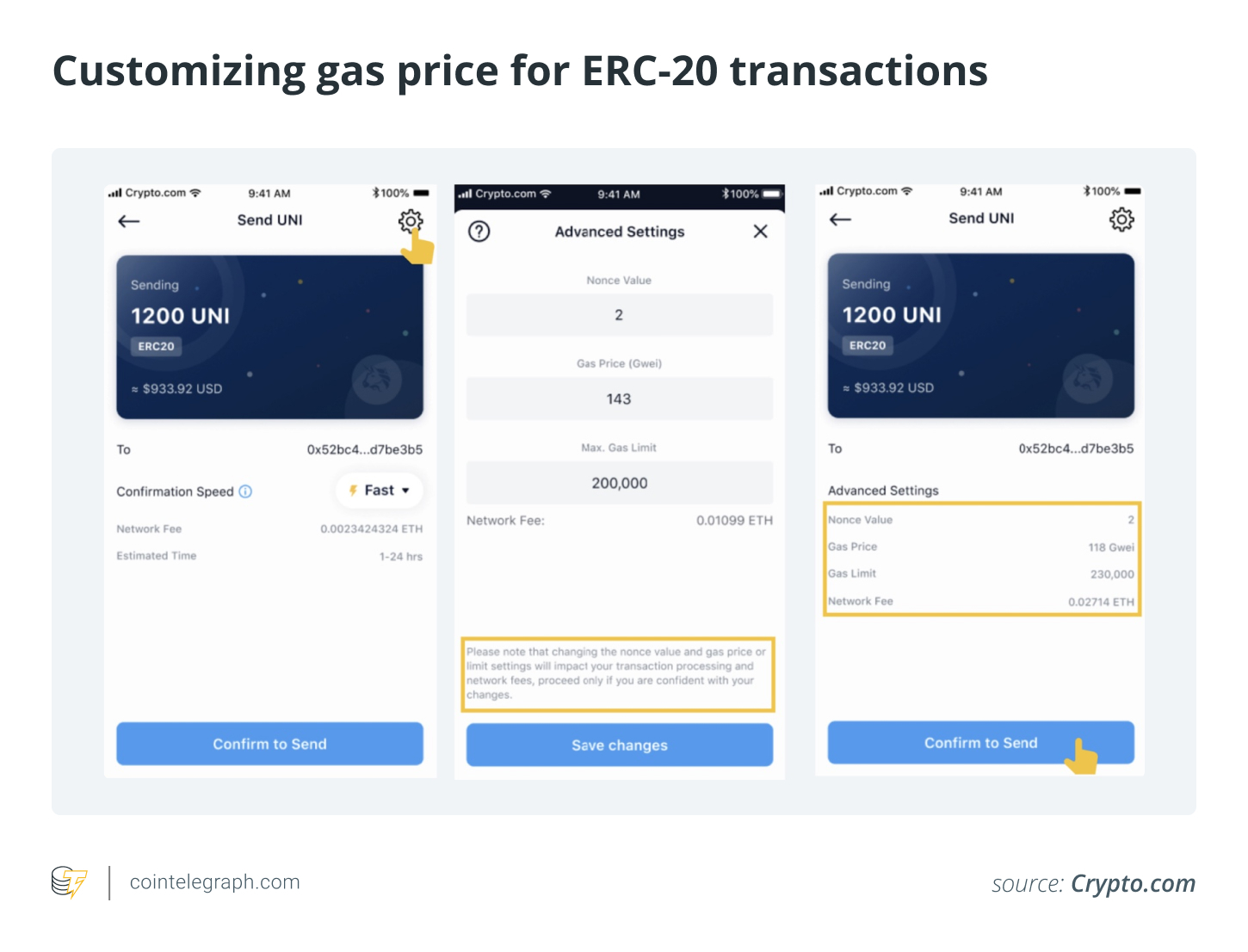
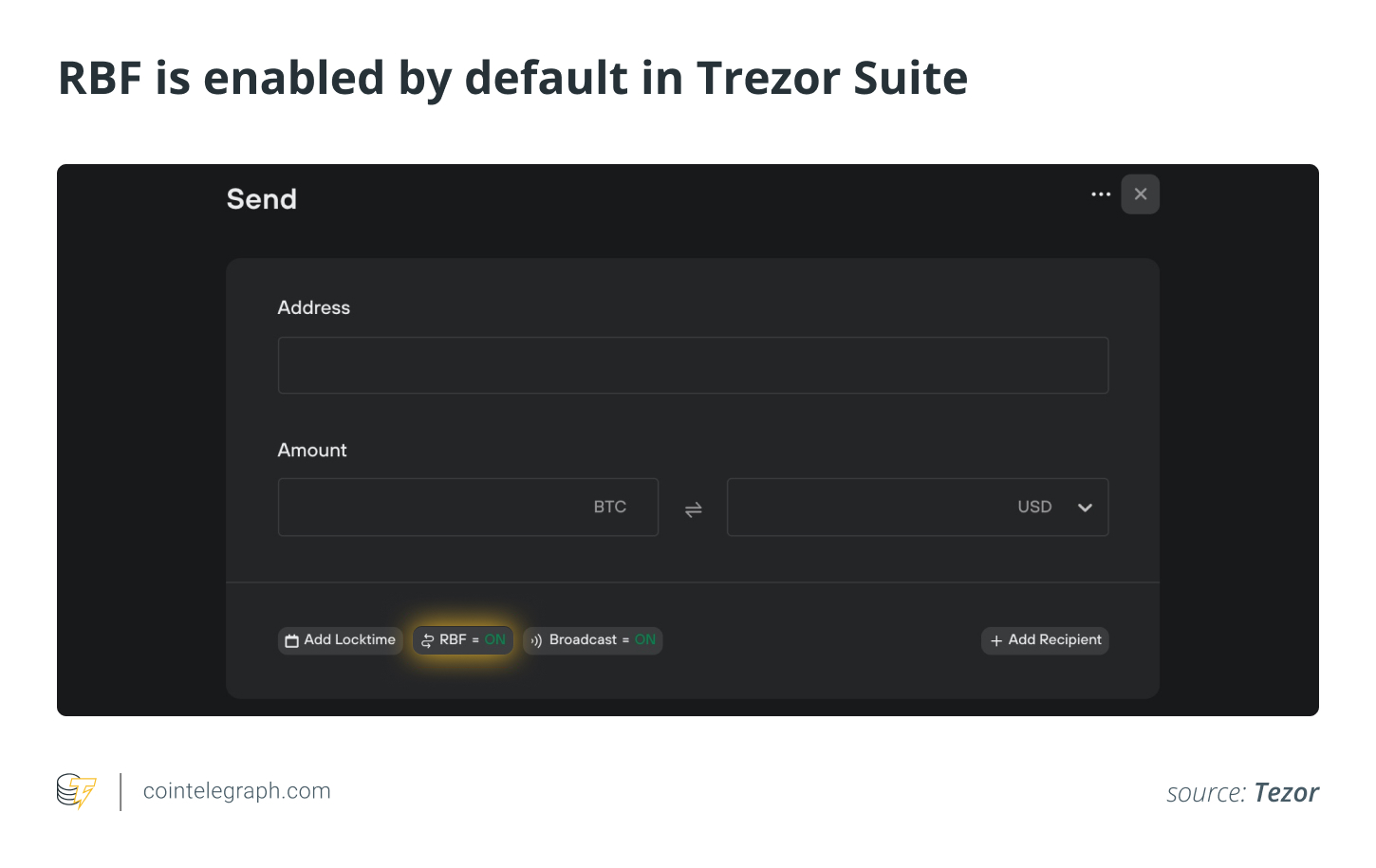
In addition, specific wallets, such as Trezor, allow users to “Bump Fee” on pending, unconfirmed transactions. Moreover, Crypto.com users can utilize advanced transaction settings to send Ether (ETH) or other ERC-20 tokens, allowing customization of the nonce value, gas price or gas limit. This feature, available in-app version 1.8.2 and above, empowers advanced users to tailor transaction parameters.
Users can navigate to the advanced settings via the send confirmation screen, adjust values, review the projected network fee and proceed with the transaction. The process includes confirming the customized settings and authorizing the transaction with a passcode and a 2FA code if enabled.