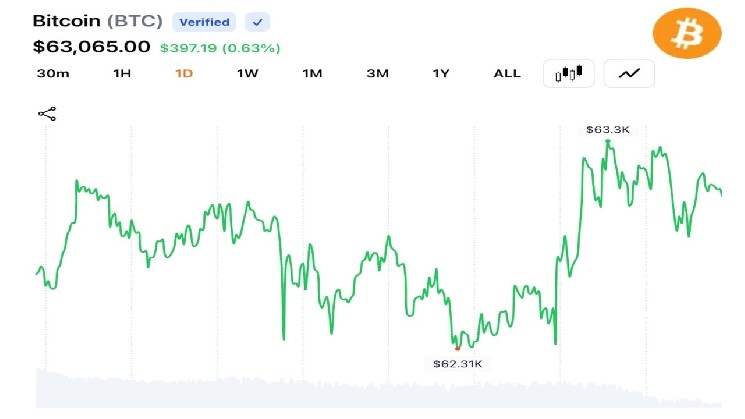
Bitcoin’s flat price action kept its market capitalization around $1.26 trillion, anchored within a broader crypto economy valued at $2.25 trillion. In the derivatives market, the marginal rise led to a marked decline in active leveraged positions. According to Coinglass data, total bitcoin liquidations topped $42.2 million, with short positions accounting for $22.5 million and long bets making up the remainder.
While bitcoin trended upward, global equities moved marginally lower as regional markets reacted to a combination of Thursday’s U.S. tech-led rally and fresh corporate guidance. An escalation in Lebanon, where Israel Defense Forces soldiers clashed with Hezbollah fighters, jolted energy markets. The fighting reportedly prompted Iran, which considers the clashes a violation of the memorandum of understanding, to suspend scheduled talks with the U.S.
Although reports indicated Israel and Hezbollah had agreed to a ceasefire, the incident pushed Brent crude—which tumbled to $77 a barrel Thursday—back just above $80 a barrel. West Texas Intermediate rose to $76.50 a barrel.
Meanwhile, a Bitunix analyst asserted that geopolitical tensions in the Middle East are no longer the primary focus for the crypto market. Instead, attention has shifted to the evolving outlook for dollar liquidity and the global cost of capital.
“Lower oil prices may help ease inflation expectations in the near term, but a stronger dollar, elevated Treasury yields, and renewed pricing of rate-hike risk are likely to continue weighing on high-risk asset valuations. Bitcoin and the broader crypto market currently appear to be searching for a new source of liquidity rather than reacting solely to geopolitical developments,” the analyst said.
The analyst added that if upward trends in both the U.S. dollar and bond yields persist, market volatility could once again concentrate around key inflation, employment, and Federal Reserve policy releases.

 news.bitcoin.com