
 coinpaper.com

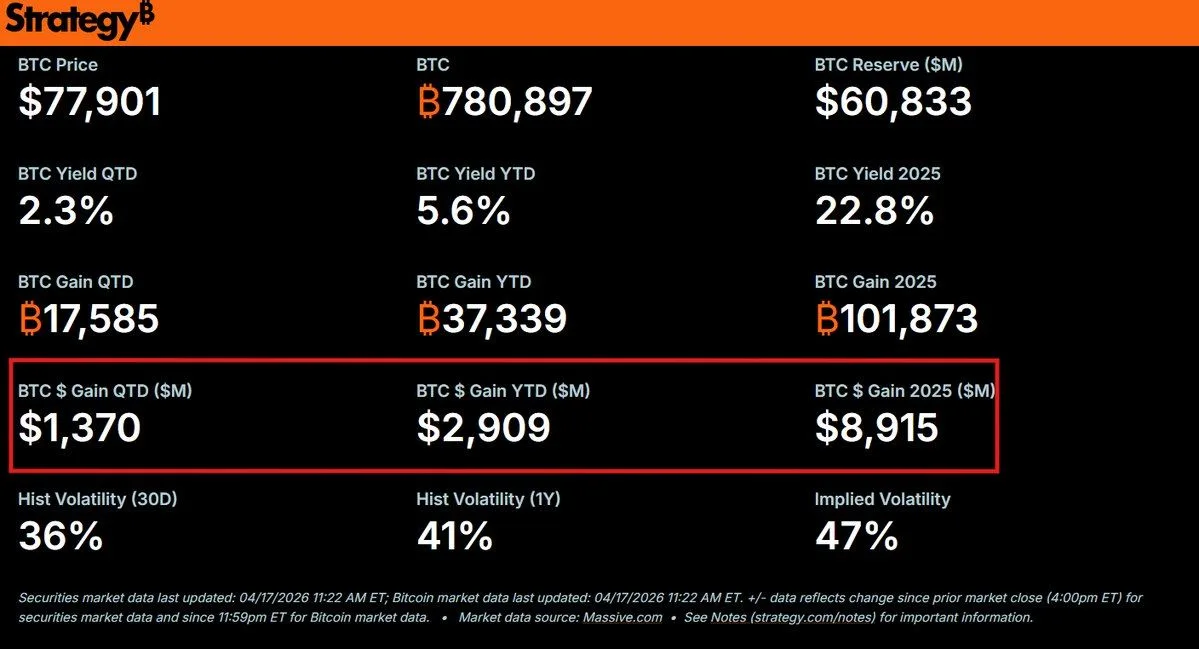
Strategy shares moved higher on April 17 as Bitcoin climbed above $77,000 and briefly crossed the $78,000 mark for the first time since the sharp February selloff. The rally put fresh focus on Michael Saylor’s company because its balance sheet remains closely tied to Bitcoin price moves. With Bitcoin trading above Strategy’s average purchase price of $75,577, the company returned to an unrealized profit position, with market commentary placing paper gains at about $1.37 billion.
Source: X
MSTR also gained during the session as traders responded to the broader recovery in risk assets. At one point during market hours, the stock was up 13.83% and trading near $169.54. Separate market updates also showed the stock ahead by about 8% on the day. The move came as Bitcoin strength improved sentiment around companies with direct digital asset exposure.
Bitcoin Breakout Lifts Strategy Back Into Profit
Bitcoin’s move above $77,000 marked its strongest level since the correction that followed the February 5 selloff, when the asset fell close to $60,000. On April 17, Bitcoin traded around $78,209.10 in one market update, while another reading placed it near $77,286.74. That price recovery mattered for Strategy because the company’s large treasury position leaves its valuation highly sensitive to changes in Bitcoin.
Strategy now holds 780,897 BTC, according to the reports. At current price levels, those holdings were valued at about $60.817 billion. Since the company’s average Bitcoin purchase price stands at $75,577, the latest market move pushed the firm back above its cost basis. That change reversed part of the pressure seen in the first quarter, when Strategy reported about $14.5 billion in unrealized paper losses.
The stock’s technical picture also improved. MSTR moved above its 200-week moving average, a long-term trend indicator watched by market participants. A break above that level often draws attention because it can show renewed strength after a period of weaker trading.
Ceasefire Hopes and Market Recovery Support Risk Assets
The latest move in Bitcoin and MSTR came as investors reacted to signs of easing tension in the Middle East. As we reported, a 10-day ceasefire between Israel and Lebanon took effect on April 16. President Donald Trump also said negotiations with Iran were progressing and that a broader agreement could emerge from weekend talks.
Oil prices moved lower as those developments reached the market. WTI crude fell more than 11.9% to $83.42 a barrel, while U.S. equities advanced. The S&P 500 and Nasdaq each gained 1.7%, and the Dow also moved higher. Lower oil prices and improving risk appetite helped support Bitcoin, which then fed into stronger trading in Strategy shares.
That backdrop has become part of the MSTR stock forecast because Strategy no longer trades like a standard software company. Its identity in the market is now tied mainly to Bitcoin price direction, treasury expansion, and investor appetite for crypto-linked equities.
Schiff Criticism Keeps Attention on STRC Funding Model
While the market focused on gains, criticism of Strategy’s funding structure also returned. Peter Schiff said the company’s STRC perpetual preferred stock was “misleading to constitute fraud.”
He also warned of possible lawsuits if dividends were canceled and the stock later fell. Schiff has repeatedly argued against Strategy’s Bitcoin-driven model and has urged investors to favor gold and silver instead.
Strategy has relied more heavily on STRC after earlier common stock dilution. The preferred stock is designed to trade near a $100 par value with relatively low volatility, and it currently carries an annualized yield of 11.5% paid through monthly cash dividends. That structure has become an important source of capital for Bitcoin purchases.