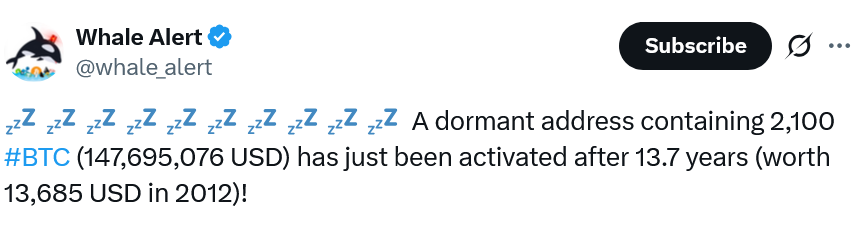
Source: Whale Alert
The test transaction doesn’t necessarily mean the whale is looking to offload its holdings. Many whales make small transfers to confirm that they still maintain full control over their funds.
However, crypto traders often watch whale transaction patterns to gauge Bitcoin’s short-term price movements, given the outsized influence that they have on market liquidity and sentiment.
Bitcoin whales contributed to selling pressure in the past
Bitwise Chief Investment Officer Matt Hougan said in November that Satoshi-era wallets were partially to blame for Bitcoin failing to recover from the Oct. 10 market flash crash, when the cryptocurrency fell from over $120,000 to around $102,000 after nearly $19 billion worth of leveraged positions were wiped out.
“Crypto-native retail” and early investors have “compressed upside” through large-scale selling, preventing Bitcoin from mounting a comeback, Hougan said at the time.
Related: Coinbase, Apex Group tokenize Bitcoin Yield Fund on Base
One of the most notable Satoshi-era transfers in 2025 took place in July, when 80,000 Bitcoin worth $4.6 billion at the time was sent to Galaxy Digital.
Sending funds of that size to market makers and liquidity providers like Galaxy Digital is typical when whales want to offload their funds.
Magazine: Big Questions: Can Bitcoin save you from the dreaded Cantillon Effect?

 cointelegraph.com