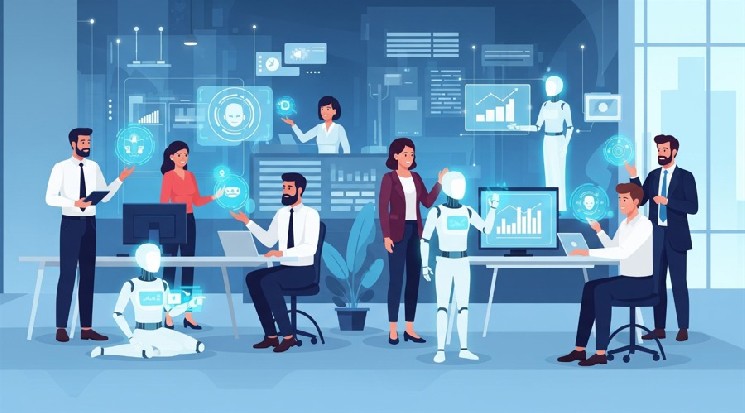
The first generation of AI tools helped humans work faster. The next generation is designed to operate autonomously. AI agents can browse the internet, book reservations, manage workflows, write code, conduct research, and execute tasks across platforms with minimal supervision.
Yet despite rapid progress, even the most advanced agents still struggle with one persistent challenge: the real world.
AI systems perform exceptionally well in structured digital environments. They struggle when tasks involve ambiguity, edge cases, social nuance, trust, or unpredictable outcomes. A customer support agent can summarize policies instantly, but may fail to calm an angry customer. An autonomous shopping agent can compare prices, but may struggle when inventory information conflicts across platforms. A travel booking agent may plan a perfect itinerary, then fail when weather disruptions require contextual decision-making.
This gap between intelligence and execution is becoming one of the defining bottlenecks of the agent economy. As a result, many AI systems increasingly rely on humans not as primary operators, but as fallback infrastructure.
This is already visible across the technology industry. Self-driving systems still rely on remote human intervention during uncertain scenarios. Content moderation platforms combine machine filtering with human review. Large language models depend heavily on human feedback and reinforcement training. Even autonomous warehouse systems still escalate unusual cases to human supervisors.
The future of AI is not purely autonomous. It is hybrid.
That hybrid structure changes the role humans play in economic systems. Instead of workers operating software directly, humans increasingly become modular contributors that AI systems can call upon when necessary.
In practice, this may look like AI agents hiring freelancers for edge case tasks, escalating verification requests to humans, routing physical world actions to local workers, or requesting judgment during uncertain decisions. This is not labor disappearing. It is labor becoming more dynamic, distributed, and machine coordinated.
The shift resembles earlier transitions in cloud computing and digital infrastructure. Computing resources evolved from fixed hardware into elastic on-demand services accessible through APIs. Human labor may evolve in a similar direction. Instead of traditional employment structures defining every interaction, human expertise becomes increasingly accessible through programmable systems.
That evolution raises important questions about how labor markets operate in an AI native economy.
Traditional systems were not designed for machine-coordinated work. Banking rails are often slow and geographically fragmented. Cross-border payments remain inefficient. Micropayments are difficult to manage. Hiring systems are optimized for long-term employment relationships rather than real-time task allocation. This is one reason crypto infrastructure may become increasingly relevant in the age of AI agents.
Autonomous systems require internet native coordination mechanisms. Stablecoins, programmable payments, decentralized identity systems, and global digital wallets are naturally suited for environments where software interacts directly with distributed human labor pools.
An AI agent does not care about banking hours or national borders. It requires infrastructure that allows it to coordinate tasks, verify outcomes, and compensate contributors instantly.
That is why many emerging AI platforms are beginning to intersect with crypto infrastructure in meaningful ways. Projects like Human API are exploring ways for AI agents to access real human labor dynamically. Distributed training networks are experimenting with decentralized contributor economies. Blockchain-based identity systems are attempting to solve trust and verification problems that autonomous systems will increasingly encounter.
None of this suggests that AI-driven disruption will be painless. Certain job categories will undoubtedly change dramatically. Repetitive digital work may become heavily automated. Some traditional employment structures may weaken over time.
But the popular narrative that AI eliminates humans entirely misunderstands the economics of intelligent systems. Autonomous agents still require human judgment, trust, context, and execution. In many cases, they may create entirely new forms of labor demand that did not previously exist.
The more autonomous software becomes, the more valuable certain forms of human coordination may become as well. The future of work is not simply humans competing against machines.
It is humans and machines operating inside increasingly interconnected systems where each handles the tasks they are best suited for.
AI agents are not removing humans from the economy, they are reorganizing how humans participate in it.

 financemagnates.com