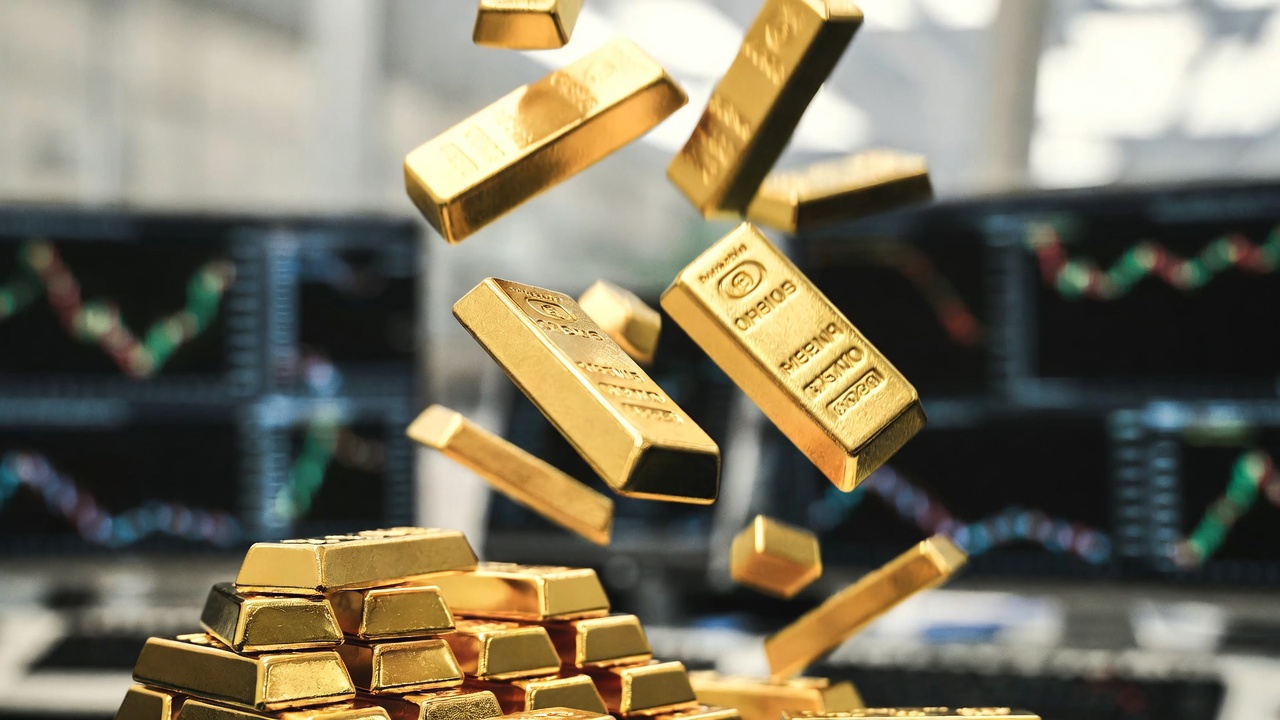
Gold set for deeper slide as Fed rate fears outweigh safe‑haven demand
invezz.com
28 May 2026 13:32, UTC
Gold prices fell again today, extending a steep decline that has rattled investors and underscored how inflation fears and US–Iran tensions are reshaping the precious metals market.
Gold prices slipped to a two-month low below $4,400 per ounce on Thursday. The contract on COMEX hit $4,396.20 per ounce, its lowest level since the end of March.
Spot gold eased after Wednesday’s sharp $54 drop, with analysts warning that the metal’s traditional safe‑haven appeal is being undermined by expectations of higher US interest rates.
Know when your coins move
Alerts, real-time prices, and market news — all in one app
4.8 based on 40K reviews in the App Store and Google Play
Fresh decline amid geopolitical tensions
Gold prices slipped on Thursday as traders weighed ongoing US–Iran negotiations against renewed military strikes.
The fragile ceasefire has kept energy markets volatile, pushing oil higher and fueling inflation concerns.
That dynamic has pressured gold, which typically benefits from geopolitical risk but is struggling in the current environment.
Spot gold was last seen easing after Wednesday’s heavy losses, while silver also tracked lower.
Kitco reported that Wednesday’s fall was the steepest single‑session drop of the month, with futures shedding about $54 to settle near $4,456 per ounce.
Analysts described the move as the culmination of weeks of pressure: peace talks that never quite materialise, inflation that refuses to cool, and a Federal Reserve increasingly expected to raise rates rather than cut them.
Why gold isn’t acting like a haven
The unusual behavior of gold has been a central theme for market strategists.
ING Economics, in a report published May 11, explained why the metal has failed to act as a safe haven during the Iran conflict.
Ewa Manthey, commodities strategist at ING, wrote that gold’s safe‑haven appeal tends to shine during financial crises or growth shocks, when real yields fall, and the dollar weakens.
But a supply‑driven energy shock does the opposite: higher oil prices push inflation up, keep central banks on hold, and strengthen the dollar—all of which weigh on gold.
Manthey noted that this dynamic mirrors what happened in 2022 after Russia invaded Ukraine. Gold initially rallied but then came under pressure as energy‑driven inflation pushed yields higher.
“The same dynamic has played out here, only faster,” she observed.
ING still forecasts gold rising to $5,000 per ounce by year‑end, but stresses that a durable resolution to the conflict is the key catalyst for recovery.
"Gold’s safe-haven appeal tends to perform best in a financial crisis or growth shock – when real yields fall and the dollar weakens," Manthey said.
A supply-driven energy shock does the opposite. Higher oil prices push inflation up, keep central banks on hold and strengthen the dollar, all of which weigh on gold. High liquidity also makes it a source of funds when investors need to cover losses elsewhere.
Inflation and Fed policy in focus
The inflation linkage is critical. Elevated crude oil prices are accelerating consumer costs, keeping central banks hawkish.
April’s US Consumer Price Index came in at 3.8%, the highest since May 2023, pushing Treasury yields to near‑year highs and strengthening the dollar.
For gold, a non‑yielding asset, this environment is toxic.
Kitco cited ActivTrades analyst Ricardo Evangelista, who said the uptick in oil prices sharpened inflationary fears and reinforced hawkish Fed expectations, creating a clear headwind.
Markets are now assigning a meaningful probability to a rate hike before year‑end, a dramatic reversal from earlier expectations of cuts in 2026.
UBS has lowered its year‑end gold forecast by $400 to $5,500 per ounce, noting that investors are rediscovering the “opportunity cost” of holding gold when real rates stay elevated.
Diverging demand trends
Despite the weakness in futures, physical demand remains robust.
The World Gold Council reported that global bar and coin demand hit 474 tonnes in the first quarter of 2026, the second highest on record, driven largely by Asian buyers.
Total quarterly demand reached 1,231 tonnes, with a record $193 billion in value.
This divergence suggests that while Western ETF investors have pulled back, structural appetite for gold remains intact.
ING also highlighted central bank demand as a supportive factor.
China extended its buying streak in April, while Poland added 31 tonnes in the first quarter.
Although Turkey sold heavily to support FX liquidity, overall official sector demand remains positive.
Manthey argued that reserve diversification continues to underpin gold’s long‑term outlook, even if short‑term price action is dominated by yields and the dollar.
Market outlook
Thursday’s calendar adds further pressure, with US GDP data, jobless claims, and the April Personal Consumption Expenditures index—the Fed’s preferred inflation gauge—due before the open.
Any upside surprise in PCE could accelerate the repricing of rate expectations and extend gold’s losses.
For now, analysts see gold trading in a $4,400–$4,800 band, reflecting the stalemate of a ceasefire without a peace deal.
Silver, platinum, and palladium have also weakened, underscoring the broad stress across precious metals.
Gold’s fall on Thursday is the latest reminder that the metal’s safe‑haven role is not absolute.
As ING Economics stressed, macro forces—real yields, the dollar, and Fed policy expectations—are dominating short‑term price action.
Until energy prices ease and inflation cools, gold is likely to remain under pressure despite strong physical demand and central bank buying.
The steep declines of the past two days highlight the fragility of investor confidence.
While long‑term fundamentals remain constructive, the near‑term outlook is clouded by unresolved US–Iran tensions and the prospect of higher US rates.
For traders and investors, patience may be required before gold can reclaim its traditional role as a crisis hedge.

 invezz.com