SVRN Chief’s Proposal Faces Several Implementation Hurdles
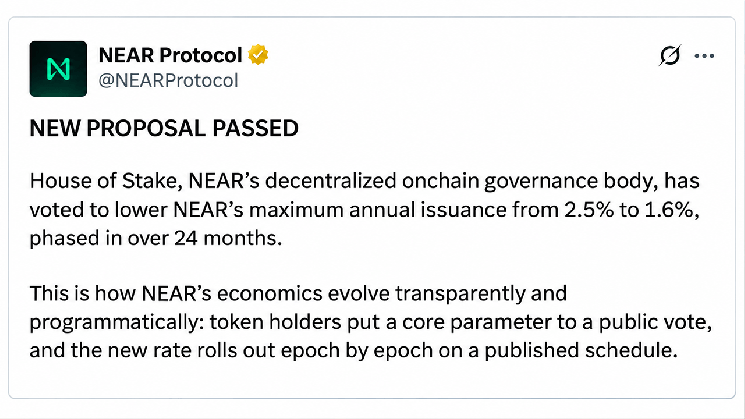
Sal Ternullo, CEO of the Nasdaq-listed SVRN, authored the initiative. His company disclosed holdings of approximately 55 million $NEAR, predominantly staked, accounting for more than 8% of the network’s staked supply.
Approval doesn’t immediately activate the adjustment. The House of Stake Security Council must first ratify the result, followed by an approximately 90-day preparation period for exchanges, custodians, wallets, and staking services.
Validators must subsequently implement a protocol upgrade before the scheduled reductions become binding. Quarterly disclosures will compare actual issuance against the published trajectory.
The initiative also follows the withdrawal of a separate Sovereign Fund proposal from $NEAR co-founder Illia Polosukhin, who cited risks associated with placing additional responsibilities on the protocol.
Token Supply Savings Come With Lower Staking Yields
Economic modeling accompanying HSP-029 estimates that approximately 11.8 million $NEAR in additional issuance would be avoided during the first two years, expanding to 66.1 million over six years compared with maintaining the previous ceiling.
At full implementation, the blockchain network‘s projected daily creation falls from approximately 89,500 tokens to 57,300. However, gross staking yields are expected to decline from 5.268% to 3.372%, assuming participation levels remain comparable.
Validator commission income faces a projected 36% reduction under unchanged conditions, potentially squeezing smaller operators dependent on issuance-based compensation. Non-staking holders, meanwhile, stand to experience slower dilution without sacrificing rewards they weren’t collecting.
$NEAR has no fixed maximum supply, although transaction fee burning offsets some emissions. With approximately 1.31 billion tokens circulating, its monetary policy increasingly centers on balancing security incentives against long-term supply growth.
The tension is straightforward. A blockchain protocol can mint fewer tokens, but its validators still need enough economic incentive to keep securing it.

 news.bitcoin.com