
 crypto.news
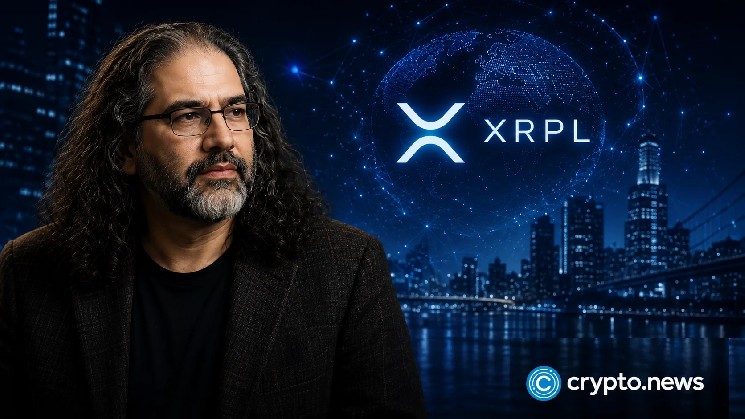
Ripple CTO Emeritus David Schwartz has defended $XRP advertising in college sports after critics called for tighter restrictions on crypto promotion.
The debate followed the University of Kansas athletics program’s decision to place $XRP branding on team uniforms under a multi-year partnership with Ripple.
In a July 15 post on X, Schwartz argued that governments cannot broadly suppress truthful advertising for lawful products simply because officials believe consumers may make poor decisions. His position centers on First Amendment protections for commercial speech.
The United States has the First Amendment. If you want to restrict or can speech, you need to find some exception it fits into. I don't think there is one here. See the cases I cited including one involving liquor and one involving gambling.
— David 'JoelKatz' Schwartz (@JoelKatz) July 14, 2026
Schwartz turns $XRP advertising debate into constitutional question
The discussion began after critics compared crypto promotion in college sports with advertising for gambling, tobacco and alcohol. They argued that universities should not expose students and younger sports fans to digital asset marketing.
Schwartz responded with a legal argument rather than a defense of $XRP as an investment. He wrote that the government cannot suppress truthful commercial speech merely to prevent people from making “bad, but lawful, decisions.” His argument draws a distinction between regulating an activity and banning truthful speech about that activity.
Supreme Court cases support protection for lawful advertising
Schwartz cited 44 Liquormart v. Rhode Island, a 1996 Supreme Court case that struck down restrictions on advertising liquor prices. The Court found that Rhode Island could not broadly block truthful price information simply because the state wanted to reduce alcohol consumption.
He also pointed to Greater New Orleans Broadcasting Association v. United States. In that case, the Supreme Court ruled that a federal restriction could not block advertisements for lawful private casino gambling under the circumstances before the Court.
However, those rulings do not make every restriction on $XRP advertising automatically unconstitutional. Under the Supreme Court’s Central Hudson framework, commercial speech receives protection when it concerns lawful activity and is not misleading. Governments may still impose properly tailored restrictions that directly serve a substantial public interest.
Kansas deal puts $XRP logo across college sports
Kansas Athletics announced the Ripple partnership on July 8. The $XRP logo will appear on uniforms across the university’s athletic programs, making it the first cryptocurrency jersey patch used across a major college athletics program, according to Kansas.
The agreement also covers branding at athletic venues, digital properties and events. Ripple will fund financial and technology education programs for student-athletes and the wider campus community. The partnership also expands an existing recruitment link between Ripple and Kansas graduates.
As previously reported, the agreement runs for five years and has personal ties to Ripple CEO Brad Garlinghouse, a University of Kansas alumnus. The sponsorship has since drawn wider attention to how universities should handle digital asset advertising.
$XRP legal history adds context to advertising dispute
The debate comes three years after a federal court issued its split ruling in the SEC’s case against Ripple. The court found that Ripple’s programmatic $XRP sales did not qualify as securities transactions under the circumstances examined, while certain institutional sales violated securities laws. The case formally ended in 2025 with a $125 million penalty and an injunction remaining in place.
That history makes broad claims about $XRP’s legal status more complex than simply calling the asset universally exempt from financial regulation. Schwartz’s First Amendment argument instead rests on a narrower point: truthful commercial speech concerning lawful activity receives constitutional protection.
A government attempt to impose a blanket ban on $XRP advertising could therefore face a serious First Amendment challenge. But existing Supreme Court doctrine still allows some commercial advertising rules when regulators can satisfy the required constitutional test.