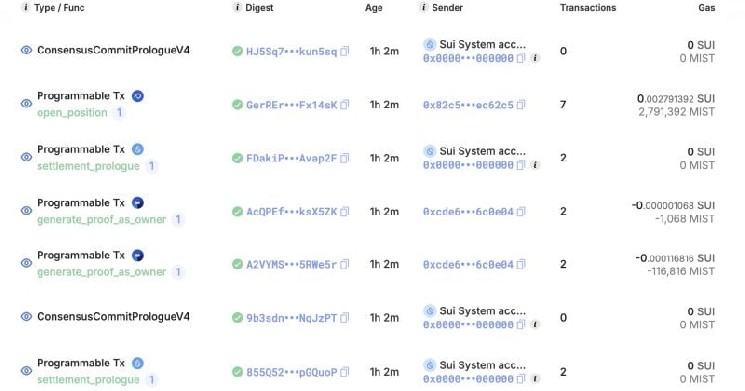
Recovery wasn’t as simple as flipping a switch. Sui’s consensus mechanism required validators holding more than two-thirds of all staked tokens to upgrade to the patched software before the chain could resume.
Sui’s safety guarantees held up. No user funds were lost during the disruption, and the network’s design prevented any data inconsistencies from creeping in while the chain was stalled.
DeFi protocols built on Sui were effectively frozen during the outage. Positions couldn’t be adjusted, trades couldn’t execute, and liquidations couldn’t fire.
A pattern emerging
This wasn’t Sui’s first rodeo with extended downtime in 2026. Back on January 14, the network experienced a similar multi-hour stall lasting approximately 6 hours, that time caused by a consensus commit bug.
Two outages of this magnitude in roughly five months is a trend that’s hard to ignore. Both incidents shared a similar profile: a bug introduced in a software update, followed by a multi-hour scramble to coordinate validator upgrades across the network.
The SUI token reflected investor sentiment in real time. During the outage, the price dropped to approximately $0.89, a decline in the range of 6-8%. It partially recovered after normal operations resumed.
What this means for investors
Sui has positioned itself as a high-throughput Layer 1 blockchain, the kind of infrastructure that’s supposed to support demanding DeFi applications and eventually attract institutional capital. The total value locked across Sui’s ecosystem has grown to hundreds of millions of dollars since the network launched.
For traders, the 6-8% price decline during the outage and partial recovery afterward suggests a playbook the market may repeat if a third incident occurs.

 cryptobriefing.com