SEC to release innovation exemption for third-party tokenized shares as soon as this week: Report
cryptobriefing.com
19 May 2026 02:37, UTC
The SEC is expected to launch a regulatory exemption for tokenized stocks as soon as this week, accelerating the push to bring US equity trading onto blockchain infrastructure, Bloomberg reported Monday.
The framework would allow digital tokens linked to public-company shares to trade on decentralized platforms, including tokens issued by third parties without the consent of the companies involved.
These third-party tokenized securities would effectively create parallel blockchain-based markets for publicly traded equities. While they would mirror stock prices, they may not necessarily include traditional shareholder rights unless platforms choose to provide them. Regulators are said to be considering restrictions on platforms that omit rights such as dividends or voting access.
Know when your coins move
Alerts, real-time prices, and market news — all in one app
4.8 based on 40K reviews in the App Store and Google Play
Advertisement
The proposal represents one of the strongest regulatory signals yet that US authorities are willing to test whether securities markets can operate outside of parts of the conventional financial system.
Supporters argue that tokenization could improve market efficiency through faster settlement and 24/7 trading. However, critics warn that it may weaken transparency, price discovery, and investor protections.
Concerns have also grown around DeFi platforms, which continue to face cybersecurity vulnerabilities and fragmented liquidity. Industry groups and market participants have cautioned that allowing multiple tokenized versions of the same stock across crypto venues could create confusion around pricing and ownership.
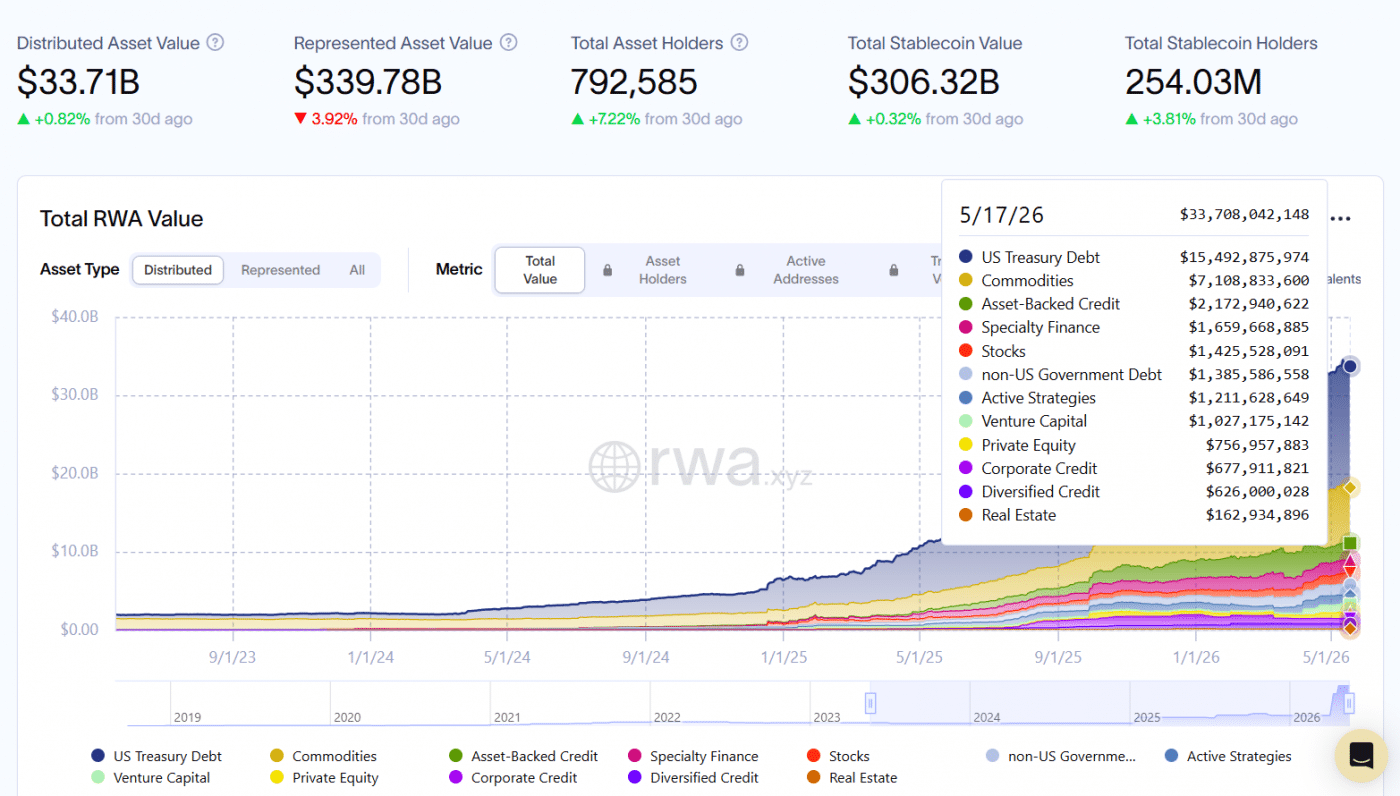
Tokenized real-world assets reach new high as on chain value climbs past $33 billion
The tokenized real-world asset market continues to gain traction, with on-chain distributed asset value reaching $33.7 billion and total represented asset value climbing to nearly $340 billion as of May 17. Growth has been steady over the past month amid rising institutional and retail interest in blockchain-based financial products.
Source: RWA.xyz
US Treasury debt continues to dominate the space at over $15 billion, reinforcing demand for tokenized yield-bearing assets. Commodities rank second at around $7 billion, while asset-backed credit, specialty finance, and tokenized equities are also seeing meaningful expansion.
The ecosystem’s user base is growing rapidly. Total asset holders have risen more than 7% to 792,585. Meanwhile, stablecoins remain critical to market liquidity and settlement activity, now accounting for over $306 billion in value across 254 million holders.

 cryptobriefing.com