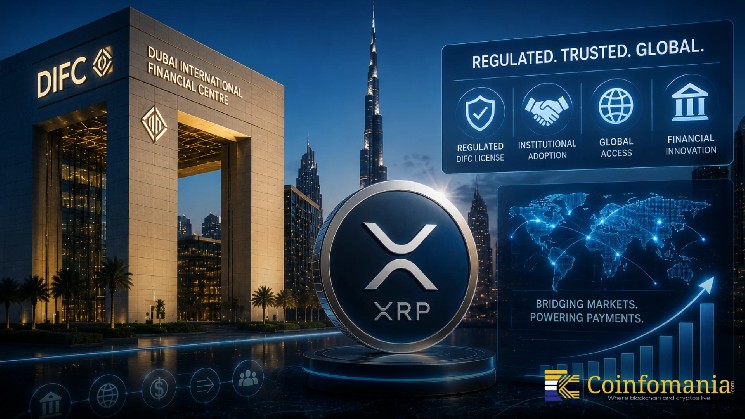
Ripple Middle East Limited is now authorized to provide money services. It arranges deals in investments, provides custody, holds or controls client assets, and provides money transmission. Additionally, it issues payment instruments, and custody and trades crypto tokens. That is not a limited sandbox license. That is a full institutional-grade authorization inside one of the world’s top ten financial hubs.
The DFSA demands audited reserves, bulletproof AML frameworks, strict capital requirements, approved senior management, and cybersecurity audits. Ripple met every requirement. That standard of approval carries serious weight with institutional partners across the region.
The Market This Unlocks
The DIFC sits at the gateway to the Middle East, North Africa, and South Asia. Cross-border payment flows across this corridor exceed $3 trillion annually. Banks, asset managers, and family offices managing trillions operate inside the DIFC’s jurisdiction. With this license in place, Ripple can custody institutional assets and issue RLUSD as a payment instrument.
It can run live remittance corridors inside the world’s most regulated crypto-friendly financial hub. Those are not future possibilities. They are current authorizations. Ripple has now built a regulatory presence that spans the OCC in the United States, the FCA in the United Kingdom, MAS in Singapore, CSSF in Luxembourg, and the DFSA in Dubai. No other blockchain payments company holds that combination of licenses simultaneously.
What This Means for Investors and $XRP
For crypto news today, the DIFC license reframes how $XRP should be understood as an asset. Every new regulatory authorization Ripple receives in a major jurisdiction reduces the compliance risk. That is associated with institutions holding or transacting in $XRP. Reduced compliance risk means lower barriers for banks, payment providers, and asset managers to integrate $XRP into their operations. Lower barriers mean broader adoption. Broader adoption means sustained demand pressure on a fixed-supply asset.
Ripple CEO Brad Garlinghouse also stated at Consensus 2026 in Miami with clear conviction, “Yes, we’ll get the CLARITY Act.” If that bill passes, $XRP gains formal commodity classification under CFTC oversight in the U.S. It completing the regulatory picture across every major financial market globally. One license at a time, Ripple is building something no one else is building.

 coinfomania.com