Pump.fun acknowledged that many users questioned the platform’s longevity, whether buybacks would continue, and how repurchased tokens would eventually be used. By permanently burning all of the accumulated tokens, the company said it wanted to remove uncertainty and clearly prove a stronger commitment to token holders.
Burning tokens reduces supply permanently, which can create scarcity and potentially support value over time.
Alongside this one-time burn, Pump.fun also launched a new automated buyback-and-burn system that will run for one year. Under the new plan, 50% of the platform’s future net revenue will be used to purchase $PUMP tokens on the open market and immediately burn them through a locked smart contract. This mechanism is designed to be irreversible and transparent.
Revenue for the program will come from several Pump ecosystem products, including the Pump.fun bonding curve system, PumpSwap, and Terminal. The remaining 50% of revenue will be allocated toward expanding the business itself.
Pump.fun said these funds will help the company hire stronger product teams, invest in larger strategic opportunities, and launch marketing campaigns across its ecosystem. The company believes balancing token burns with reinvestment will create a more sustainable business model than using all profits solely for buybacks.
Co-founder Alon Cohen also defended the revised revenue split, and explained that maintaining a sizable treasury gives Pump.fun the flexibility to make major moves over the next five to ten years. He argued that every dollar not burned can still contribute to the same long-term goal if it is invested wisely into product development and growth.
The announcement comes after strong financial growth for the company. Last month, Pump.fun became the first Solana platform to exceed $1 billion in cumulative revenue since launching in January of 2024.
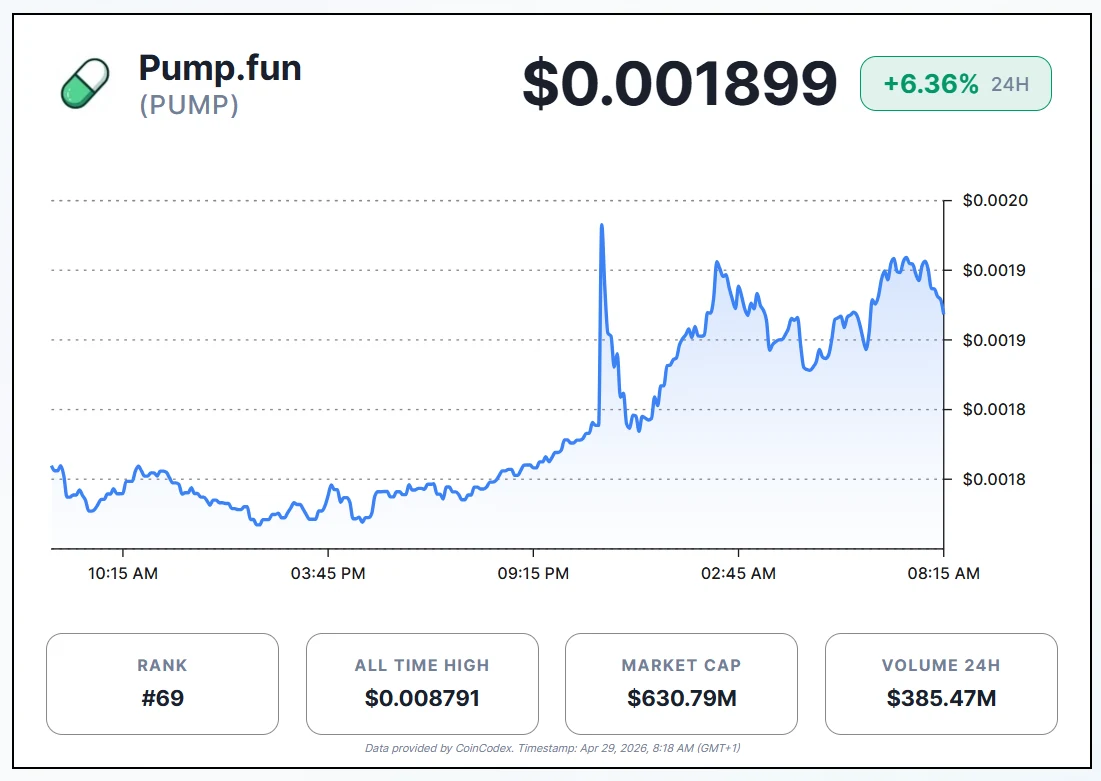
$PUMP price over the past 24 hours (Source: CoinCodex)
After the announcement, $PUMP rose about 6% over 24 hours to trade close to $0.0019, which suggests that investors reacted positively to the new strategy.

 coinpaper.com