Recent cycles in early 2026 highlight this pattern. In March, for instance, roughly 700 million $XRP was re-locked into escrow shortly after being unlocked, leaving about 300 million $XRP available for potential use. Similar behavior was observed in January and February.
Overall, Ripple has historically re-escrowed between 60% and 80% of the monthly unlocked $XRP.
This means that, in practice, only around 200 million to 400 million $XRP is retained each month for operational purposes. These uses typically include supporting liquidity for cross-border payments, funding partnerships, and expanding the broader $XRP ecosystem.
The escrow program, introduced in 2017, was designed to bring predictability and transparency to the cryptocurrency’s supply. By locking billions of tokens into time-based contracts and re-locking unused amounts, Ripple has maintained a controlled and gradual release schedule rather than allowing large, sudden increases in circulating supply.
Importantly, not all $XRP retained after the unlock is immediately sold on the open market. A significant portion is deployed strategically, meaning the actual sell pressure is often lower than the raw figures might imply.
$XRP price analysis
Meanwhile, this unlock is likely to have less impact on $XRP’s price. During past unlocks, there has been minimal to no effect, as investors have largely already priced it in.
At the time of reporting, the asset was valued at $1.45, up nearly 4%.
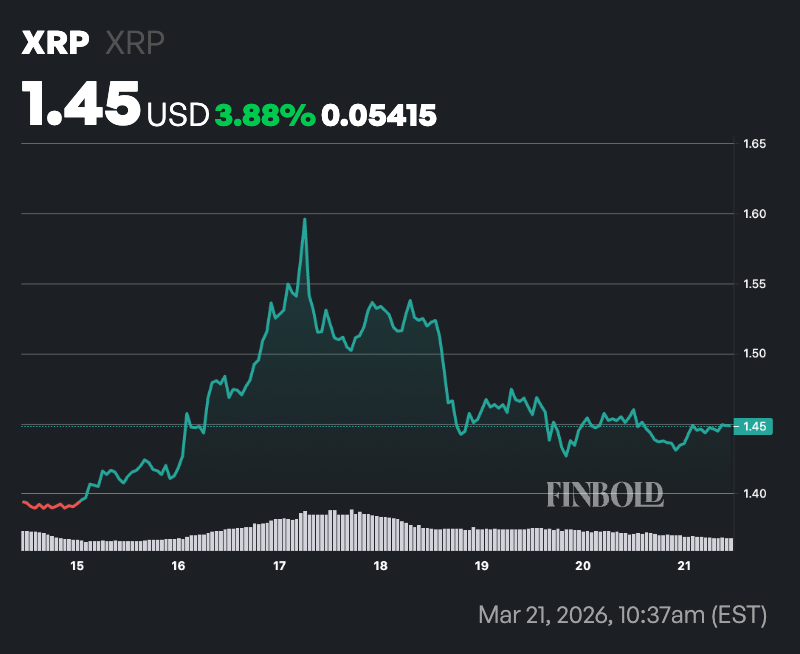
Following the move, $XRP is now testing its 50-day simple moving average, signaling short-term equilibrium but a lack of clear momentum. However, it remains well below the 200-day average at $2.14, indicating the broader trend is still bearish.
The 14-day relative strength index stands at 50.69, reflecting neutral conditions with neither overbought nor oversold pressure.
Featured image via Shutterstock

 finbold.com