
 bsc.news
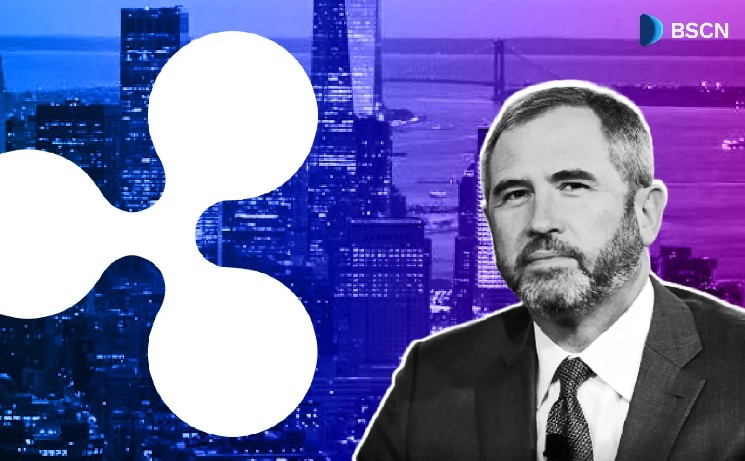
Table of Contents
$XRP has had a busy start to 2026, even if the price hasn't cooperated. Between a growing stack of global licenses, a ledger roadmap built for institutions, and ETF flows that continue to outpace Bitcoin and Ethereum, Ripple is moving fast to convert last year's legal win into real-world traction. The token trades around $1.37 as of early March, down roughly 30% year to date from a January high near $2.38 amid broader crypto weakness. But the infrastructure story underneath the price tells a different tale.
What Changed on the Regulatory Front?
Ripple came into 2026 with a big weight off its back: the SEC lawsuit, settled in late 2025, confirmed $XRP is not a security. That clarity opened doors fast.
CEO Brad Garlinghouse said in recent weeks he sees an 80% to 90% chance the Digital Asset Market CLARITY Act will pass by the end of April. The Senate bill would formally classify $XRP as a non-security commodity, which analysts say could push the price toward $4 to $5 by year-end if paired with Ripple's pending U.S. banking charter and Federal Reserve access. Garlinghouse also pointed to active talks between crypto firms and banks on stablecoin rules, noting momentum toward a deal, though stablecoin yield provisions remain a sticking point.
On the licensing side, Ripple turned its preliminary Electronic Money Institution approval in Luxembourg into a full license from the CSSF in early February. That came on top of EMI and crypto asset registration approvals from the UK's Financial Conduct Authority in late 2025. The total count now stands at over 75 global licenses, making Ripple one of the most regulated players in the space.
State-Level and Banking Moves
Arizona lawmakers advanced a bill in February to include $XRP in a state Digital Assets Strategic Reserve Fund, passing the Senate Finance Committee in a 4-2 vote. The bill explicitly names $XRP alongside Bitcoin and DigiByte as eligible assets. Meanwhile, Ripple's application for a national bank charter and Federal Reserve master account, filed in late 2025, remains one of the bigger catalysts to watch this year.
Partnerships with SBI Holdings, Mastercard, BNY Mellon, and others continued to expand, with over 20 central bank digital currency pilots running on Ripple tech. Network activity reflected all of this: daily transactions surged 40% to 2.5 million by late February.
How Is the $XRP Ledger Growing?
The XRPL saw meaningful upgrades in the first two months, with the focus squarely on compliant DeFi and real-world asset tokenization.
Ripple disclosed it has deployed $550 million into XRPL projects since 2017, funding over 200 initiatives across payments, DeFi, tokenization, AI, and enterprise. In February, the company shifted to a community-driven funding model, bringing in co-funders like Oxford, UC Berkeley, Pantera Capital, Dragonfly, and Franklin Templeton. SBI Holdings backed the transition and launched the XAO DAO FinTech Builder Program for broader ecosystem support.
Technical Roadmap Highlights
The 2026 XRPL roadmap, revealed in early February, leans heavily into institutional features:
- Permissioned Domains and a Permissioned DEX went live in Q1, enabling KYC/AML-compliant trading of RWAs and FX
- Confidential Transfers using zero-knowledge proofs for private but auditable transactions (targeted for Q1)
- Q2 targets include Smart Escrows, MPT liquidity pools, and a native lending protocol
- Ripple joined a $5 million seed round for t54 Labs, building AI agent infrastructure on XRPL
On the utility side, over 107 million FXRP (wrapped $XRP) were locked on the Flare network in February, pointing to rising DeFi activity. RWAs on XRPL hit $2 billion, including $280 million in tokenized diamonds. $RLUSD, Ripple's stablecoin, reached a market cap of $1.58 billion as of early March, more than doubling from $750 million in September 2025.
Institutional deals added weight too. Aviva Investors began tokenizing funds on XRPL, and the UAE's Zand Bank partnered with Ripple for stablecoin solutions. Rothschild & Co flagged the CLARITY Act's potential to boost XRPL for tokenized assets in a January blockchain fund update.
How Are $XRP ETFs Performing Compared to Bitcoin and Ethereum?
$XRP spot ETFs launched in November 2025 and racked up $1.3 billion in cumulative inflows within 50 days, making $XRP the second-fastest crypto ETF to cross the $1 billion mark after Bitcoin. That initial burst was driven by $483 million in December alone, with 43 consecutive days of positive flows and zero outflow days.
The pace has moderated in 2026. January inflows came in at $15.5 million, and February added $58 million as broader crypto markets pulled back hard. But the ETFs have never posted a monthly net outflow since launch, which is more than Bitcoin or Ethereum can say right now. Cumulative net inflows sit at roughly $1.24 billion, with AUM holding above $1 billion despite the price decline.
In relative terms, $XRP ETFs still outperform their bigger peers. Bitcoin ETFs turned negative on a year-to-date basis, shedding $1.09 billion in one stretch. Ethereum ETFs lost $564 million. Analysts have described the dynamic as capital rotation, with $XRP's regulatory clarity acting as a magnet for institutional money even during the drawdown. That resilience suggests conviction rather than speculation.
On the product side, the SEC extended its review of T. Rowe Price's Active Crypto ETF, which lists $XRP among its eligible assets, with proceedings still open as of early March. The $1.8 trillion asset manager's filing marked its first-ever crypto fund, and an approval would further expand the institutional on-ramp.
What Comes Next?
The outlook depends on who you ask. Conservative estimates put $XRP in the $1.50 to $2.50 range for 2026, while bullish targets reach $3 to $5 or higher if the CLARITY Act passes and ETF inflows reaccelerate. The CLARITY Act remains the single biggest catalyst. If it passes as expected, it could accelerate everything from institutional adoption to state-level reserve allocations.
$XRP's story has shifted from legal uncertainty to infrastructure play. Even in a down market, the ETF flows, licensing momentum, and XRPL upgrades separate it from most of the field.
Sources:
- CoinDesk — Garlinghouse confidence on CLARITY Act passing by April
- Yahoo Finance — CLARITY Act analysis, SEC and CFTC coordination on Project Crypto
- Ripple — Full EMI license announcement from Luxembourg CSSF
- Crypto Times — Arizona SB1649 advancing through Senate Finance Committee 4-2
- Ripple — 2026 XRPL Institutional DeFi roadmap
- CoinMarketCap — $RLUSD market cap at $1.58 billion
- 247 Wall St — $XRP ETF cumulative inflows, second-fastest to $1 billion
- Nasdaq — Capital rotation from Bitcoin/Ethereum ETFs into $XRP
- Bankless Times — January and February 2026 ETF inflow figures, individual fund AUM
- Investing.com — $XRP price analysis, ETF AUM above $1 billion, $RLUSD at $1.56 billion