
 thecryptobasic.com
Founder Charles Hoskinson has said Cardano’s recent integration with LayerZero is a major step toward connecting Cardano with other blockchains and ending its isolation.
Earlier this month at Consensus Hong Kong 2026, Hoskinson unveiled the integration after concluding negotiations with key stakeholders. The move strengthens Cardano’s cross-chain functionality and directly addresses concerns about limited interoperability, allowing the network to fully participate in the emerging omnichain future of DeFi.
Key Points
- Cardano’s LayerZero integration aims to end the network’s long-standing isolation from other blockchains.
- IOG founder Charles Hoskinson says the integration connects Cardano to more than 80 blockchains, including $BNB Chain.
- This opens the door to cross-chain DeFi, omnichain DEXs, cross-network lending, and improved liquidity routing.
- Experts warn that developer adoption and sufficient liquidity remain crucial for Cardano to realize the benefits of interoperability.
Cardano is No Longer an Island
In a recent livestream, Hoskinson highlighted the significance of Cardano’s LayerZero integration, emphasizing that the interoperability protocol now connects the network to more than 80 blockchains.
This includes major networks such as $BNB Chain, Solana, and Ethereum. He stressed that Cardano is no longer an island, as it can now seamlessly move liquidity, users, and value across multiple networks.
Notably, the integration marks a major step forward for Cardano’s ecosystem. Rather than operating as a standalone blockchain, Cardano can now coordinate smart contracts, enable cross-chain communication, and support advanced interoperability use cases.
In turn, this opens the door to cross-chain DeFi, omnichain decentralized exchanges, cross-network lending, and more efficient liquidity routing, significantly expanding Cardano’s utility and growth potential.
How the Cardano —LayerZero Integration Works
Meanwhile, stake pool operator Cardano Jaromir Tesar outlined how the integration delivers seamless interoperability. For context, LayerZero is a decentralized messaging layer that enables blockchains to communicate directly with each other.
Each supported network deploys a standardized endpoint for secure cross-chain messaging. By deploying this endpoint, Tesar noted that Cardano enables its smart contracts to send instructions, data, and state updates to applications on networks like Ethereum and Solana, without relying on traditional asset bridges.
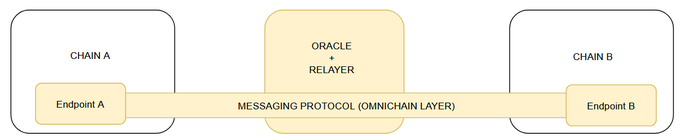 Unlike legacy bridges that lock tokens and mint wrapped assets, he stresses that LayerZero uses an omnichain model.
Specifically, it relies on verified messaging and native burn-and-mint mechanisms, thereby reducing reliance on centralized trust assumptions and limiting systemic risk. Independent oracle and relayer nodes validate each message to ensure secure, decentralized communication.
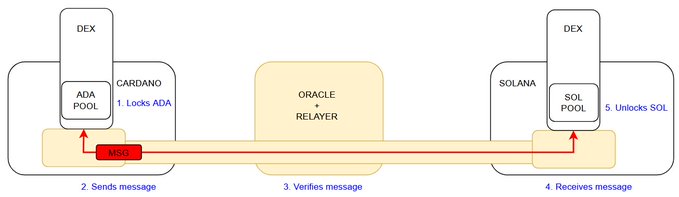
Consequently, developers can build omnichain applications that operate as single logical apps across multiple blockchains, according to Tesar. For instance, a decentralized exchange could let users initiate a swap on Cardano and finalize it on Solana.
In this case, Cardano smart contracts would transmit verified instructions to Solana, triggering asset releases from liquidity pools on the destination chain.
 LayerZero Integration Not Enough
Meanwhile, Tesar emphasized that although the LayerZero integration marks a major milestone for Cardano, interoperability alone will not guarantee success.
Developers must build omnichain applications, while liquidity providers must provide sufficient funds to support them. Without strong developer participation and deep liquidity, Cardano may struggle to unlock the full benefits of cross-chain connectivity.
Tesar described these factors as key challenges that could ultimately determine the integration’s long-term impact.