
 coindesk.com

A trader who bought $285 worth of a memecoin called "zreal" early made $627,000 after offloading the token into a wave of retail buyers.
Blockchain analytics platform Lookonchain claims the trader was an "insider" who bought 66.3 million ZREAL tokens, selling around 10 million for $210,000 while leaving the remaining 46.3 million on the table, for an unrealized profit of $417,000.
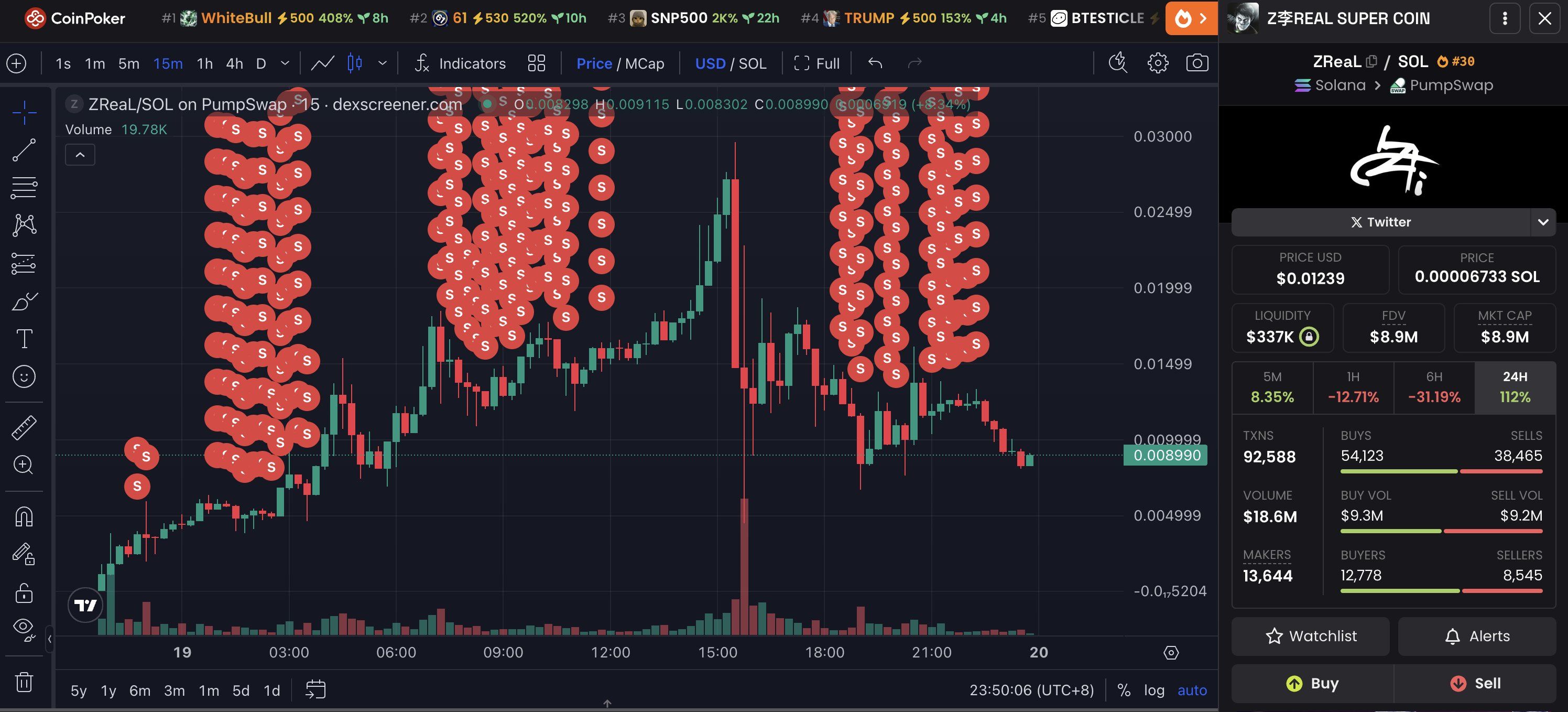
Onchain data backs up the claims, with the wallets in question spamming hundreds of market sell orders over a 10-hour period on Monday.
Memecoin insiders, typically called "snipers," are often told about a project before it goes live. This allows them to get in early via a bot before the wider public, then sell on exchanges when prices rise to make quick profits.
Sniping became mainstream news in early 2025 when Hayden Davis revealed all on a podcast with Coffezilla, claiming that he was involved in the issuance of several high-profile memecoins, including MELANIA and LIBRA.
When Davis revealed that memecoins were instruments of extracting liquidity from unsuspecting retail buyers, he became both the villain and the avatar of the memecoin era. His admission brought to light the wild west of memecoin trading, where actors like Davis and others were dumping on unknowing retail traders, rigging the game.
Mini frenzy
While the memecoin craze of early last year has mostly died down, there seems to be a small revival of the frenzy.
The ZREAL trade comes amid a mini memecoin season, as evidenced by the record daily trading volume on popular memecoin launch platform Pump.fun, which reached $1.2 billion earlier this month.
The zreal token has also amassed a community of more than 7,000 members on X since its introduction on Sunday, with 24-hour trading volume reaching $18 million.
A Solidus Labs report in May last year claimed that 98% of tokens issued on Pump.fun were fraudulent, a claim the platform vehemently denied, with a Pump.fun spokesperson saying: "What Solidus Labs lacks is a basic understanding of memecoins."