
 en.bitcoinsistemi.com

The Optimism Foundation has publicly presented a new governance proposal that envisions 50% of the revenue generated from the Superchain ecosystem being used for OP token buybacks.
If the vote scheduled for January 22nd is approved, the program will be launched in February.
According to the proposal, OP tokens purchased under the buyback program will be transferred directly to the treasury. These tokens can later be burned or distributed as staking rewards. Thus, the aim is for the OP token’s role to go beyond governance and become an economic structure directly linked to Superchain growth.
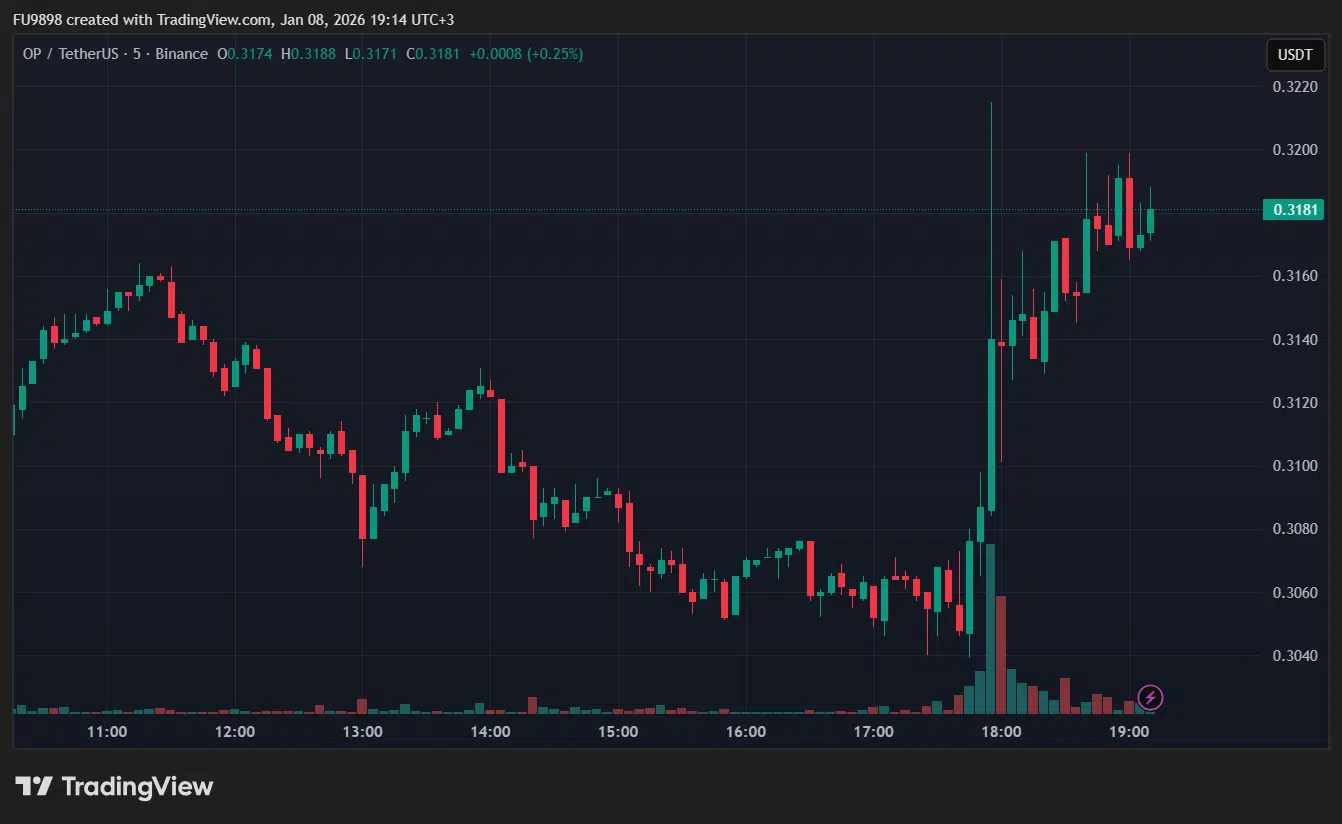
The Optimism team argued that over the past five years, OP Stack has evolved from an Ethereum scaling experiment to the default infrastructure for serious developers. According to the statement, the Superchain controls 61.4% of the layer-2 (L2) fee market and processes approximately 13% of all crypto transactions. This percentage is said to be continuously increasing over time.
Optimism’s revenue model is based on Superchain networks built on the OP Stack, including Base, Unichain, Ink, World Chain, Soneium, and OP Mainnet. These networks allocate a certain percentage of sequencer revenue to Optimism. Over the past 12 months, a total of 5,868 ETH was generated through this method, and all of this revenue was allocated to the treasury, which is overseen by the administration.
The new proposal suggests that 50% of the revenue generated from Superchain over the next year be used monthly to purchase OP tokens. The remaining ETH revenue could be used by the Optimism Foundation within a more active treasury management framework, in addition to the existing staking program.
*This is not investment advice.