Rather than deploying the full amount in a single transaction, the wallet accumulated tokens through multiple swaps, each ranging from about $1,000 to $3,000.
These transactions resulted in the purchase of approximately 8.15 million Pippin tokens at relatively low prices, when the asset was still trading near its early base levels.
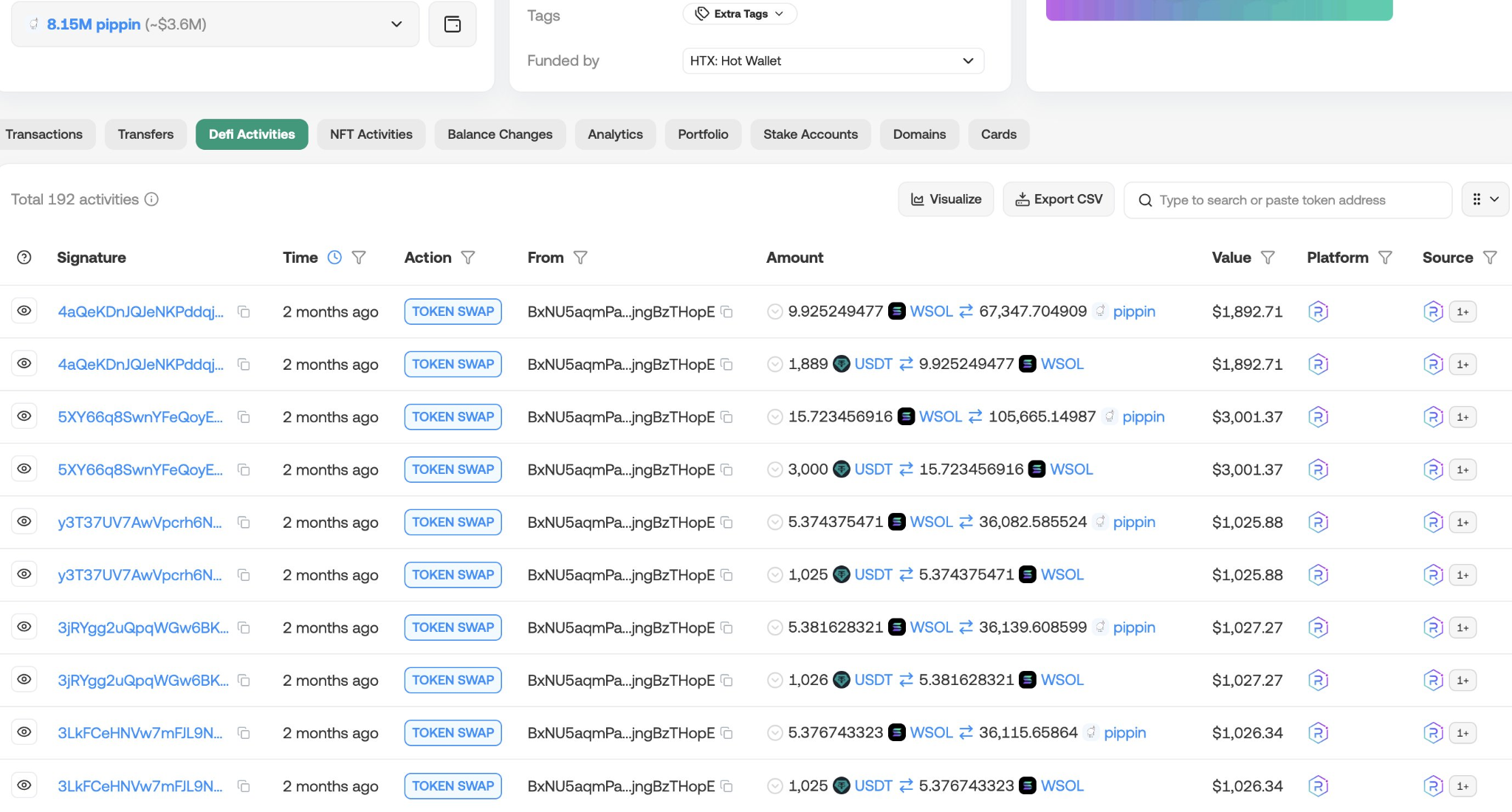
DeFi activity records indicate repeated $USDT-to-WSOL conversions followed by WSOL-to-Pippin swaps, with individual trades capturing tens of thousands of Pippin tokens per transaction.
At the time, these purchases reflected modest dollar values but collectively built a sizable position while liquidity remained thin. The wallet has not recorded corresponding sell transactions, indicating the trader continues to hold the full allocation.
Understanding PIPPIN’s rally
Since then, Pippin has staged a sharp rally. By press time, PIPPIN was trading at $0.4229, down about 10% over the past 24 hours. On a weekly basis, the token is still up nearly 30%, while monthly gains exceed 1,400%.
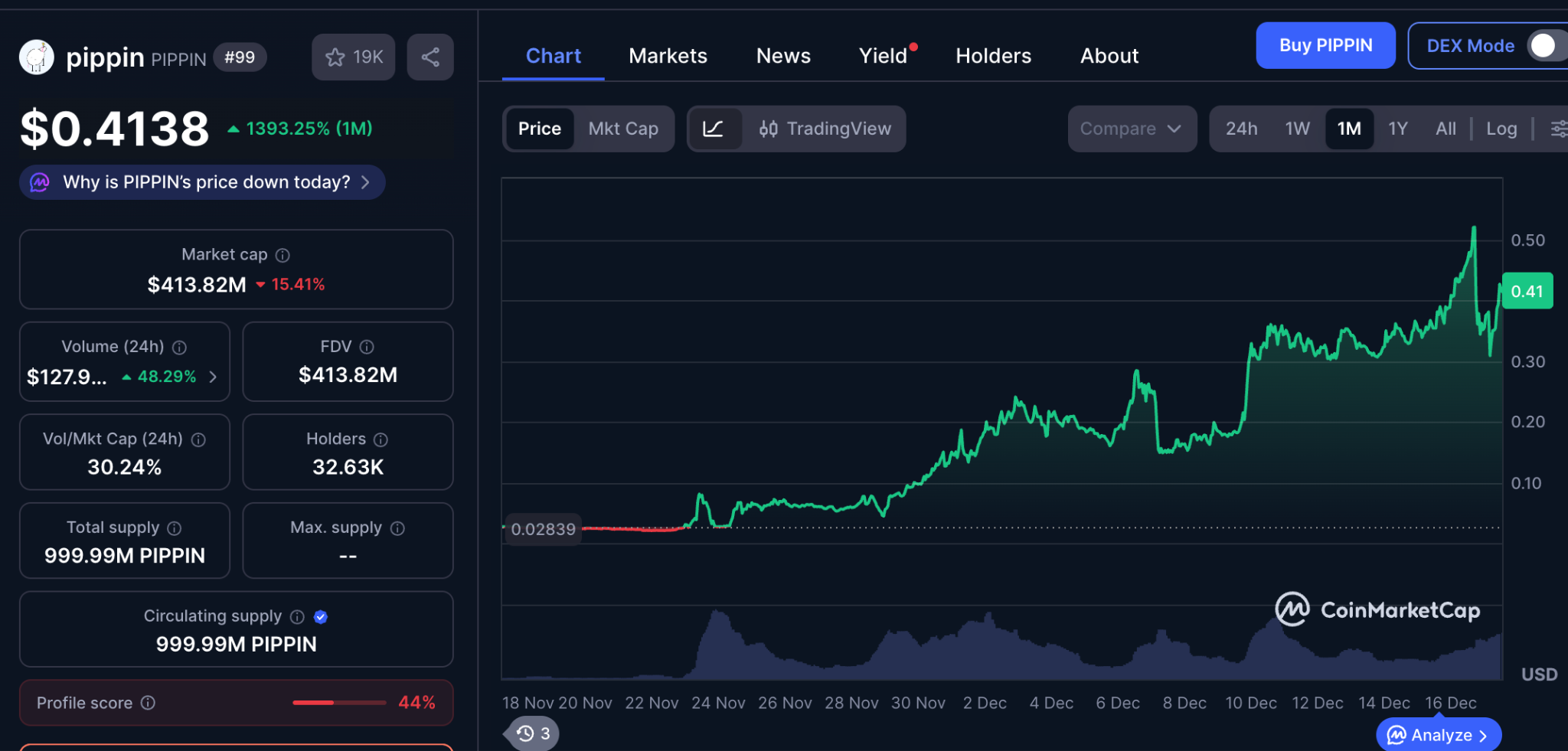
The rally has been fueled in part by aggressive buying from large investors, with whale wallets accumulating roughly $1.5 million worth of tokens and pulling significant supply off exchanges.
Notably, more than 44% of the circulating supply has been withdrawn from trading platforms in recent weeks, creating a supply squeeze that amplified demand. The move has also been supported by rising retail interest and broader enthusiasm for AI-linked tokens.
However, the surge carries notable risks. Supply data suggests a single entity may control over 70% of PIPPIN’s tokens across multiple wallets, leaving the market vulnerable to sudden sell-offs.
While such concentration is common in early-stage projects, limited transparency around distribution and token control raises concerns that sentiment could reverse quickly if large holders begin to exit.
Featured image via Shutterstock

 finbold.com