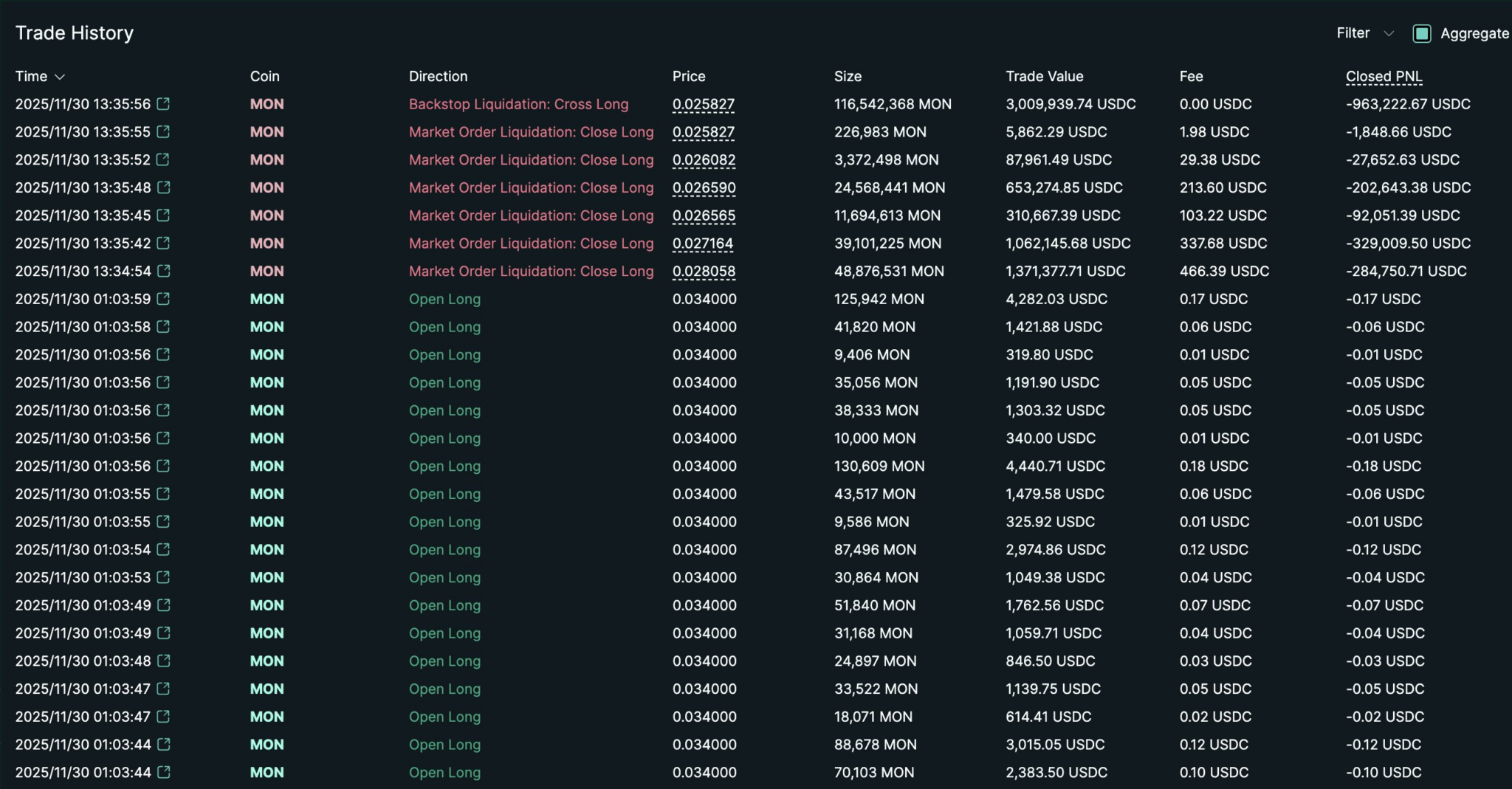
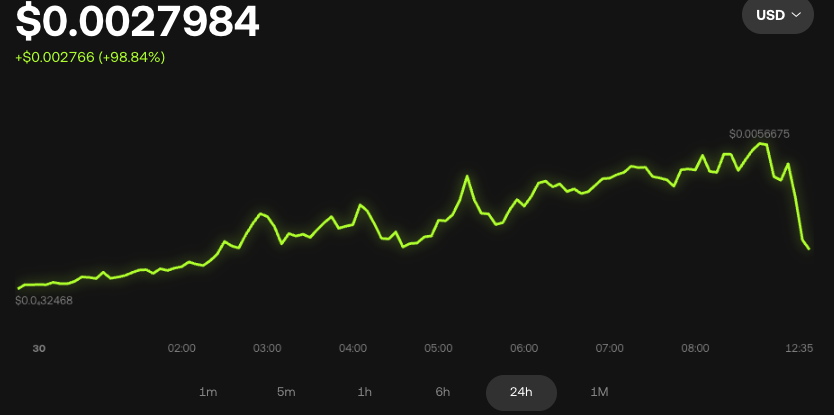
The trader built long exposure near the $0.034 level, but a sharp intraday reversal sent $MON tumbling from its peak, triggering a cascade of liquidations. Although $MON gained nearly 99% at one point within the 24-hour window, the rapid downturn visible on the price chart erased the trader’s positions almost instantly.
The heavy loss unfolded during one of the most widely participated token sales held on Coinbase’s new launch platform. The week-long sale attracted nearly 86,000 buyers from more than 70 countries, accumulating $269 million in commitments and oversubscribing the $187.5 million allocation by 1.43×.
Most participants entered for long-term exposure, but early trading activity proved far more volatile than the sale itself.
Notably, $MON launched with 10.8% of its 100 billion supply unlocked, split between the public sale at $0.025 and the airdrop, while the rest remains locked for years across team, investor, treasury, and ecosystem allocations. The team’s large share drew pushback from some community members who viewed the distribution as insider-heavy.
Why $MON rallied
Monad’s mainnet went live with apps and developers active from day one, generating immediate on-chain activity. The combination of strong early demand and low circulating supply fueled $MON’s sharp price surge and equally fast reversal.
However, not everyone in the industry shares the enthusiasm. In this case, BitMEX co-founder Arthur Hayes has reiterated his view that most new layer-1 blockchains will eventually fade, maintaining that only Ethereum and Solana have the institutional durability to endure.
He characterized Monad as a high-valuation, low-float token vulnerable to steep declines once the initial launch momentum wears off.
Featured image via Shutterstock

 finbold.com