
 forbes.com
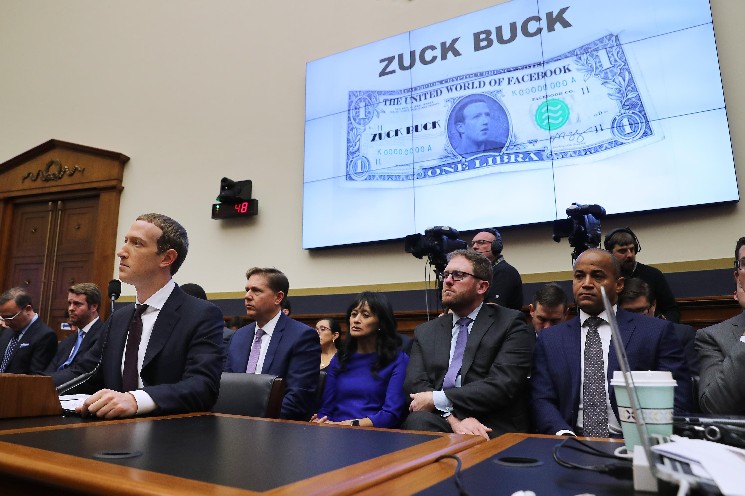
Stripe just pulled back the curtain on Tempo, its corporate blockchain, and the pitch is a classic. You get an all-star team, state-of-the-art tech, an impressive roster of partners—including one of the card networks the whole thing is designed to replace—and “neutrality.” The price for this grand bargain? Just handing the fintech giant the keys to global payments. If this gives you a powerful sense of déjà vu, you’re not alone. The only question is if Stripe can write a different ending for the movie Meta already showed us.
There’s a cliché in tech and finance that being too early is indistinguishable from being wrong. Looking back on Libra, the stablecoin project I helped create inside Meta, I can confirm we weren’t just early; we were also comically, spectacularly wrong. We had a bad case of Silicon Valley hubris—the belief that elegant code can simply wish away centuries of financial regulation. We announced our plan to reinvent money with the subtlety of a foghorn, giving every incumbent on the planet time to find their pitchforks. And to top it off, we handed our political opponents a gift-wrapped narrative: a "basket of currencies" that let them paint us as Bond villains coming for the dollar and the euro.
There is a simple story one could tell about why Stripe will succeed where Libra failed. A story of better timing, a better brand, and the wisdom of being a second mover. In this story, Tempo is the inevitable winner. The political climate, after all, is radically different today. Stripe isn't emerging from the wreckage of a scandal like Cambridge Analytica. And they get to learn from our very public mistakes.
So, case closed? Not quite. The problem is that this entire bull case is based on a fundamental misreading of what actually killed Libra.
The Wrong Autopsy
The popular story is that Libra was a regulatory train wreck. The reality is that we were on the verge of becoming the most buttoned-up, regulator-friendly crypto project on the planet. We approached it with the seriousness of building—in the regulators’ own view—potential systemic financial market infrastructure.
Despite a rocky start, we eventually had a US Treasury veteran at the helm: Stuart Levey, a man who knew the D.C. rulebook by heart. We were in weekly dialogue with every central bank that would take our call. The legal framework we helped build is now, ironically, the basis for the GENIUS Act. We even had the notoriously meticulous Swiss regulator FINMA ready to give us the green light.
We got so close you could taste it: Libra’s license was physically sitting on the desk of FINMA’s president, waiting for a signature. And then Janet Yellen entered the chat.
Two Competing Philosophies
This leads us back to Stripe, and a question that hangs over the entire project: can it avoid repeating Libra’s fate? What happens when the antibodies of the financial system—the powerful incumbent banks and card rails—identify Tempo as a new threat and begin to swarm?
What makes the situation fascinating is the paradox at its heart. After a decade of spectacularly failed attempts to build their own private blockchain clubs, the big banks are finally, grudgingly, coming around to the idea that open, permissionless networks are the only way forward. At the very same moment, a new generation of challengers, led by Stripe and Circle, are betting everything on the opposite idea: that the future belongs to slick, branded, proprietary chains.
The problem with corporate chains like Tempo or Circle’s Arc isn’t a matter of code—it's a matter of incentives. We already know the script. A tech player builds a network and promises fairness to get everyone on board. But once they have a captive market, the temptation to tilt the playing field becomes irresistible. Would a sane competitor bet its future on Stripe's promise not to eventually favor its own products?
This isn’t a new insight. It’s the very dilemma crypto was designed to solve. As Chris Dixon crystallized it, crypto’s purpose is to break this cycle of broken promises. It's the same fundamental economic truth we identified at MIT almost a decade ago: the only thing that truly separates crypto from the systems it aims to replace is that it's permissionless. Full stop.
From the very beginning of Libra, my biggest concern wasn’t the external fight with regulators, but the internal one. I was terrified we'd never win the debate to make the network truly permissionless. You have to understand, these are the brilliant engineers who build the most efficient centralized systems on Earth. They looked at our crypto ideals with a brutal, and not entirely incorrect, logic: why are we tying ourselves in knots to decentralize the database when the underlying asset is centralized? To them, it was an elegant solution in search of a problem.
So, after months of negotiations and economic modeling with one of the world’s top market design experts, Scott Kominers, our grand vision for a permissionless future was buried into a single and lonely four-page, appendix document.
Of course, the dream of a truly open system was the first casualty. The first domino to fall was the non-custodial wallet—a concession the Libra founding team extensively agonized over.
Why? Because regulators need a "clear perimeter." That’s a polite way of saying they need to know who to call—and who to fine—when things go wrong. Their entire compliance playbook was written for a world of intermediaries. A world where users truly control their own money is messy, borderless, and doesn’t fit that legacy blueprint, making it a traditional compliance officer's worst nightmare. For them, killing self-custody wasn't a choice, it was an obvious necessity based on the tools they understood.
The irony, of course, is that this is an entirely solvable problem. Open networks are now pioneering their own native compliance tools—from onchain analytics and attestations, to identity and compliance protocols—that are much more effective than the old model. But for us, back then, it was simply a sign of things to come.
The Gravitational Pull of Control
So what’s the lesson here? As long as there is a single throat to choke—or a committee of them—you can’t truly rewire the system. Worse, any network with an architect is living on borrowed time. It will inevitably break its promises on privacy, developer freedom, interoperability and business neutrality. We’ve all seen this with the internet giants: court the developers, capture the users, and then close the gates. It's a script as predictable as it is profitable.
If corporate chains like Tempo and Arc succeed, it will mean the crypto experiment was not a revolution, but a failed coup. The backend technology would be different, yes, but the market structure would be eerily familiar: we would simply swap an old monarchy of card networks and financial sector incumbents for a new one of fintech giants. The throne will have new occupants, but it will be the same throne. And in our fractured world, that reign would inevitably split along geopolitical lines. There is little chance the West and the East would agree to live under the same corporate king, leading not to a unified global system, but to at least two powerful, competing empires.
Ultimately, Stripe’s Tempo is a referendum on the ghost of Libra. If that ghost was merely a product of bad timing, then Tempo is poised for a historic victory, and the crypto world's original dreamers may finally have to accept a more pragmatic, centralized reality.
But if Libra’s ghost is a warning about a fundamental truth—that any system with a single architect is built on a fatal flaw—then Stripe is not writing a new story. It is merely staging an entertaining, and very expensive, sequel.