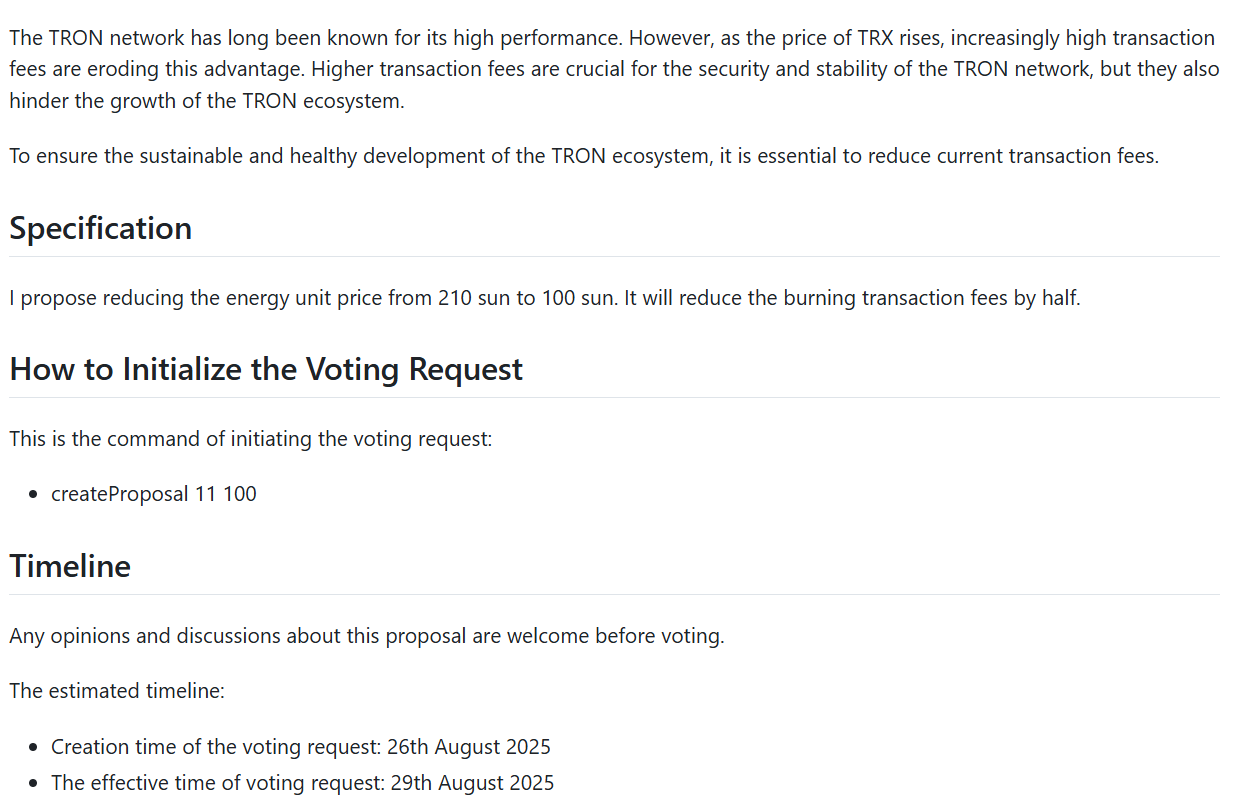
Tron Improvement Proposal #789. Source: GitHub
If approved, the change is expected to improve user accessibility by lowering the $TRX required per transaction. Estimates suggest the adjustment could expand the network’s affordability to nearly 45% more users, particularly for high-volume use cases such as stablecoin transfers.
The proposer pointed to historical precedent: Following Proposal #95, which cut energy costs by 50% in 2024, the network saw a marked increase in new smart contract deployments, indicating a strong correlation between lower fees and ecosystem growth.
Still, the update carries risks. At the current rate of 210 sun per energy unit, Tron achieves a net burn of around 76 million $TRX. Reducing the rate to 100 sun could reverse that trend, resulting in net inflation unless transaction activity rises enough to offset the lower burn rate.
Related: Tron Inc. seeks $1B to grow $TRX holdings as stock rallies
Proposal gains traction ahead of deadline
Voting on the proposal opened Tuesday and will close Friday. It was published on the Tron Blockchain Explorer as Proposal #104.
As of Wednesday, it had received 17 votes in favor, including support from Chain Cloud, CryptoChain, Nansen, HTX.com, P2P.org and Tron Alliance, while 10 participants had yet to cast their votes. At this pace, the proposal appears likely to pass.
Under Tron’s governance rules, a proposal must be approved by at least 18 of the 27 Super Representatives — the elected block producers responsible for generating blocks and validating transactions on the network.
Launched in 2017, Tron is one of the few blockchains to have expanded its presence across multiple market cycles.
It is currently the ninth-largest blockchain by market capitalization, valued at $33.1 billion, according to CoinMarketCap. The network has also established a significant foothold in the stablecoin market, with its stablecoin supply increasing by 40% since the start of the year.
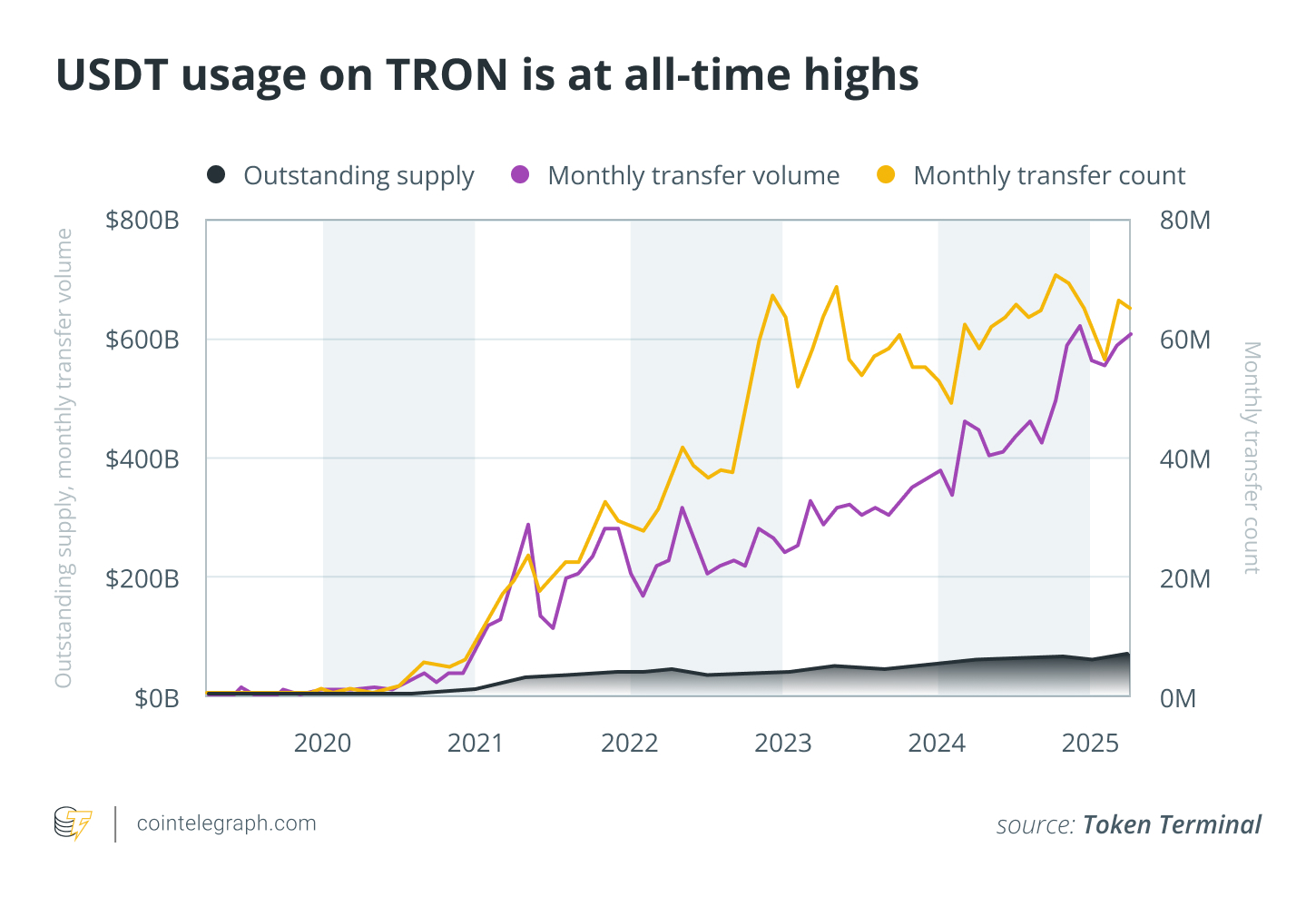
The Tron network has seen a spike in USDt usage. Source: Cointelegraph
Related: Crypto Biz: Wall Street giants bet on stablecoins

 cointelegraph.com