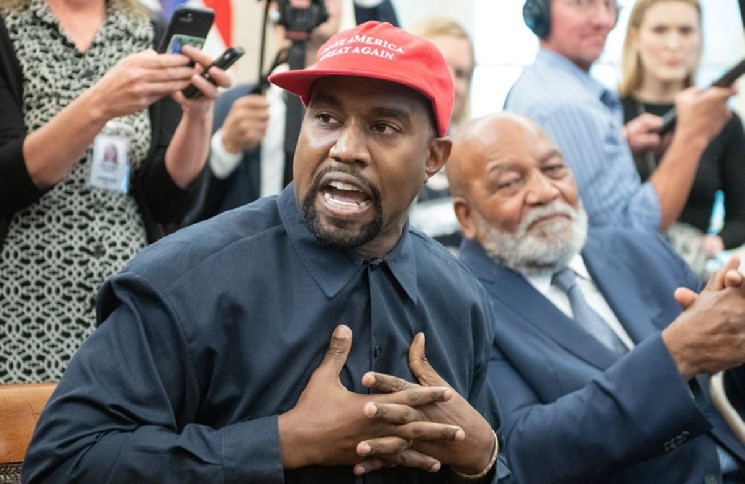
The Yeezy Money website claims that 25 contract addresses were deployed, with one chosen at random as the official token to discourage bot activity. However, analysts and on-chain observers pointed out several red flags.
Lookonchain reported that only $YZY tokens were initially added to the liquidity pool, giving developers the ability to manipulate liquidity and sell at will. Coinbase director Conor Grogan mentioned that as much as 94% of the token supply was controlled by insiders, with a single multisig wallet holding 87% before being split across multiple wallets. These concerns fueled accusations of insider trading, which is very similar to controversies that have plagued other celebrity-backed cryptos.
Despite the risks, the $YZY token still attracted traders and crypto whales. High-profile investors like BitMEX co-founder Arthur Hayes and leverage trader James Wynn disclosed positions in the token. Wynn suggested the play is short-term, and referred to Donald Trump’s memecoin that quadrupled in value within a day earlier this year. On-chain activity also revealed massive profits for early entrants, including one trader who secured $3.4 million in gains after paying hefty priority fees on the Solana network.
The $YZY launch happened amid a wave of celebrity and political figures dabbling in crypto tokens. Trump’s TRUMP token even rallied to billions in market cap shortly after its release.
Judge Unfreezes Libra Scandal Funds
In other celebrity token related news, a US judge lifted a freeze on $57.6 million in $USDC stablecoins connected to the Libra token scandal earlier this year. This gives meme coin promoter Hayden Davis and former Meteora decentralized exchange CEO Ben Chow access to the funds.
The assets were initially frozen in May by Judge Jennifer L. Rochon as part of a class-action lawsuit against Davis, Chow, blockchain company KIP Protocol, and its co-founder Julian Peh.
According to court documents, the judge found that the defendants did not prove that they would suffer “irreparable” harm. The judge also pointed out that the funds earmarked for reimbursing victims is still available and the defendants did not try to move the frozen assets. While Davis attempted in July to have the case against him dismissed, his motion was denied as moot. Even so, Judge Rochon is skeptical that the lawsuit against Davis, Chow, and the others will ultimately succeed.
The Libra token debacle is remembered as one of the largest rug pulls in crypto history as it involved high-profile figures and caused political fallout. It was launched in February as a project supposedly aimed at helping Argentina’s small businesses, and the token even received a promotional boost from President Javier Milei on social media. Within hours, however, the token collapsed, wiping out $107 million in investor funds and triggering widespread outrage.
Milei quickly backtracked by claiming he had no connection to the project and merely supported what he thought was a private venture. His distancing did little to ease the backlash, which included a congressional ethics probe and even calls for his impeachment. Though Milei later shut down the investigation without any charges, critics accused him of orchestrating a cover-up to protect his administration.
The scandal is now a cautionary tale about celebrity and political endorsements in the crypto space, due to the risks for retail investors and the ongoing legal battles surrounding those who promoted or launched the failed token.

 coinpaper.com