How ZKJ crash unfolded
According to on-chain data, the crash was triggered by a series of coordinated moves involving several large wallets.
Liquidity was quietly drained from the ZKJ/$KOGE trading pairs in the hours before the event. Traders began swapping $KOGE for ZKJ, only to dump ZKJ back into the market immediately.
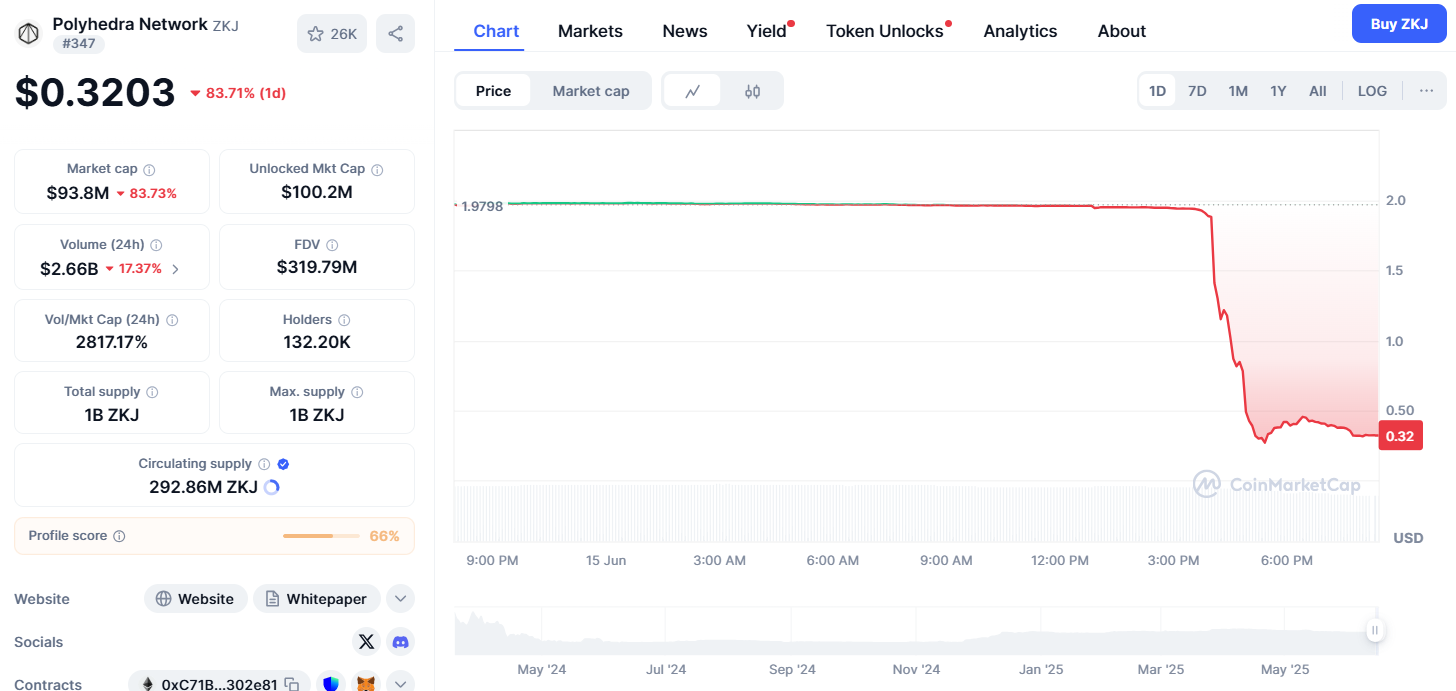
Six whale wallets were at the storm’s center, offloading over 5.23 million ZKJ for $9.66 million. The sudden liquidity exit and intense selling pressure tanked the price, triggering a wave of forced liquidations across trading platforms.
In total, more than $99 million in ZKJ long positions were wiped out, accounting for 81.3% of all crypto liquidations. At least six individual traders were liquidated for more than $1 million each.
Suggestions indicate the crash might have stemmed from a “perfect storm” of vulnerabilities, including front-running ahead of scheduled token unlocks, a mass exit by airdrop farmers cashing out, and widespread panic as the token’s price structure unraveled.
In the aftermath, members of the 48 Club DAO, the creators of $KOGE, blamed the meltdown on poor management. Outrage erupted across social media, with users demanding accountability and claiming they were “rugged from both sides.”
$ZKJ nuked 85% in under an hour.
$40M spread across insider wallets.
Liquidity drained.
Tokens dumped.
It was farmed like a stablecoin, valued like a unicorn, and ended like a penny stock.
Another reminder:
In a market like this, only a handful of projects will actually… pic.twitter.com/LFYVlOlXxP
— MetaverseSG (@MetaverseSG) June 15, 2025
Further complicating the situation is a looming token unlock: 5.3% of ZKJ’s supply, worth an estimated $32 million, is set to be released in the coming days.
Featured image via Shutterstock

 finbold.com