As previously reported by Bitcoin.com News, Pi’s rally in early May briefly pushed the token into the top 20 digital assets by market capitalization. At the time, its surge was attributed to rumors of a possible Binance listing and a major announcement set for May 14.
However, after the announcement turned out to be nothing more than the launch of a $100 million investment fund, Pi plunged by more than 25% in 24 hours. The sudden decline prompted allegations from some Pi Network supporters, who accused the core team of deliberately hyping the project to inflate the token’s price.
One supporter criticized the team’s decision to build hype around a single announcement, warning that the strategy could backfire if it failed to meet the community’s expectations. Since then, Pi Network has faced growing scrutiny, especially as the token has continued trading well below its May 12 price of just under $1.60. At 4:45 a.m. EST on May 20, Pi traded just under $0.74, marking a 33% drop in seven days.
Atlas, meanwhile, claimed an analysis had identified the dumping wallet, which is allegedly linked to the Pi Network core team.
“The wallet in question—GABT7EMP—is allegedly connected to Pi Core ops. Millions of Pi flowed out from this address right near the local top. Piscan shows massive outflows just as the price began dumping. To many, this looks like a textbook insider exit during peak liquidity,” Atlas said.
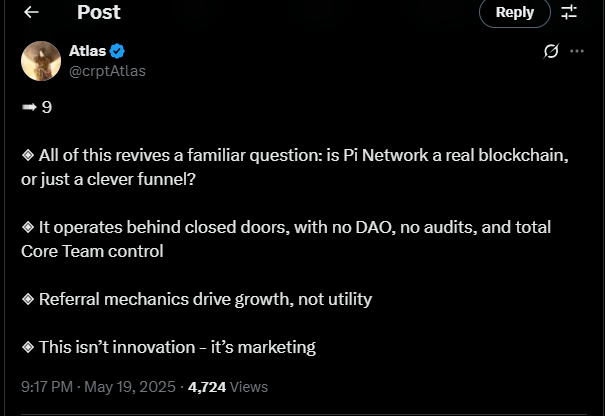
Although the Pi Network core team has not responded to the allegations on X, a pro-Pi Network handle appeared to address some of the concerns about the movement of massive amounts of Pi tokens.
“The Pi Core Team manages numerous wallets for different operational purposes. These wallets are used for various functions, including ecosystem development funding, exchange liquidity provision, strategic partnerships, operational expenses, and community rewards and incentives,” Times of Pi Network wrote in a post on X.
Meanwhile, Atlas also rejected claims that the fund transfers were merely part of a testnet-to-mainnet migration. The analyst argued that if this were the case, it should have been communicated more effectively to dispel pump-and-dump suspicions.

 news.bitcoin.com