Ethereum layer-2 solutions, such as Arbitrum, Optimism, and Base, have gained traction over the years due to their ability to enable inexpensive transactions. Currently, these layer-2 platforms handle $36.57 billion in assets according to L2Beat data. However, these solutions face the challenge of processing transactions off-chain without immediate proof of their validity before batching and confirming them on-chain.
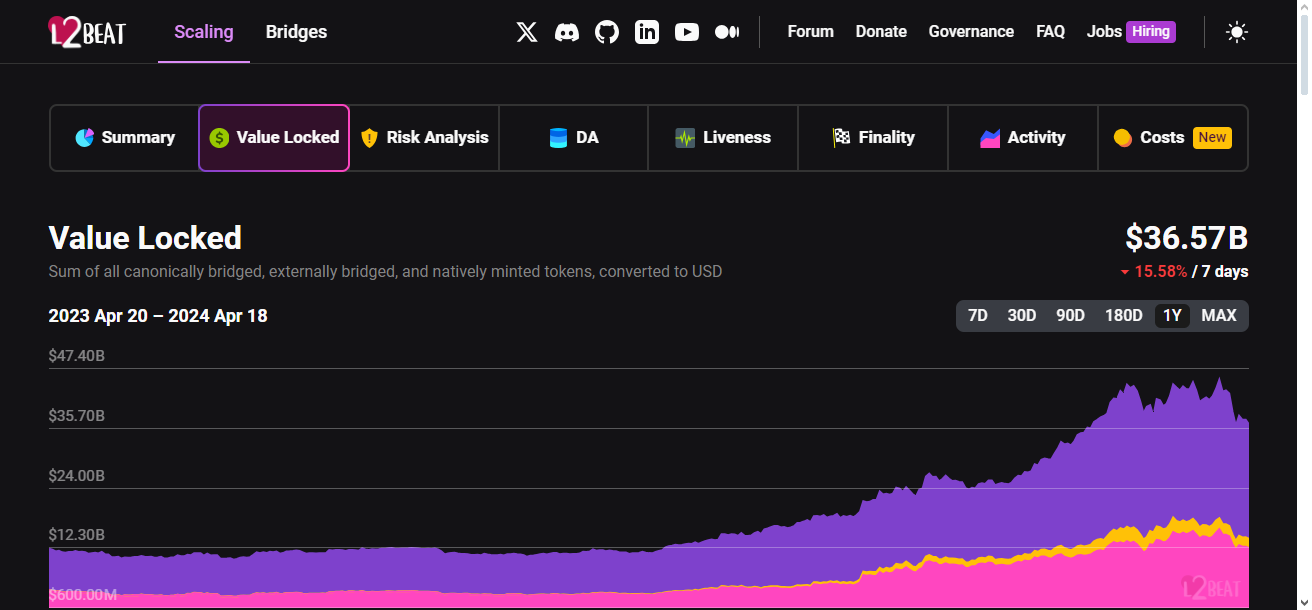
Source: L2Beat
Fraud proofs, like the ones Arbitrum and other optimistic rollup solutions implement, are designed to address this challenge by ensuring the validity of off-chain transactions. Once fully integrated into Arbitrum, $BOLD will serve as a safety net to maintain transaction integrity while allowing for efficient off-chain processing.
Decentralization and Community Participation
In line with blockchain principles, $BOLD will be decentralised, allowing the community to operate nodes and validate withdrawals back to Ethereum. This marks a shift from the current centralised setup, in which only a few validators handle transaction validation in Arbitrum.
$ARB Prices and Market Pressure
Despite the introduction of $BOLD in the testnet, $ARB token prices remain stable but under pressure. $ARB is down 50% from its March 2024 peak at current rates and is still experiencing significant selling pressure. If buyers can reverse the sell-off seen on April 12 and 13, the token could recover strongly, potentially reaching $1.5.
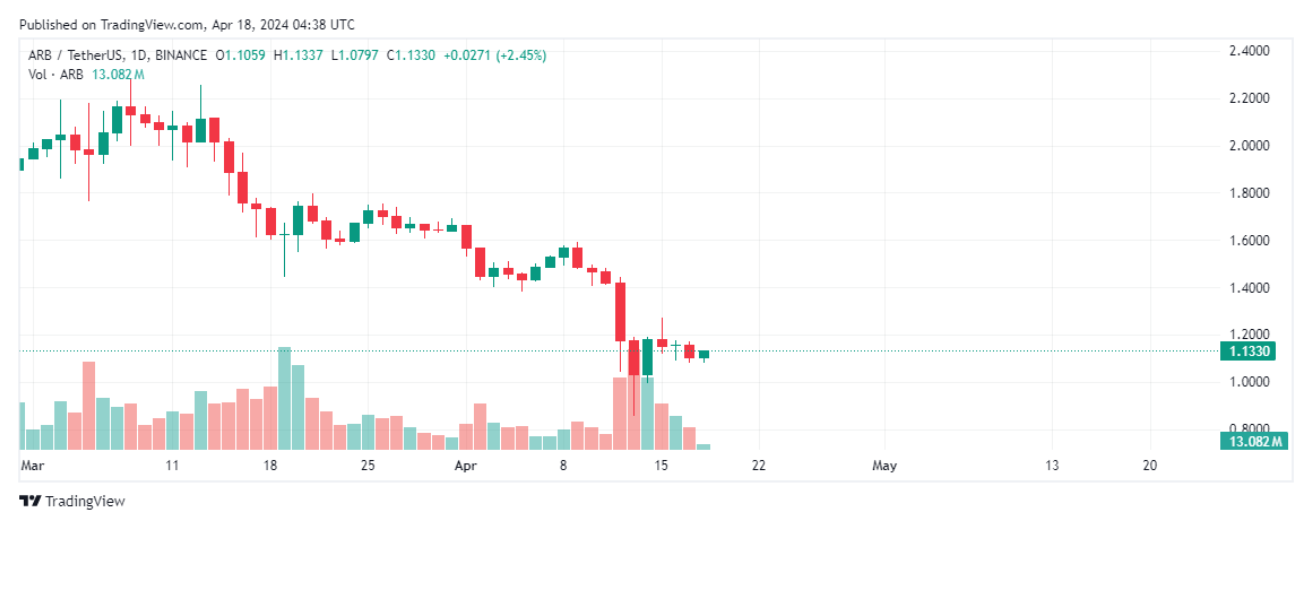
$ARB’s Price. Source: TradingView
Overall, the deployment of $BOLD in the testnet marks a significant milestone for Arbitrum, positioning it as the first Ethereum layer-2 to implement its fraud proofs on the testnet. This step is vital for creating a more decentralised ecosystem and reinforcing the platform’s robustness.

 coinculture.com




