
 ambcrypto.com
A divergence emerged on Ethereum [ETH], where stablecoin liquidity remained present, yet network activity declined during Bitcoin’s [BTC] consolidation phase.
At press time, Tether [$USDT] Active Addresses fell to 202,300, while USD Coin [$USDC] dropped to 109,300, marking the lowest levels since mid-December. Meanwhile, this decline reflected reduced transactional demand on Ethereum, as users held stablecoins without deploying them.
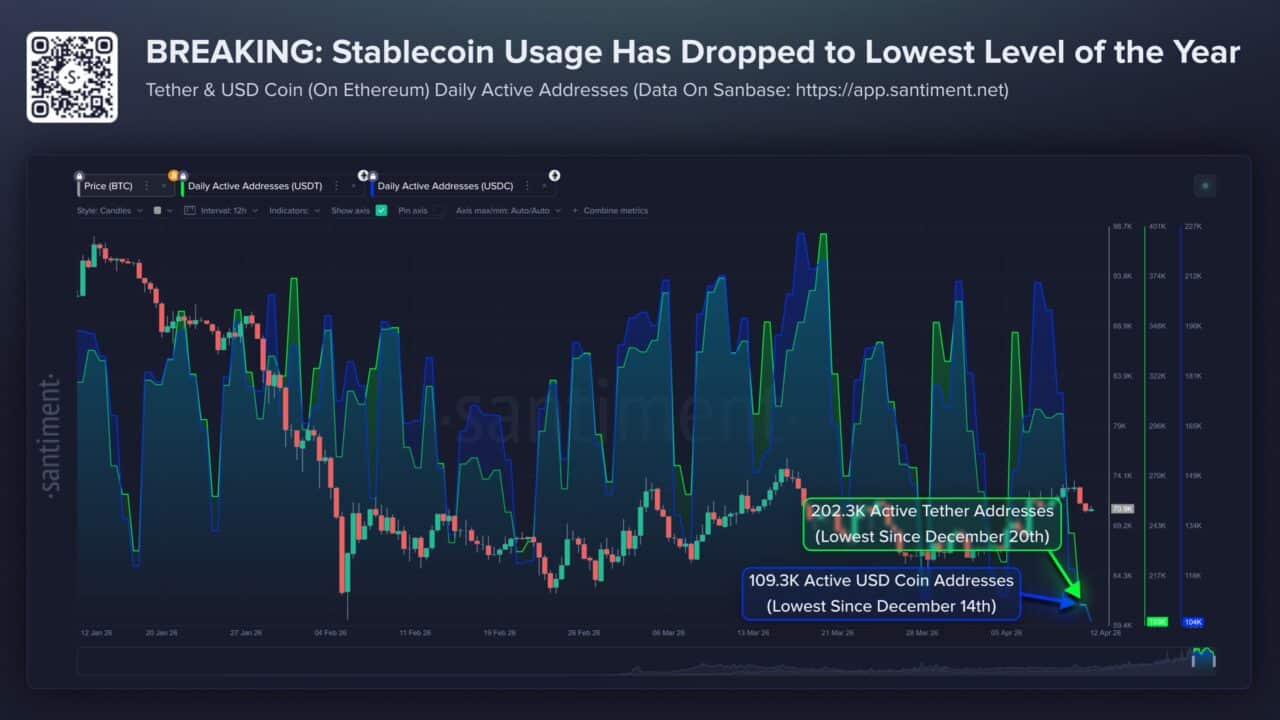
This behavior signals caution, where capital stays idle despite being available, aligning with a prolonged range-bound structure below $75,000. However, as Bitcoin gradually approaches this level, conditions begin to shift.
If momentum strengthens, Ethereum activity may recover, allowing sidelined liquidity to re-enter, increasing volatility; otherwise, continued inactivity may extend consolidation across the market.
Ethereum usage grows despite activity slowdown
However, a deeper structural layer began to emerge on Ethereum, where long-term usage trends contrasted sharply with recent activity declines.
While current engagement weakened, quarterly stablecoin transfer volume continued to rise, now breaching the $8.5 trillion mark, reflecting sustained settlement demand.
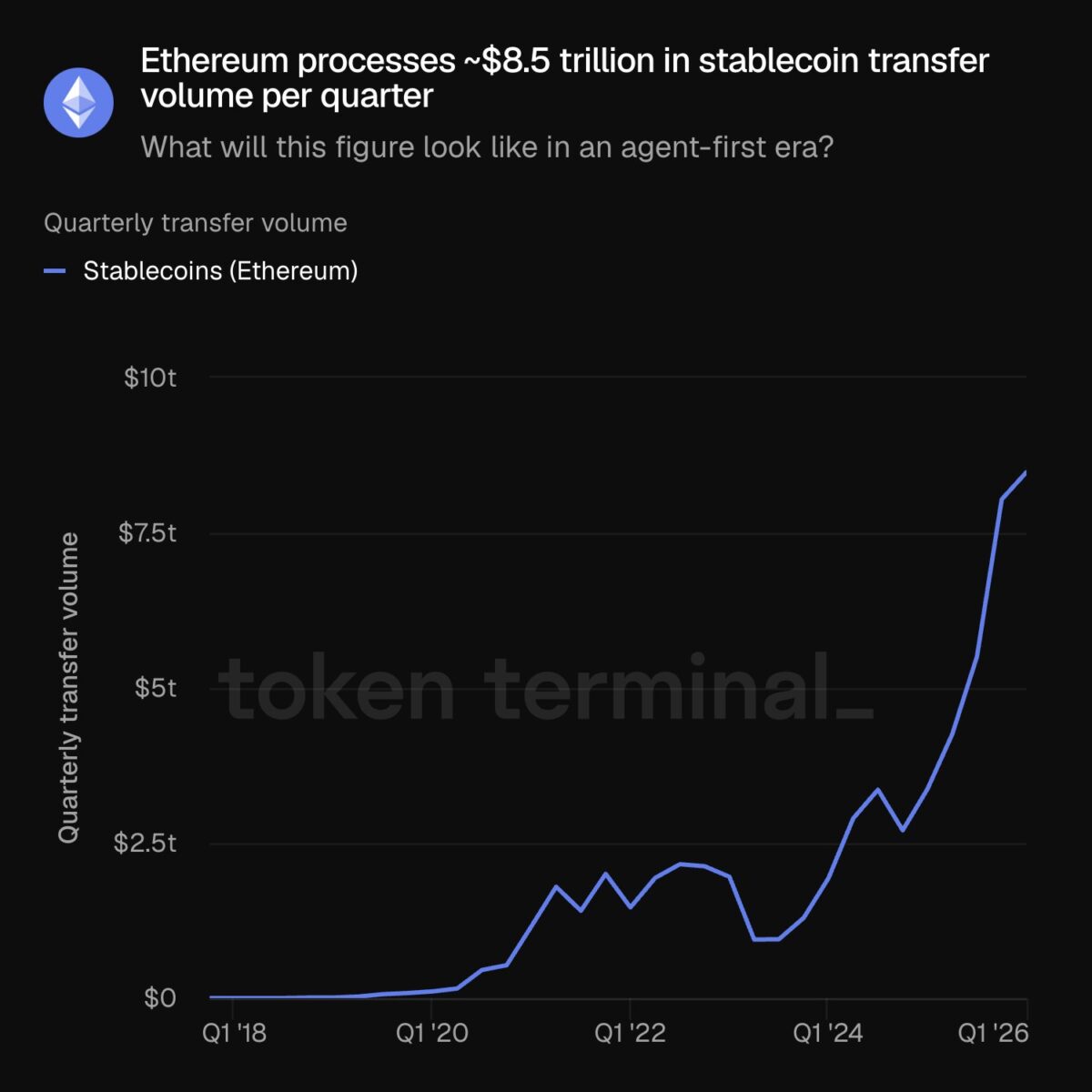
Earlier cycles showed volume near negligible levels through 2018–2019; however, activity accelerated rapidly from 2020, crossing $2 trillion by 2021. As adoption expanded, periodic slowdowns appeared, yet the broader trajectory remained upward, signaling structural growth beyond short-term participation drops.
More recently, volume surged from roughly $3 trillion to above $8 trillion, indicating increasing reliance on Ethereum for large-scale transfers. This divergence suggests that while retail activity slows, underlying network utility remains strong, leaving room for reactivation as market conditions improve.
Stablecoin compression and reactivation risk
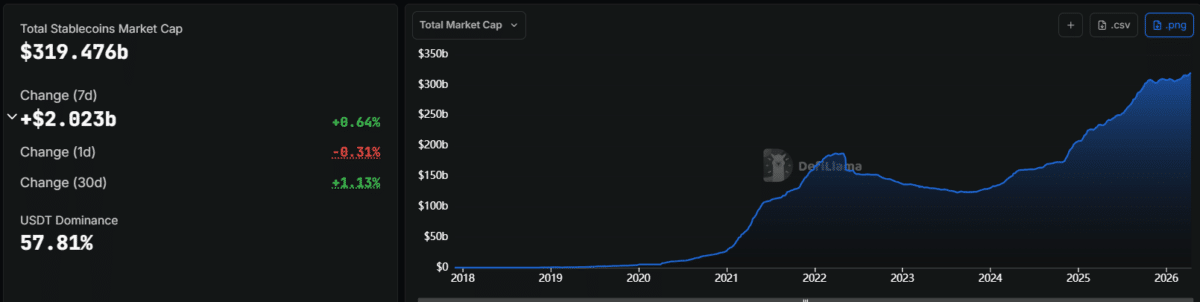
Stablecoin liquidity sat in quiet tension, as supply reached $319.5 billion with modest weekly growth of +0.65% as of writing, reflecting restrained issuance. At the same time, monthly expansion of +1.13% signaled limited capital inflow despite a $2.5–$2.7 trillion market.
Meanwhile, stablecoins accounted for nearly 75% of trading volume, but velocity and exchange inflows remain muted, indicating inactive deployment. As this continued, Bitcoin’s dominance remained near 59%, indicating limited participation and weak altcoin rotation.
In parallel, 30 day- Realized Volatility compressed into the low-40% range, reinforcing a controlled market environment. This setup matters because incremental flows now carry greater impact.
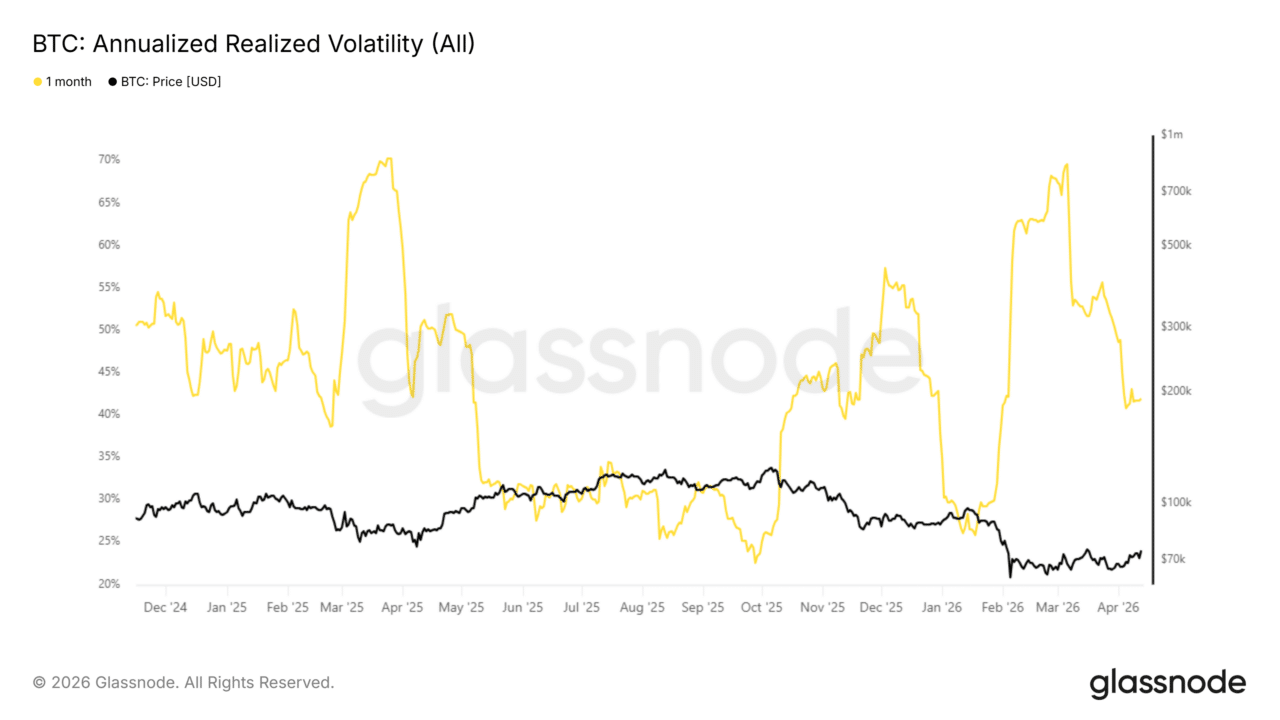
If activity rises with Bitcoin strength, expansion may follow; otherwise, the rally risks staying narrow, with limited breadth and weaker conviction.
All in all, Bitcoin strength may reactivate stablecoin liquidity and broaden participation, while failure to engage capital could keep markets compressed, limiting volatility and upside follow-through.
Final summary
- Ethereum shows strong settlement growth near $8.5 trillion quarterly, yet falling $USDT and $USDC activity signals idle liquidity.
- Bitcoin strength may trigger stablecoin reactivation and broader participation, while weak engagement risks extending a narrow, low-conviction consolidation phase.