
 forbes.com
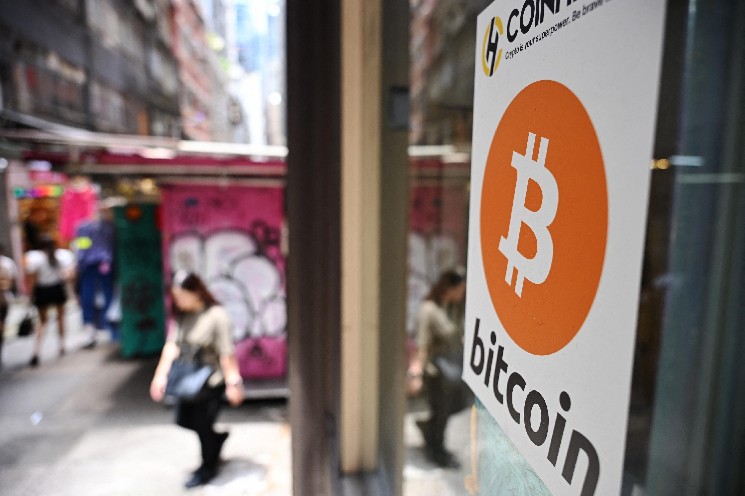
While headlines obsess over Bitcoin prices and regulatory battles, a quieter revolution is unfolding. Crypto infrastructure is quietly becoming the backbone of everything from stock trading to social media monetization. Most users will never know it's there.
The Stealth Takeover
Traditional finance has a user experience problem that’s due to paperwork processes being turned digital. Opening a brokerage account still requires paperwork marathons. International transfers can take days. Trading hours follow century-old schedules. Meanwhile, crypto infrastructure solved these problems years ago, and now it’s being deployed far beyond cryptocurrency thanks to the shift in the regulatory environment.
The evidence is everywhere once you know where to look. MEXC, a crypto exchange with 30 million users, just launched stock futures for Apple, Tesla, and McDonald’s. Coinbase is rolling out embedded wallets that let any app offer financial services with a few lines of code. The common thread? Both are using crypto rails to deliver experiences that traditional finance will strugle to match. This isn't crypto companies trying to become traditional finance. This is crypto infrastructure eating traditional finance from the inside out.
Stablecoins Unlock Stocks For The Rest Of The World
MEXC’s slow transition from a long tail offshore crypto exchange to a stock trading venue reveals how crypto exchanges are becoming the new universal trading platforms. Their stock futures product lets users trade U.S. equities using $USDT settlement, eliminating the need for traditional brokerage accounts entirely.
The exchange identified four distinct user groups driving this convergence: Crypto natives who think in $USDT rather than dollars.Investors in Southeast Asia and Latin America where traditional brokers remain expensive or inaccessible. Younger traders who expect financial services to work like smartphone apps. And experienced traders tired of regulatory hurdles and traditional fee structures.
These aren’t separate markets anymore. Why should crypto users need to exit their native environment just to buy Apple stock? Why should users require USD instead of $USDT to trade stocks? MEXC’s answer: they shouldn’t have to. The convergence is happening on the other side too. More traditional brokers are increasingly incorporating stablecoin deposits, as they seek to provide users with an easier ways to get their money on platform.
Coinbase's Abstraction Play
While MEXC brings traditional assets into crypto environments, Coinbase is making crypto infrastructure invisible for mainstream adoption. Their embedded wallets solve what product managers call the "developer's dilemma" - the choice between controlling user experience and avoiding custody responsibilities.
Traditional wallet experiences require users to understand 12-word seed phrases, browser extensions, and approval modals. As Coinbase’s Yuga Cohler explains, you need crypto expertise just to participate. This creates massive friction for mainstream adoption.
Embedded wallets flip this entirely. Users sign in with Google or email and private keys get generated in secure enclaves, unbeknownst to the user. The crypto complexity disappears behind familiar interfaces. Developers get full UX control without touching user funds.
The technology is already powering Coinbase's own products. Their retail app will soon launch DEX functionality using embedded wallet infrastructure. Users will trade on decentralized exchanges without knowing they're using decentralized exchanges.
But the real innovation is in the bundled services. Embedded wallets come with onramps, swaps, and 4.1% $USDC rewards built in. This creates what Yuga calls the "one-stop shop" - everything needed to build financial applications without stitching together separate services.
The Social Commerce Explosion
The convergence becomes most visible in social applications. Coinbase's Base App lets creators post content and immediately monetize it using embedded financial rails. The emphasis is on monetization of content, with crypto elements deliberately de-emphasized in the interface.
This represents a fundamental shift in how social platforms operate. Instead of relying on advertising revenue or subscription models, creators can capture value directly from their audience using programmable money. Tips, purchases, and speculation all happen within the same interface where content gets consumed.
Zora exemplifies this trend. The platform foregrounds content monetization while abstracting away blockchain complexity. Users engage with digital collectibles and creator economics without needing to understand the underlying infrastructure.
The social finance fusion creates entirely new economic models. Creators could become emancipated from their platofrms, and communities develop not just social but real currencies. Content and commerce merge into seamless experiences that traditional platforms cannot replicate.
The Payments Revolution Hiding in Plain Sight
While crypto exchanges experiment with trading and social platforms explore creator monetization, traditional payments companies are quietly deploying the same infrastructure for mainstream use cases. Remitly's new stablecoin wallet reveals how crypto rails are becoming the default choice for solving age-old problems.
Remitly specializes in serving immigrants and overseas workers who need to send money across borders. Traditional remittance methods are expensive and slow, sometimes taking weeks for recipients to access funds. Converting between currencies adds additional fees and complexity.
The company's solution bypasses traditional banking infrastructure entirely. Their new wallet, launching in September, lets users send and receive stablecoins like $USDC across 170 countries. Recipients can convert to local currency with a single click at significantly reduced fees.
The infrastructure partnership reveals the ecosystem’s maturity. Remitly uses Bridge, the same stablecoin infrastructure provider that powers Stripe's crypto payments. This isn't experimental technology anymore. It's production infrastructure handling real money for mainstream users.
The timing is significant. Currency volatility from recent trade policies has made stablecoins more attractive for cross-border transactions. The Bank for International Settlements reports that cryptocurrencies facilitated roughly $600 billion in cross-border payments in Q2 2024, with $USDC and $USDT leading adoption.
Remitly is also tokenizing portions of its own dollar reserves using stablecoins. This enables faster fund transfers across time zones and outside banking hours, reducing reliance on pre-funded local currency pools. The operational efficiency gains are substantial enough to justify rebuilding treasury operations around crypto infrastructure.
When Everything Becomes Tradeable
All three companies are building toward the same endgame: seamless financial experiences where the underlying infrastructure becomes invisible. Crypto brokers like MEXC talk about 24/7 trading across all asset classes. Coinbase envisions social feeds where financial interactions feel as natural as liking a post. Remitly demonstrates how crypto rails can make traditional services dramatically better.
This vision requires infrastructure that can handle massive scale while remaining invisible to end users. Coinbase's embedded wallets use the same security and compliance systems that power their exchange serving millions of users globally. Remitly leverages the same stablecoin infrastructure that Stripe uses for merchant payments.
The regulatory environment is finally catching up. Recent legislation like the CLARITY and GENIUS Acts provide frameworks for companies to build self-custodial wallet solutions with regulatory certainty. This removes major barriers that previously limited mainstream adoption.
Traditional financial institutions are watching this transformation with growing interest. Their infrastructure was built in a world of phone calls and paper certificates. Crypto infrastructure was built for global, always-on, mobile-first experiences.
The New Financial DNA
What’s emerging is a completely different operating system for money. One where programmable currencies enable new economic models and global settlement happens in seconds rather than days. Where financial services integrate seamlessly into any application, for better or for worse.
The transition is happening faster than most realize because users don’t need to understand it. They just need apps that work better than what came before. MEXC users get more instruments to trade. Coinbase embedded wallet users get seamless onboarding. Creators get direct monetization. Remitly customers get faster, cheaper international transfers. But the crypto infrastructure powering these experiences remains almost invisible.