
 cryptonews.net
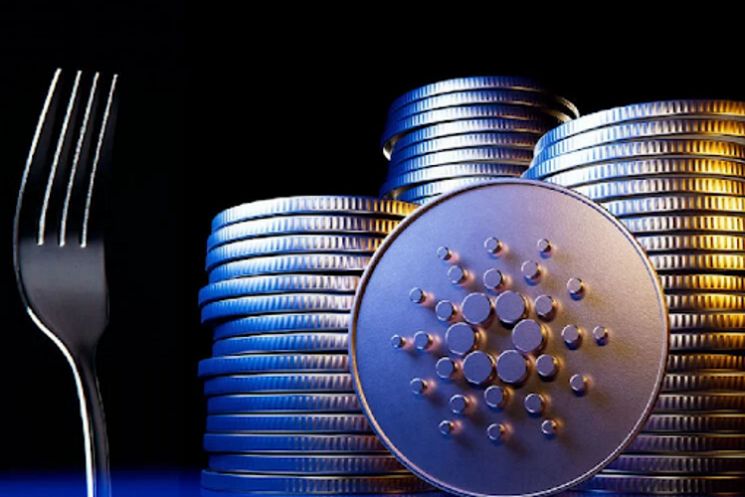
$ADA is currently making implementation preparations for a hard fork. As a result, the blockchain will now invalidate all transactions it back then deemed valid and validate all transactions it initially thought invalid. It is an unchangeable, irreversible update to the blockchain.
Users must install and run an improved program version upon the arduous fork setup. There exists a previous iteration of the blockchain; therefore, a new coin may emerge in the future. This distinguishes it from a soft fork that modifies the protocol and deletes the previous iteration. Hard forks fix issues, stop hackers from stealing cryptocurrency, or improve network performance. However, there is significant controversy around them. Those who own the hard forking currency may not wish to own the upgraded version.
Charles Hoskinson Speaks on the Vasil fork of $ADA
The event is fast approaching, and as per Cardano inventor Charles Hoskinson, it might happen by the end of September. According to him, the imminent Ethereum update known as The Merge has eclipsed the cryptocurrency asset's upgrading. He claims that $ADA, a proof-of-stake (PoS) blockchain, aims to perform a hard fork at or close to the Merge’s anticipated time. On a live Twitter broadcast, Hoskinson stated that the Vasil hard fork may occur in September even though "substantial testing" is still ongoing.
Cardano's hard fork experienced delays at the end of June, just like The Merge.
Four CIPs will be included in the Vasil hard fork. CIP-33 (Scripts references), CIP-31 (Input references), CIP-32 (Datum Inlines), and CIP-40 are. One specific modification, CIP-31, will significantly lower Cardano's transaction fees, as developers explained a few months earlier. The Cardano developers at Input-Output Global (IOG) stated within the first week of May, "Reference scripts minimize your transaction costs."
Having stated that Vasil would occur in September, Hoskinson added that the following significant push would be to get the markets on board. He further noted that ensuring transactions and third parties updates were challenging. More extensive digital assets that push for upgrades encourage sprouting exchanges to do the same.
In the past few days, the mother currency of the blockchain has declined significantly relative to the US dollar amid speculation of a Cardano hard fork. Cardano ($ADA) has lost 20.9% of its USD value over the past fifteen days, and on the most recent day, the daily price range for $ADA lay between $0.441034 and $0.454172 per unit. The digital currency is down 84.8% this year compared to the US dollar and 85.9% from its all-time high on September 2, 2021.
Will Vasil Mark Cardano's Turning Point?
A few things to note. First, it is essential to know that the Vasil hard fork generally modifies existing protocols, even though it may influence the price of $ADA.
Contrary to Alonzo, which opened up a whole new universe of Cardano intelligent contract capability, this is not the case. Vasil appears to be emerging in a bad environment, in contrast to earlier upgrades and hard forks, during periods when the marketplace was solid and bullish. The price of $ADA may rise as a result, but we should temper our optimism with the reality that the market is wholly struggling. As a result, it may be prudent to avoid anticipating a significant price increase too soon.
Given the technical intricacy of the hard fork and its significance in the network's trajectory, it is evident that this is a challenging topic to answer. Vasil, one of the two hard forks that would herald the transition to the fourth development epoch – Basho – is known to be a part of the third growth epoch.
The network has undergone several updates thus far, but Alonzo stands out as the one that everyone in the community eagerly awaited. It allowed the protocol to support smart contracts and transformed it into a blockchain that programmers can use to create decentralized applications. Alonzo needed to be the update that marked a turning point, if there was to be one. In contrast, Vasil attempts to add features and capabilities to enhance the network's fundamental properties and make it more accessible and valuable. But odds are it can't match in terms of acting as a turning point.