
What Restores an Embedded Crypto Wallet After You Lose Your Phone?
By Emine Özmen
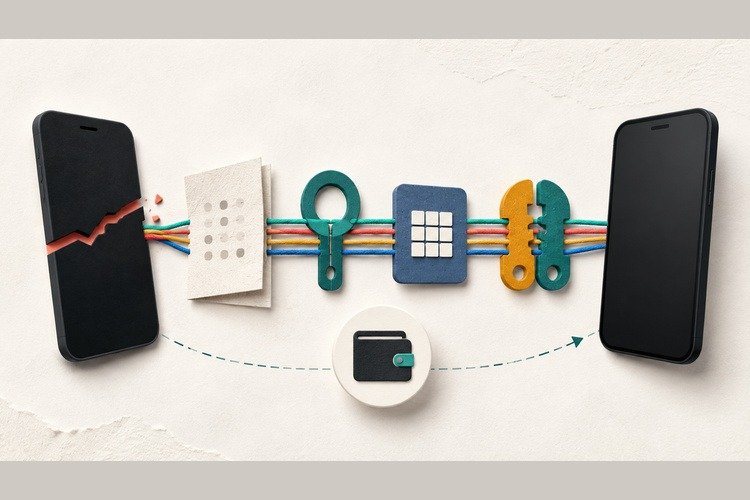
A crypto wallet built into another app can be easy to use until the phone holding it disappears. Losing the device does not always mean losing the wallet, however. Access depends on which credential can recreate or regain the power to approve transactions. A recovery phrase might rebuild the wallet on a replacement device. A synced passkey may return through a cloud account. A device-bound credential may need a separate backup. A self-custody label may describe who approves transfers during ordinary use, but it does not reveal who or what can restore that ability.
In an April 2026 study of 11,000 consumers, the FIDO Alliance found that 75% had enabled a passkey on at least one account and 49% used one regularly when available. A passkey lets a phone or computer verify someone without asking for a reusable password. The familiar fingerprint check or device PIN says little about where the credential is stored or what would restore wallet access on a replacement phone, but it can be a useful starting point for understanding this setup as a whole.

Know when your
coins move
Alerts, real-time prices, and market news — all in one app
 4.8 based on 40K reviews in the App Store and Google Play


Signing Does Not Explain Recovery
Signing authorizes a transaction. Recovery begins when the original credential or device is unavailable. It may recreate the same keys, install a replacement credential, or activate a fallback arranged during setup. A wallet built into another app can therefore leave routine approvals with the user while depending on another account or service after device loss.
The crypto news site AlphaWire launched in 2026, and one of its September reports examined conflicting descriptions of Gram Wallet’s recovery design. One description said a split-key method could depend on control of both a messaging account and an email inbox. Another referred to a conventional 24-word recovery phrase. The report did not establish which version reflected the final design and left open whether the difference resulted from a design change or inconsistent public descriptions. Until current primary documentation settles that conflict, the wallet’s final recovery method remains unconfirmed. A person can approve every transfer personally and still rely on an outside account to regain that ability later.
For a lost phone, first identify which credential normally signs. Then find what can replace or recover it. Finally, check what must remain reachable during that process: a stored phrase, cloud account, email inbox, second device, another key holder, or app account. If an outside service is required, losing access to it can block recovery, even when nobody else routinely approves transactions.
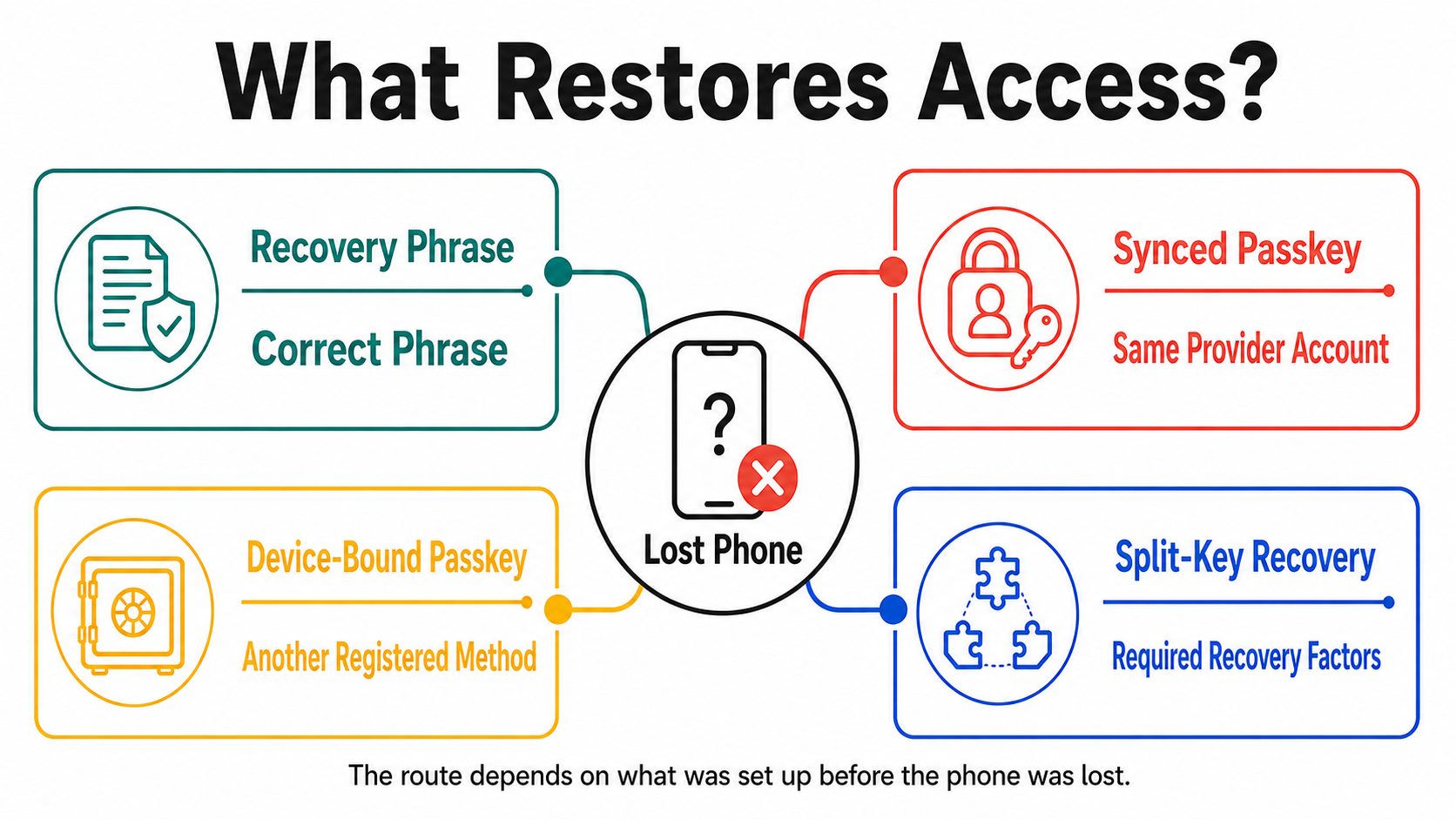
Four Ways Access Can Return
A recovery phrase can rebuild the wallet in compatible software by recreating the private keys used to authorize transactions. No account reset is required, but possession of the phrase becomes decisive.
A synced passkey can become available on another device through the account that synchronizes it. The user avoids typing a recovery phrase, but restoration now depends partly on the account, devices, and recovery process behind the synchronization service.
Suppose a wallet opens on a new phone after its owner signs back into a cloud account and confirms with a face or fingerprint check. That check happens locally, yet the credential became available because the cloud account synchronized it. Losing the cloud account could therefore remove the recovery route, even though later transactions are approved on the phone.
A device-bound credential stays on the original hardware. If that hardware is unavailable, a separate recovery method must already exist. Depending on the wallet, this may be another credential, a backup prepared earlier, or a recovery process defined by the provider. A device-only description is incomplete unless it also explains the fallback.
A split-key process divides recovery authority between two or more components. No single piece completes recovery alone. The decisive details are who controls each component, whether a lost component can be replaced, and whether any account used to retrieve it has its own recovery procedure.
Each route can fail at a different point. A phrase can be lost or copied. Synchronization relies on the account behind it. Device-bound access makes the backup crucial. Split-key recovery depends on the availability and replacement rules of every required component.
Check the Dependency Before You Need It
A June 2026 analysis of passkey-based Web3 wallets explains that synced credentials can extend the relevant security boundary from the local device to the cloud account behind synchronization. Its detailed example concerns one operating system, so the exact behavior should not be applied to every wallet or device. Other designs may use different recovery paths, but every required account or service becomes part of the route back in.
Product documentation should state whether recovery replaces the signing credential, recreates an existing key, or restores a synchronized credential. It should also specify what happens when the phone and a linked account are both unavailable. Instructions that explains transaction approval but say little about device loss describe only ordinary use.
Before storing assets, examine the written recovery instructions without completing an irreversible reset. Confirm which credential signs, which credential restores, and which outside dependency remains. “User controlled” can accurately describe everyday signing while leaving recovery dependent on a cloud account, inbox, provider, or second key holder. After the original device is gone, the decisive fact is the exact combination of credentials that can authorize transactions again.
Image source: Illustration by the author