
SoftGamings Connects Crypto Payments and Casino Infrastructure in One iGaming Stack
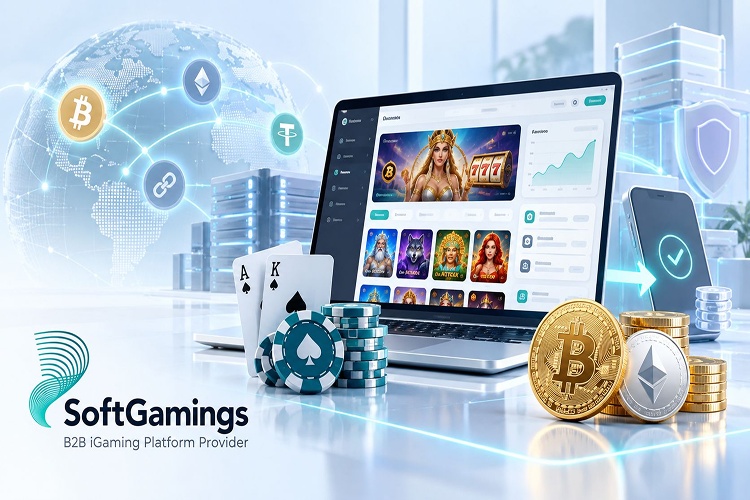
Crypto payments have become familiar across digital markets, but adding Bitcoin or stablecoins to a gambling product is only one part of building a crypto-ready casino. Operators still need game content, player management, reporting, bonus tools, payment workflows, mobile compatibility, and an infrastructure layer that keeps those components connected.
SoftGamings, an iGaming platform provider, approaches crypto as part of that wider operating stack rather than as a standalone feature. Its product portfolio combines casino platform technology with game integration, payment infrastructure, back-office tools, and several launch models for operators at different stages of development.
Why Crypto Casino Infrastructure Is More Than a Wallet
A crypto casino still has the same operational requirements as any other online casino. Players need accounts and balances, games need to launch reliably, payments need to be reconciled, campaigns need bonus and loyalty mechanics, and teams need data for support and reporting.

Know when your
coins move
Alerts, real-time prices, and market news — all in one app
 4.8 based on 40K reviews in the App Store and Google Play


SoftGamings’ crypto casino software is designed around that broader environment. The company says the solution supports multiple currencies and languages, desktop and mobile use, loyalty and bonus mechanics, reporting, CMS functionality, affiliate tools, and integrations with popular cryptocurrencies.
These elements can sit within the same platform architecture used for content, player management, and day-to-day operations, keeping cryptocurrency support integrated with the rest of the casino.
That matters for businesses that want to launch a crypto-focused brand, but it is also relevant to existing casinos. SoftGamings can add cryptocurrency payments to an existing operation or include them as part of a broader platform launch.
The Payment Layer Matters
Accepting digital assets is not only about displaying several coin logos at the cashier. Operators also have to think about wallet ownership, supported blockchains, transaction handling, integration effort, and how deposits and withdrawals connect to the casino’s own account logic.
SoftGamings offers a separate cryptocurrency payment solution that can also be used within its wider platform products. The service supports major digital assets and multiple blockchain networks, including Bitcoin, Litecoin, Ethereum, TRON, BSC, Polygon, and Arbitrum One.
According to SoftGamings, the operator retains the keys to its cryptocurrency wallets rather than handing custody to the software provider. The payment layer is connected through an API, allowing crypto transactions to become part of the same operational flow as other casino activity.
This is particularly useful for operators that do not want their payment stack to become another collection of isolated systems. A crypto payment option can be added separately, but it can also be deployed alongside the platform, game content, reporting, and other operational tools.
One Stack, Several Launch Routes
The same crypto capability can be used across Turnkey, White Label, and Self-Service launch routes, which offer different balances of launch speed, ownership, and technical control.
Turnkey is aimed at operators seeking more ownership and configuration control without building the technology stack from scratch. White Label offers a faster route based on a ready-made operating framework. Self-Service is designed for companies with their own development teams that want more control over the front end while relying on an existing platform engine.
For a crypto-focused project, the key decision is how much technology and operational responsibility the business wants to manage internally.
SoftGamings’ wider portfolio of products and services extends beyond the core platform. Operators can add casino games, a sportsbook platform, payment solutions, and bonus and back-office tools, as well as licensing and banking support, as the project develops.
Why Integration Can Matter More Than the Number of Features
The iGaming market already offers no shortage of individual tools. The harder part is making them work together without creating unnecessary technical and operational overhead.
For crypto casinos, this problem can become more visible because the payment layer introduces additional networks, currencies, wallet workflows, and user expectations. Adding another isolated integration may solve one problem while creating several new coordination points for the operator.
A connected platform model changes the focus. Instead of asking how many separate systems a casino can assemble, the operator can concentrate on how efficiently games, payments, player accounts, reporting, and engagement tools work together.
SoftGamings treats digital-asset support as one component of a broader operating environment that can expand with the project’s business model.
Crypto as Part of the Product Strategy
Crypto casino software is most useful when it supports a defined commercial strategy. Operators still need to decide which currencies fit their audience, which jurisdictions they can serve, how the cashier should be structured, and whether the broader casino experience gives users a reason to stay.
Technology can make those decisions easier to execute, but it cannot replace them.
For businesses that already see a commercial opportunity around crypto-native or crypto-friendly players, SoftGamings offers a way to combine the payment layer with the rest of the casino infrastructure. That can mean launching a dedicated crypto casino, adding digital assets to an existing brand, or building a broader iGaming project in which crypto is one of several supported payment options.
In each case, crypto becomes one component of the operating stack rather than an isolated feature.