
GPU Mining Is Dying — Why Smart Miners Are Switching to GPUNex Rental
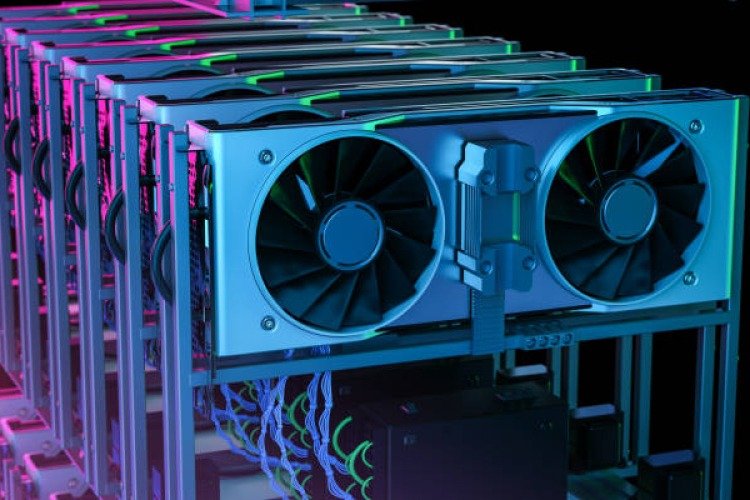
For years, crypto GPU mining was a reliable income stream. Set up a rig, point it at Ethereum, and collect returns. That era is over. Ethereum moved to Proof-of-Stake. Bitcoin requires specialized ASICs. The most profitable GPU-mineable coins now yield between $0.20 and $1.40 per day — before electricity.
But here is what the mining community is only starting to realize: the same hardware that struggles on crypto is now in extreme demand for AI compute. Research labs and enterprises are desperate for GPU power — and willing to pay far more than any mining pool ever did. Platforms like GPUnex, a GPU compute marketplace connecting renters, providers, and investors in a single ecosystem, are making this pivot seamless. The shift from GPU farming to GPU rental is not just viable. It is the most profitable move hardware owners can make in 2026.
The End of Profitable GPU Mining
The numbers are blunt. An RTX 4090 earns roughly $0.80 to $1.20 per day mining Kaspa at $0.10 per kilowatt-hour. That translates to a return timeline stretching beyond two years — assuming coin prices remain stable. Mid-range cards perform even worse.
Mining GPU bitcoin directly has been impractical for years. Even a top-tier consumer card would take tens of thousands of years to mine a single Bitcoin. The network difficulty is designed for ASIC machines, leaving GPU miners permanently outclassed on the most valuable chain.
Meanwhile, crypto GPU mining faces structural headwinds. Memory shortages are pushing hardware prices upward. NVIDIA has cut consumer GPU production by 30 to 40 percent in 2026, prioritizing data center chips. The window for affordable GPU farming hardware is closing fast.
Why Selling Compute Power Pays More
The shift to sell computing power instead of mining is driven by simple economics: AI workloads pay better than hash rates.
Enterprise-grade GPU rental commands between $1.50 and $3.50 per hour for high-end cards. Even consumer GPUs generate meaningful revenue when utilized for AI training or rendering. Compare that to mining returns measured in cents per day.
This is not theoretical. The GPU-as-a-Service market is valued at $5.7 billion in 2025 and projected to reach $25.9 billion by 2031. OpenAI alone needs an estimated 4.8 billion GPU-hours this year. Financial institutions, healthcare systems, and autonomous vehicle developers are all competing for limited compute capacity. When you sell computing power to this market, you tap into demand that dwarfs anything crypto mining ever generated.
GPUnex has positioned its rental marketplace to serve exactly this demand. Enterprises can browse and deploy H100, A100, and L40S GPUs with per-second billing and full root access — the kind of infrastructure that used to require six-figure contracts with hyperscalers. For the supply side, the platform is actively onboarding hardware owners through its provider program, which pays in USDC and lets providers set their own pricing and availability.
GPU Hosting: The New Mining
GPU hosting has emerged as a direct evolution of the mining farm. Instead of running hashing algorithms, hardware owners connect their GPUs to compute marketplaces that match capacity with paying customers. The infrastructure is similar — racks, cooling, power management — but the revenue model is fundamentally stronger.
For former miners, the transition to GPU hosting on a platform like GPUnex is remarkably straightforward. The provider onboarding requires a lightweight Docker agent that benchmarks your GPU and configures networking automatically. Once listed, your hardware appears on the marketplace instantly. The technical requirements — stable power, reliable internet, thermal management, uptime — overlap almost entirely with what any mining operation already has in place.
The critical difference is the revenue model. Mining forces you to compete against ever-increasing network difficulty that erodes margins daily. GPU hosting revenue scales with marketplace demand — which, in the current AI environment, is growing exponentially. GPUnex reinforces this with escrow-based billing and KYC verification, ensuring providers receive guaranteed payouts without chargeback risk.
The Hybrid Strategy
The smartest operators are not choosing between GPU mining and compute rental — they are doing both. When altcoin profitability spikes, hash power flows toward mining. When margins thin, the same hardware switches to AI workloads through rental marketplaces.
This hybrid approach to GPU farming maximizes utilization and diversifies revenue. A rig earning $0.80 per day mining Kaspa might generate several dollars per hour serving AI inference jobs on GPUnex’s network.
For those who want exposure to GPU infrastructure without managing physical hardware, GPUnex also offers an package tier where participants deploy capital into GPU infrastructure packages. Returns are variable and tied to actual compute utilization across the platform — a passive participation model that mirrors the early appeal of crypto mining without the operational complexity. Earnings are credited daily and withdrawable via USDC at any time.
What Comes Next
The convergence of crypto and AI compute is accelerating. Major Bitcoin mining companies like Core Scientific are already leasing excess capacity to AI clients, securing multi-billion-dollar hosting contracts. The infrastructure built for crypto — power distribution, cooling, facility management — turns out to be exactly what AI needs.
For individual GPU owners, the message is clear. Pure crypto GPU mining as a primary income strategy is fading. But GPU hardware has never been more valuable. Whether you rent out your GPUs as a provider, explore infrastructure packages, or run a hybrid mining and rental operation — your hardware still prints value. The question is whether you are pointing it at the right workload.