
Crypto Checkout Goes Mainstream: Why Online Stores Are Putting Stablecoins Next to Cards
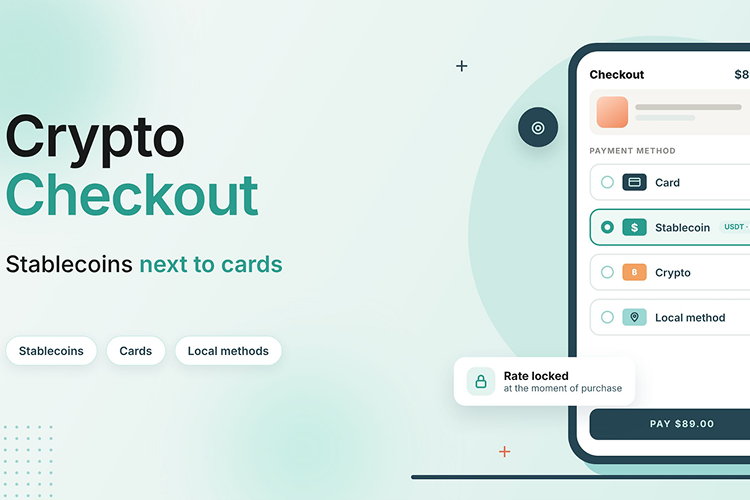
For most of the past decade, paying with crypto online meant visiting a crypto-native shop or a separate payment page that felt bolted on. That is starting to change. Stablecoins are moving from trading desks into everyday commerce, and online merchants are beginning to treat a crypto checkout not as an experiment for enthusiasts but as one more payment option alongside cards, wallets, and local methods.
The shift is less about Bitcoin as a currency and more about infrastructure. Dollar-pegged tokens such as USDT and USDC give buyers a way to pay across borders in seconds, while merchants get a payment rail that works the same way on weekends, holidays, and across time zones.
What changed?
Three developments have pushed crypto payments closer to mainstream ecommerce.

Know when your
coins move
Alerts, real-time prices, and market news — all in one app
 Point your phone camera to install
 4.8 based on 40K reviews in the App Store and Google Play


Regulation became clearer. The European Union’s Markets in Crypto-Assets regulation (MiCA) introduced rules for stablecoin issuers and crypto service providers, and in 2025 the United States passed the GENIUS Act, setting a federal framework for payment stablecoins. Clearer rules make it easier for payment providers, banks, and merchants to work with stablecoins without operating in a grey zone.
Large payment companies moved in. Major payment providers and commerce platforms, including Stripe, PayPal, and Shopify, have added stablecoin capabilities in different forms over the past two years. When the company's merchants already rely on support stablecoins, the step for an individual store becomes smaller.
Stablecoins solved the volatility problem for checkout. A customer paying in USDT or USDC sends a fixed dollar value. Merchants do not need to worry that the price of the payment will change between the order and the settlement in the way it can with more volatile coins.
From a separate crypto page to one unified checkout
Early crypto payment setups often sent shoppers away from the store to a third-party payment screen. That extra step created friction and made crypto feel like a niche option. The newer approach is to place crypto directly inside the same checkout as other methods.
In a unified setup, the shopper sees prices in their local fiat currency and chooses how to pay: card, wallet, a local method, or crypto. If they choose crypto, the amount is calculated at the moment of purchase, and the exchange rate is locked, so the order value stays the same. Merchants can also decide where crypto appears, for example, offering it in markets where card acceptance is weak or cross-border fees are high, while keeping cards as the main option elsewhere.
Some ecommerce platforms now build this into their checkout. One example is the crypto checkout from Checkify Plus, which connects to Binance Merchant Pay and lets merchants accept USDT, USDC, Bitcoin, and other supported coins on the same page as cards and local payment methods, with location-based rules for which options each buyer sees.

What merchants can gain
Wider reach. In many regions, a meaningful share of online shoppers either lack international cards or face high fees and frequent declines when paying foreign merchants. A crypto option can give these buyers a way to complete the purchase.
Faster settlement. Depending on the coin and network, crypto payments typically confirm within seconds to minutes, rather than the days that some cross-border bank transfers can take.
Lower exposure to card disputes. A confirmed on-chain payment cannot be reversed by the buyer’s bank in the way a card payment can. This can reduce the risk of fraudulent chargebacks, although merchants still need a clear refund policy and should handle legitimate customer complaints fairly.
Potentially lower costs. For cross-border sales, crypto payments can cost less than card processing in some cases. The actual difference depends on the provider’s fees, network fees, and how and when funds are converted to fiat.
What merchants should weigh
Adding a crypto checkout is not only a technical decision. Several practical questions are worth answering first:
- Volatility. Stablecoins limit price risk, but coins such as Bitcoin or Ethereum can change in value after the payment if the merchant holds them rather than converting.
- Refunds. Because on-chain payments cannot be reversed, refunds have to be initiated by the merchant. The policy should state how refunds are calculated and in which currency they are returned.
- Compliance and taxes. Rules on accepting, holding, and reporting crypto differ by country. Merchants should check accounting and tax treatment with a qualified advisor and understand the compliance checks their payment provider performs.
- Network details. Sending funds on the wrong network or to the wrong address can lead to losses. A clear checkout interface and support instructions help prevent mistakes.
- Provider dependence. Most stores will rely on a third-party processor. It is worth reviewing that provider’s availability by country, fees, payout options, and account terms.
A practical way to start
Merchants testing crypto payments often begin small:
- Offer stablecoins first, before adding more volatile coins.
- Enable crypto in selected markets where cards underperform, rather than everywhere at once.
- Keep fiat prices visible so shoppers do not need to calculate crypto amounts themselves.
- Track how many buyers choose crypto, how often those payments are complete, and whether average order value or refund rates differ from card orders.
- Review the setup after a few months before expanding it.
What comes next
Crypto checkout is still a small share of online payments, but the direction is clear. As regulation matures and more payment providers support stablecoins, paying with a dollar-pegged token could become as ordinary as choosing a digital wallet, especially for cross-border purchases.
A further shift may come from AI. As AI shopping agents begin to search, compare, and buy on behalf of users, they will need payment methods that are programmable, fast, and available around the clock. Stablecoins fit that description, and some developers are already experimenting with protocols that let software agents pay for goods and services directly. If that model takes hold, a crypto option at checkout may matter not only for human buyers but also for the software that shops for them.
For now, the most practical model is not crypto instead of cards, but crypto alongside them: one checkout, several ways to pay, and the buyer choosing the one that works best for them.
This article is for informational purposes only and does not constitute financial, legal, or tax advice.