
Why Bitcoin ETFs Changed How Regular Americans Buy Crypto
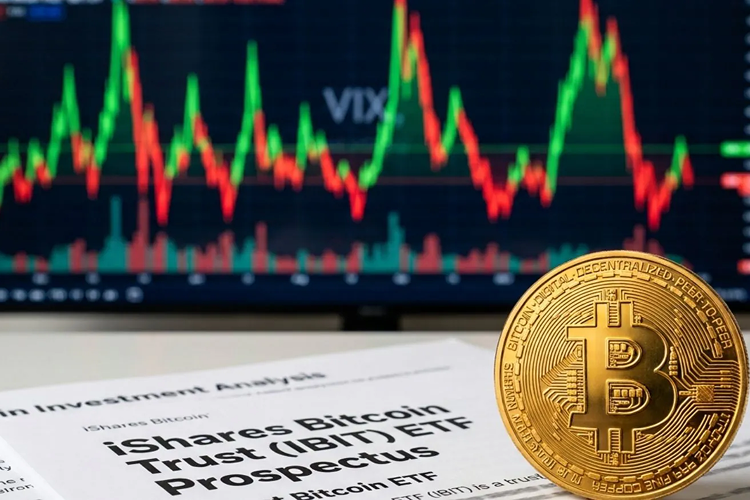
Eighteen months. That’s all it took for BlackRock’s iShares Bitcoin Trust (IBIT) to reach 700,000 BTC, worth roughly $76 billion, after its January 2024 launch. For anyone watching the bitcoin price usd climb over that stretch, the scale of that accumulation was hard to miss.
Numbers like that tend to get filed under ’big investor news’ and forgotten. But there’s a subtler story underneath, and it’s about you; about how ordinary people in the US now buy Bitcoin without ever touching a crypto exchange, a wallet, or a private key.
We’ll walk through what you’re really buying when you pick up a Bitcoin ETF, how it compares to owning the coin outright, and the trade-offs on fees and risk that nobody should skip. By the end, you should be able to tell which door actually fits your goals.

Know when your
coins move
Alerts, real-time prices, and market news — all in one app
 Point your phone camera to install
 4.8 based on 40K reviews in the App Store and Google Play


The On-Ramp Got a Lot Shorter
For years, buying Bitcoin meant setting up an account somewhere new, funding it, and taking on the slightly nerve-wracking job of guarding your own keys. One forgotten password or misplaced seed phrase could wipe out everything, and plenty of early buyers learned that the hard way. The spot ETF removed most of that friction in one move.
Now you can hold Bitcoin exposure inside the same brokerage or retirement account you already use for index funds. These funds are even IRA-eligible.
The money agrees. Total spot Bitcoin ETF assets under management climbed to about $102 billion by late April 2026, up from $86.22 billion earlier that same month.
Part of what smoothed the on-ramp happens out of sight. The robo-advisors and portfolio tools many brokerages now run lean on AI to slot Bitcoin exposure into a wider mix, sizing it against your other holdings the same way they’d weigh a bond fund. You feel it as a tidy suggestion on screen, not as machinery.
The real change here isn’t the price exposure; Bitcoin was always buyable. It’s that Bitcoin now sits on the same account screen as your retirement savings, one line down from an S&P 500 fund.
What You’re Holding
When you buy a Bitcoin ETF, you don’t own Bitcoin. You own shares in a fund that owns Bitcoin. That distinction shapes everything you can and can’t do with it.
Think of the ETF as a sealed container of Bitcoin. It suits retirement money you don’t plan to touch for years, because you get the price movement without the responsibility of custody. What you give up is access to the coin itself; you can’t send it, spend it or move it off the platform. If that flexibility is what you’re after, a direct holding on an exchange like Binance serves a different purpose, letting you interact with the crypto itself rather than a wrapper around it.
Does the choice of fund change your returns much? Not really. IBIT and Fidelity’s FBTC post nearly identical performance because both are fully invested in Bitcoin, according to a Yahoo Finance analysis. The differences come down to convenience and liquidity, not the asset underneath.
It’s worth a word of caution here too. AI chatbots have become a first stop for people researching which fund to pick, and they’re confident even when they’re wrong. Treat their answers as a starting point, then check the fund’s own documents before you act on anything.
So the honest question isn’t which fund is better. It’s what you intend to do with the Bitcoin once you have it, and how long you plan to hold it.
Fees, Volatility and Honest Expectations
Simplicity has a price, and it’s worth knowing yours. Most of the major funds land in a tight range:
-
IBIT charges 0.25%
-
FBTC also charges 0.25%
-
ARKB comes in slightly cheaper at 0.21%
Those are modest fees for the convenience, and they get quietly deducted from the fund rather than billed to you directly. But a low expense ratio doesn’t smooth out Bitcoin’s temperament, and this is where you need clear eyes.
Bitcoin ETFs shed roughly $4.5 billion in early 2026, with Bitcoin sitting about 47% below its peak, oscillating around $67,000 to $68,000. The wrapper is easier to buy; the ride inside it is exactly as bumpy as Bitcoin has always been.
A fair chunk of that day-to-day swing traces back to automated trading. AI-driven funds and high-frequency systems now move a large share of the volume, and they react to signals in milliseconds, which can sharpen a sell-off before any person has read the news. The ETF sits on top of that same restless market.
The recovery came, though. Those same funds went on to post four straight weeks of inflows totaling $824 million by late April 2026.
For scale on the other side of the fence, Binance surpassed 250 million users by the end of 2025. That tells you the direct-access crowd is enormous too; ETFs didn’t replace it, they added a second door.
If the fund removes the hassle but keeps the risk, which part of investing were you really hoping to simplify?
The Wallet Was Never the Point
Strip away the headlines, and the ETF did something subtler than most people credit it for. It didn’t make Bitcoin safer. It made the decision to own it feel ordinary.
That’s a different kind of progress, and arguably a more durable one, because habits outlast hype.
The scale backs it up. Cumulative net inflows into US spot Bitcoin ETFs reached $58.5 billion by April 2026, while IBIT alone crossed the $50 billion AUM milestone, reaching $55.5 billion.
The two financial worlds keep drifting toward each other, too. Binance rolled out trading in more than 7,000 US-listed securities through an integration with the US broker-dealer Alpaca. Crypto platforms are adding stocks; brokerages are adding Bitcoin. The middle ground keeps filling in, and the wall that once separated the two is starting to look decorative.
AI threads through that overlap as well. The same recommendation engines and risk models that pick your index funds are learning to read Bitcoin, which is a reason the asset stopped feeling exotic on a standard account.
So maybe the real winner wasn’t Bitcoin at all. Maybe it was you, the investor who no longer has to pick between two separate financial worlds just to own a little of both?