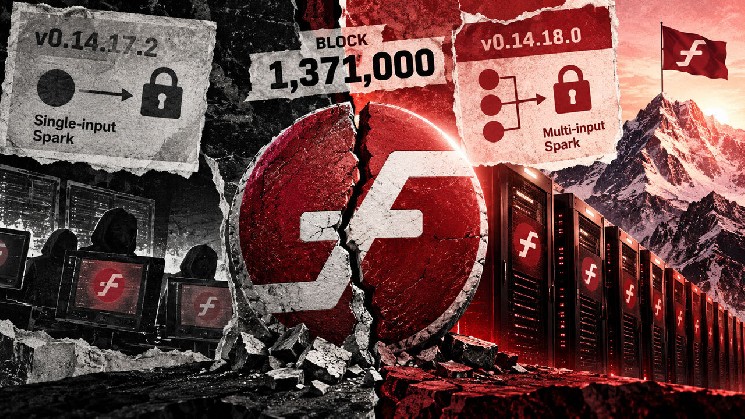
What the Firo hard fork repairs
Spark is Firo’s protocol for private transactions. The project disclosed on Aug. 13 that a flaw in multi-input Spark spends could, under specific conditions, allow forged coins and inflate supply. Firo said the issue did not compromise wallets or keys, let an attacker remove coins from an address, or affect single-input spends.
The researcher who disclosed the flaw generated about 200 FIRO on mainnet in a controlled test. Firo said it had found no evidence of other inflation as of its Aug. 13 notice.
As an interim defense, version 0.14.17.2 restricted Spark spending to one input. Someone assembling a larger payment could split it across several single-input transactions, but the separate amounts could be correlated more easily than a normal multi-input spend. The stopgap protected supply integrity while providing weaker privacy for users who transacted before the permanent fix.
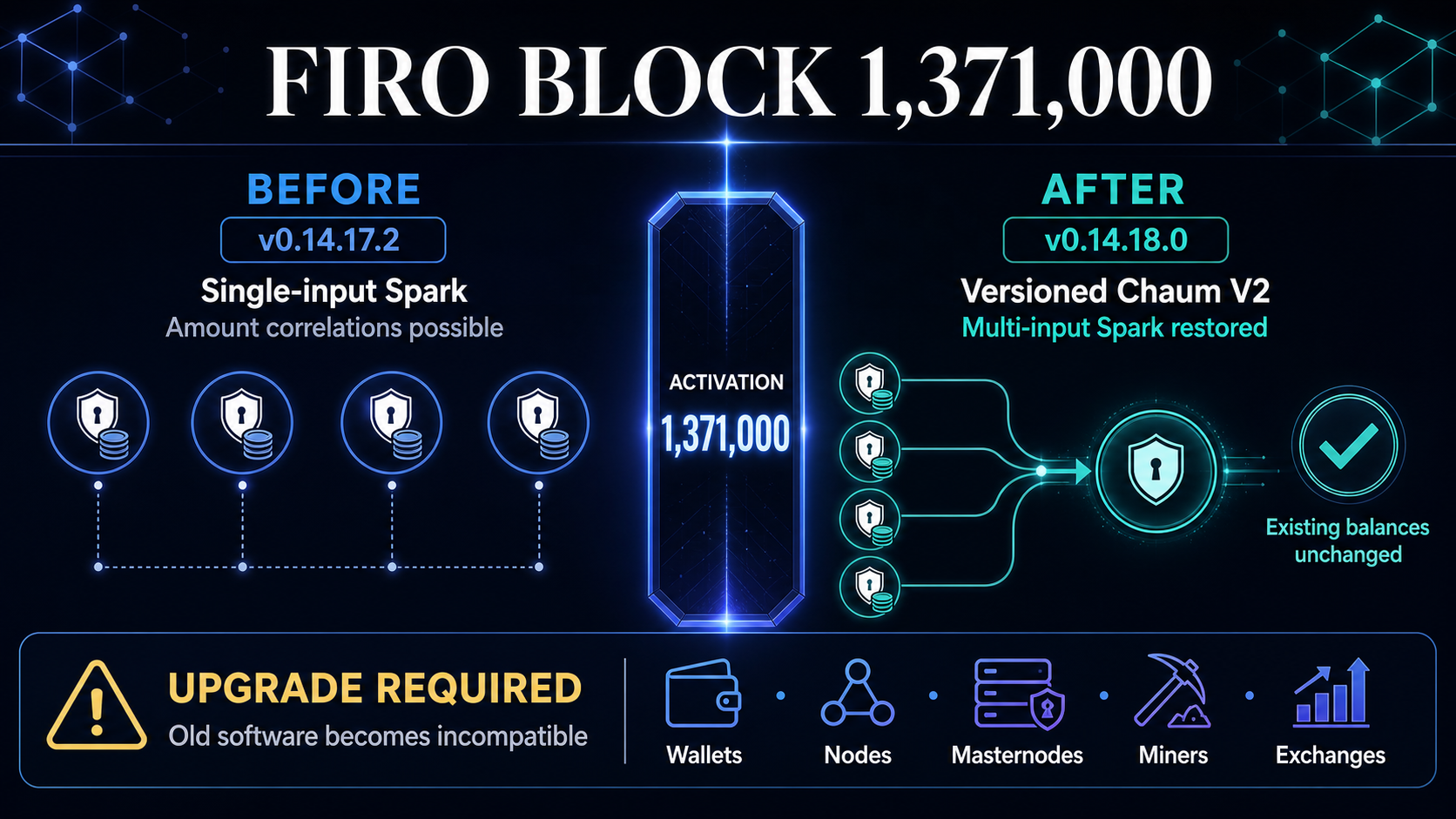
In practical terms, one private payment that would normally draw on several Spark coins could need to be broken into a pattern of separate amounts. Firo’s warning concerned correlations among those amounts; it did not say that the temporary rule exposed wallet keys or let others take funds.
Version 0.14.18.0 introduces a new versioned Chaum V2 proof and transaction format, according to the release notes. At block 1,371,000, updated wallets will automatically resume normal multi-input Spark spending, while the software will continue to validate historical Spark transactions.
Existing Spark coins, balances, addresses and wallet keys stay valid, so funds do not need to be migrated or reminted. The mandatory action applies to people and businesses running affected Firo software or infrastructure, not to a passive balance that remains untouched. The funds persist across the fork, but the software enforcing the network’s rules must change.
Firo said it plans to publish a full technical disclosure and post-mortem after the fork activates.

 cryptoslate.com