Enhancing Cybersecurity through Control-Flow Monitoring
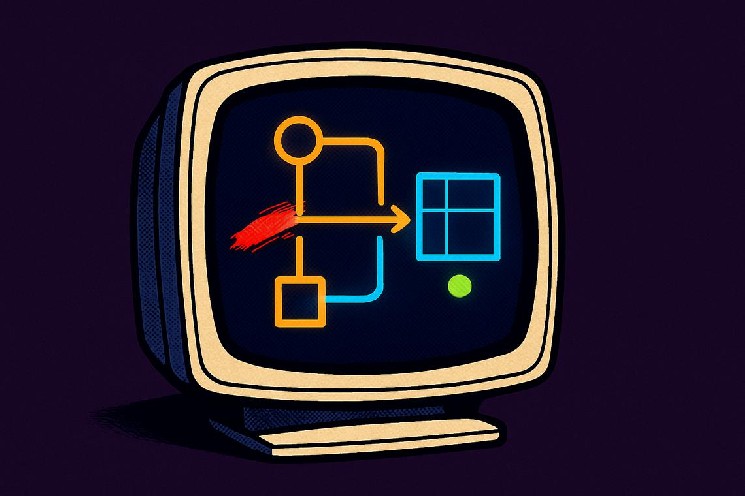
Control-flow anomaly detection works by tracking the sequence of steps a piece of software actually executes and flagging deviations from what is expected. It gives defenders a way to catch problems as they happen rather than after damage is already done, which is why the paper frames it as a foundational tool for run-time system integrity.
Detecting Integrity Anomalies and Using Attack Trees
According to the paper, this kind of monitoring provides “a principled basis to ensure integrity and detect possible anomalies at run-time.” Once something unusual is flagged, the next challenge is figuring out what it actually means. That is where attack trees come in: these structured models map detected anomalies to specific categories of cyber-attacks, helping analysts move from a vague red flag to an actual diagnosis. In effect, attack trees turn a raw anomaly signal into an interpretable hypothesis about what an attacker is trying to do.
Challenges of Attack Camouflage in Control-Flow Detection
The core weakness of this setup is that the very control-flow signal being watched can itself be manipulated. Sachenbacher’s paper is explicit about this vulnerability, noting that the approach “is vulnerable to camouflage, by which attackers try to evade detection… by deliberately manipulating also the system’s observed control flow.”
Why Software-Level Observation Alone Falls Short
This matters because a skilled attacker does not just break into a system — they can also tamper with the trail that a monitoring tool relies on to spot them. The paper describes a realistic failure mode: a software-level observer notices a control-flow deviation that looks odd but not dangerous, attributes it to a harmless cause using an attack tree, and never realizes a genuine intrusion is unfolding underneath. In other words, the detection system technically “works” and still misses the real attack, because the attacker has learned to make the malicious activity look ordinary from the software’s vantage point.
A Model-Based Combined Hardware-Software Monitoring Approach
The paper’s central proposal is to stop relying on a single observation layer and instead combine software-based and hardware-based monitoring into one architecture. This matters because it directly targets the camouflage problem: an attacker who successfully fools software-level checks still has to get past an independent hardware layer that watches the same activity from a different vantage point.
How the Two Layers Work Together
In this design, software-level observation does the first pass, flagging activity that looks suspicious. Hardware-level monitoring then checks that same activity independently and in far greater detail, which the paper says makes it “much harder for attacks to camouflage themselves and go undetected.” Because the hardware layer is separate from the software being monitored, an attacker who manipulates the software’s own view of its control flow cannot simultaneously fake what the hardware sees.
To demonstrate the value of this setup, the paper walks through an authentication-service scenario. A software-level observer initially sees an anomalous but seemingly harmless control-flow deviation and maps it, via an attack tree, to a low-severity configuration or maintenance issue. But a second, independent hardware control-flow monitor observes the actual transition sequence taking place in the system — and that additional evidence changes the diagnosis entirely, upgrading it from a minor glitch to a high-confidence code-injection or control-flow hijack. The example shows concretely how a hardware check can correct a diagnosis that software monitoring alone got wrong.
Benefits of the Combined Approach in Cyber-Attack Identification
Why does this combination matter for the broader field? Because it does not just catch more attacks — it also improves how confidently analysts can tell benign anomalies apart from serious cyber-attacks. The paper concludes that combining control-flow anomaly detection, attack-tree-based intrusion identification, and hardware-based monitoring “can improve not only anomaly detection, but also the diagnostic precision” of attack-tree-driven analysis.
That distinction between detection and diagnostic precision is significant. A system can technically detect that something is wrong while still misclassifying the severity or nature of the problem, as the authentication-service example shows. By adding a hardware layer that independently verifies what software observation flags, the model-based approach gives defenders a second opinion that is much harder for an attacker to spoof, strengthening confidence in the final call on whether an anomaly is truly a benign quirk or an active intrusion in progress.
FAQ
What is control-flow monitoring in cybersecurity?
It is a method that detects integrity anomalies at run-time by monitoring the execution paths of software.
How do attack trees help in cyber-attack identification?
Attack trees analyze detected anomalies to identify possible types of cyber-attacks based on modeled attack structures.
Why is hardware-level monitoring important alongside software monitoring?
Hardware-level monitoring independently verifies activities in greater detail, preventing attackers from camouflaging attacks within software-level observations.
How does the proposed combined approach improve cybersecurity?
By integrating control-flow anomaly detection, attack trees, and hardware monitoring, it enhances both detection sensitivity and diagnostic precision, especially in identifying true intrusions.
Article produced with the assistance of artificial intelligence and reviewed by the editorial team.

 en.cryptonomist.ch