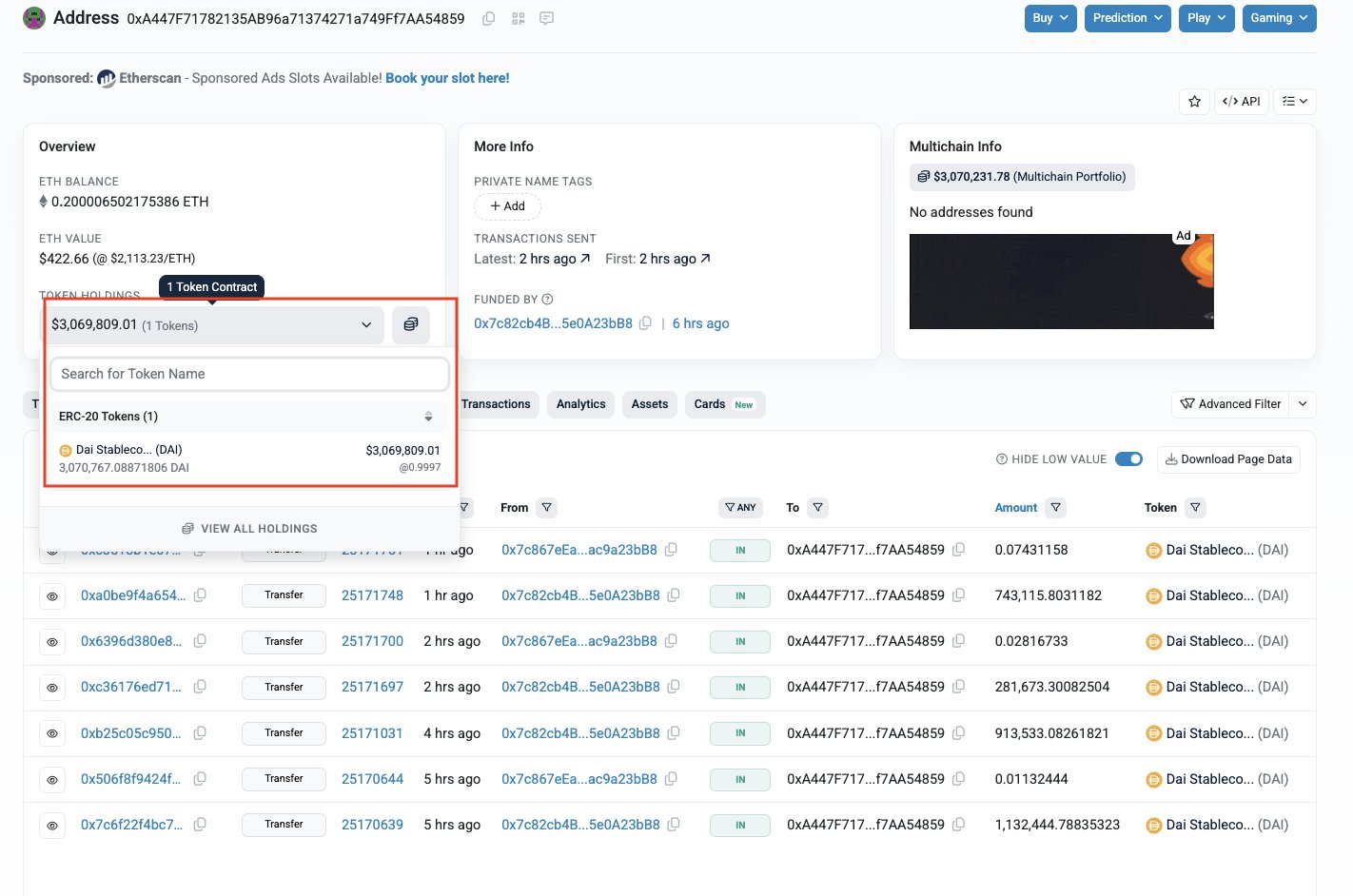
Through Uniswap V3, the hacker forcibly swapped the victims' real tokens for fake tokens, then extracted liquidity and withdrew the funds to wallet "0xA447...54859". As a result, the hacker drained 86 Gnosis Safe addresses across Ethereum and Base in just two hours, stealing 3.07 million DAI.
Why is Squid Router not involved?
The panic in the media arose solely because of the name of the vulnerable contract. The Squid Router team and its co-founder known online as "fig" quickly stated that the SquidRouterModule contract belongs to an unknown third-party smart wallet that integrated Squid without the developers' knowledge. The platform's original contract, "0xce16F69375520ab01377ce7B88f5BA8C48F8D666", has a different architecture and was not affected.
User funds and approvals across all 100+ networks are fully safe.
This incident is unrelated to Squid’s core protocol and contracts. All Squid users and integrators are unaffected and no action is needed.
A third-party Gnosis Safe module was exploited today across Base and Ethereum, resulting in approximately $3.2M in losses. The vulnerable… https://t.co/I3gGmdBvE9
— squid (@squidrouter) May 25, 2026
The attempt to damage Squid's reputation happened at the moment of the project's maximum media rise: on May 22, the platform announced a strategic $6 million round from Ripple, North Island Ventures and angels from Axelar and Ledger. These funds are aimed at expanding the ecosystem, which since 2023 has already processed more than $6 billion in volume for one million users.
The incident has no impact on the operations, infrastructure or development plans of the legitimate DeFi protocol.

 u.today