The move builds on earlier efforts by Thailand’s Securities and Exchange Commission and the TDO to curb money laundering and investment scams involving digital assets. In February 2025, the SEC said it had worked with the TDO, the Bank of Thailand, the Cyber Crime Investigation Bureau, the Central Investigation Bureau, the Anti-Money Laundering Office and the Thai Bankers’ Association to establish additional safeguards against mule accounts.
That effort led to Thai digital asset operators reportedly freezing 47,692 mule accounts in 2025.
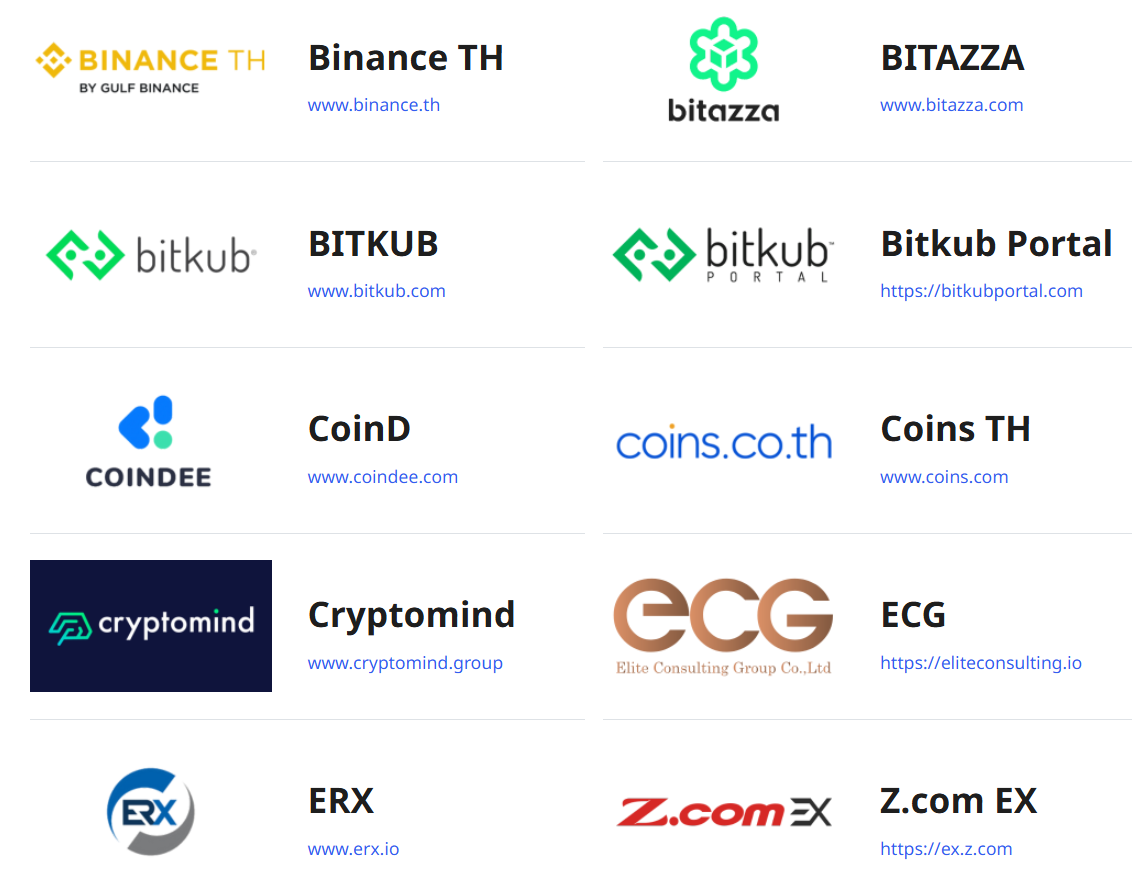
TDO members directory. Source: TDO.or
The TDO represents licensed digital asset operators in Thailand, including exchanges and brokers.
Cointelegraph has contacted the TDO for comment on the total value of frozen funds but had not received a response by publication.
Related: Thailand approves crypto as underlying assets in derivatives markets
SEC, TDO team up to fight mule crypto accounts
During the February 2025 workshop, the SEC and TDO joined other regulators, police agencies and banking groups to develop additional measures for identifying and restricting suspicious accounts.
“The SEC and the TDO have jointly developed guidelines for monitoring and investigating suspicious accounts,”SEC Deputy Secretary-General Jomkwan Kongsakul said at the time.
“In today’s meeting, apart from enhancing industry standards to tackle digital asset mule accounts, we have issued measures for addressing different types of mule accounts within an expedited timeframe,” she added.
The agencies also agreed to expand href="https://cointelegraph.com/news/bithumb-faces-partial-suspension-south-korea-aml-kyc">Bithumb faces possible six-month partial suspension in South Korea
The latest reported freezes come as Thailand launched a campaign against so-called “gray money,” tightening oversight across physical gold markets and digital assets to close money-laundering loopholes, Cointelegraph reported on Jan. 13.
For crypto activity, the government ordered the SEC to strictly enforce the Travel Rule, requiring licensed crypto asset service providers to collect and transmit identifying information about the sender and recipient of certain digital asset transactions, particularly in wallet-to-wallet transfers facilitated by exchanges.
Magazine: How crypto laws changed in 2025 — and how they’ll change in 2026

 cointelegraph.com