A Ledger user reported receiving a similar letter last year in October, with the letter claiming recipients must complete mandatory “Transaction Check” procedures.
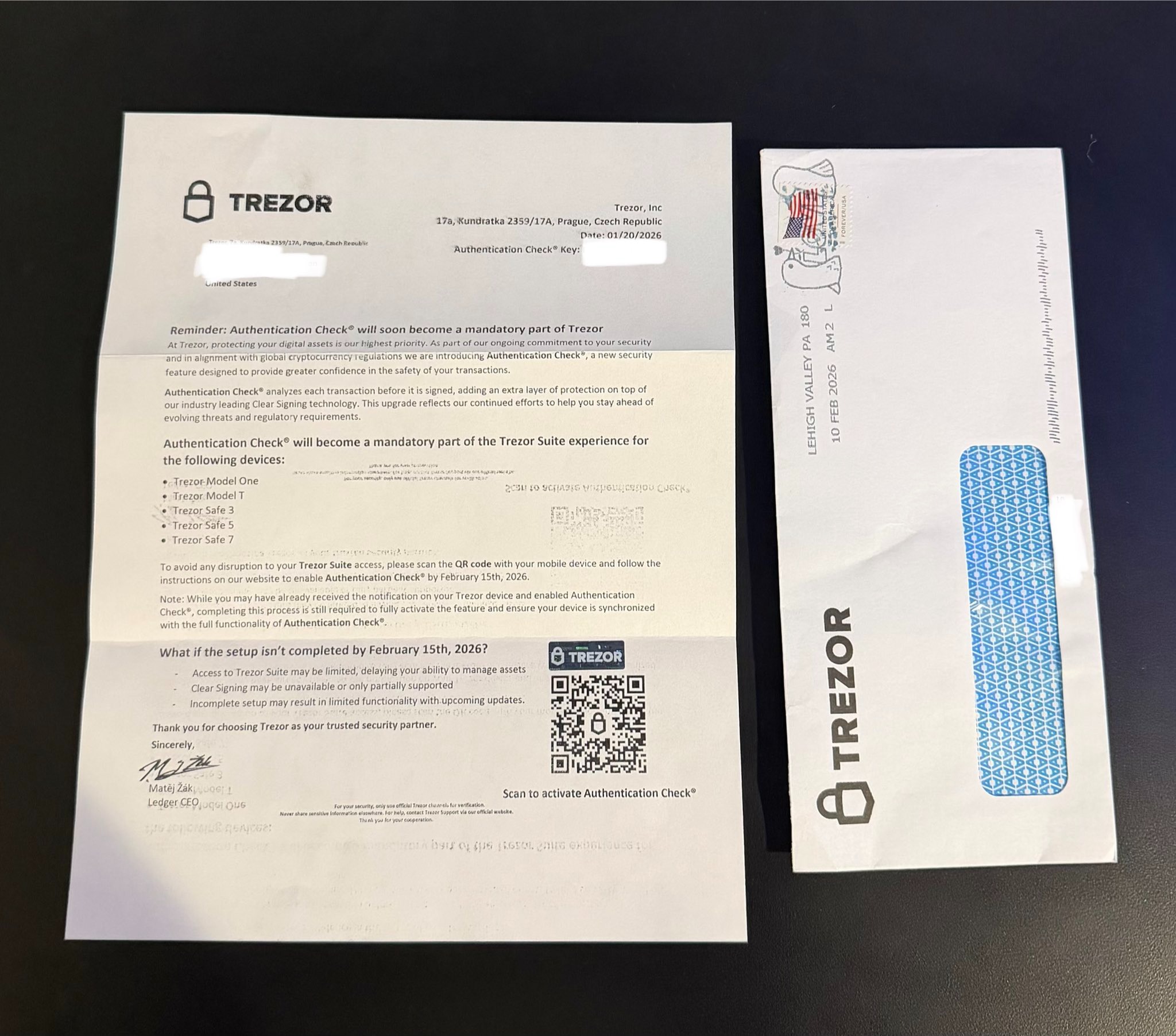
Fake letter sent to Trezor customers. Source: Dmitry Smilyanets
Scanning a malicious QR code for “mandatory” checks
The QR code reportedly takes the victim to a malicious website made to look like Ledger and Trezor setup pages, tricking users into entering their wallet recovery phrases.
Once entered, the recovery phrase is transmitted to the threat actor through a backend API, enabling them to import the victim’s wallet onto their own device and steal funds from it.
Related: Phishing scammers spoof Ledger’s email to send bogus data breach notice
Legitimate hardware wallet companies never ask users to share their recovery phrases through any method, including website, email, or snail mail.
Not the first time letters have been sent
Ledger and its third-party partners have suffered multiple large-scale data breaches over the past few years, resulting in leaks of customer data, including physical addresses used for postal purposes, and physical threats.
Meanwhile, Trezor flagged a security breach that exposed the contact information of nearly 66,000 customers in January 2024.
In 2021, scammers mailed counterfeit Ledger Nano hardware wallets to victims of the 2020 Ledger data breach.
Physical letters prompting victims to scan QR codes were sent in April 2025, while in May, hackers used fake Ledger Live apps to steal seed phrases and drain crypto from victims.
Ledger alerted users to the physical mail phishing scam on its website in October.
Magazine: Coinbase misses Q4 earnings, Ethereum eyes ‘V-shaped recovery’: Hodler’s Digest

 cointelegraph.com