In parallel, large portions of the Bitcoin were bridged across Ethereum (ETH), Ripple (XRP) and Litecoin using THORChain, a move that allowed the attacker to shift value between blockchains without relying on centralized exchanges. The activity reignited debate around how decentralized cross-chain infrastructure can be abused during large-scale thefts.
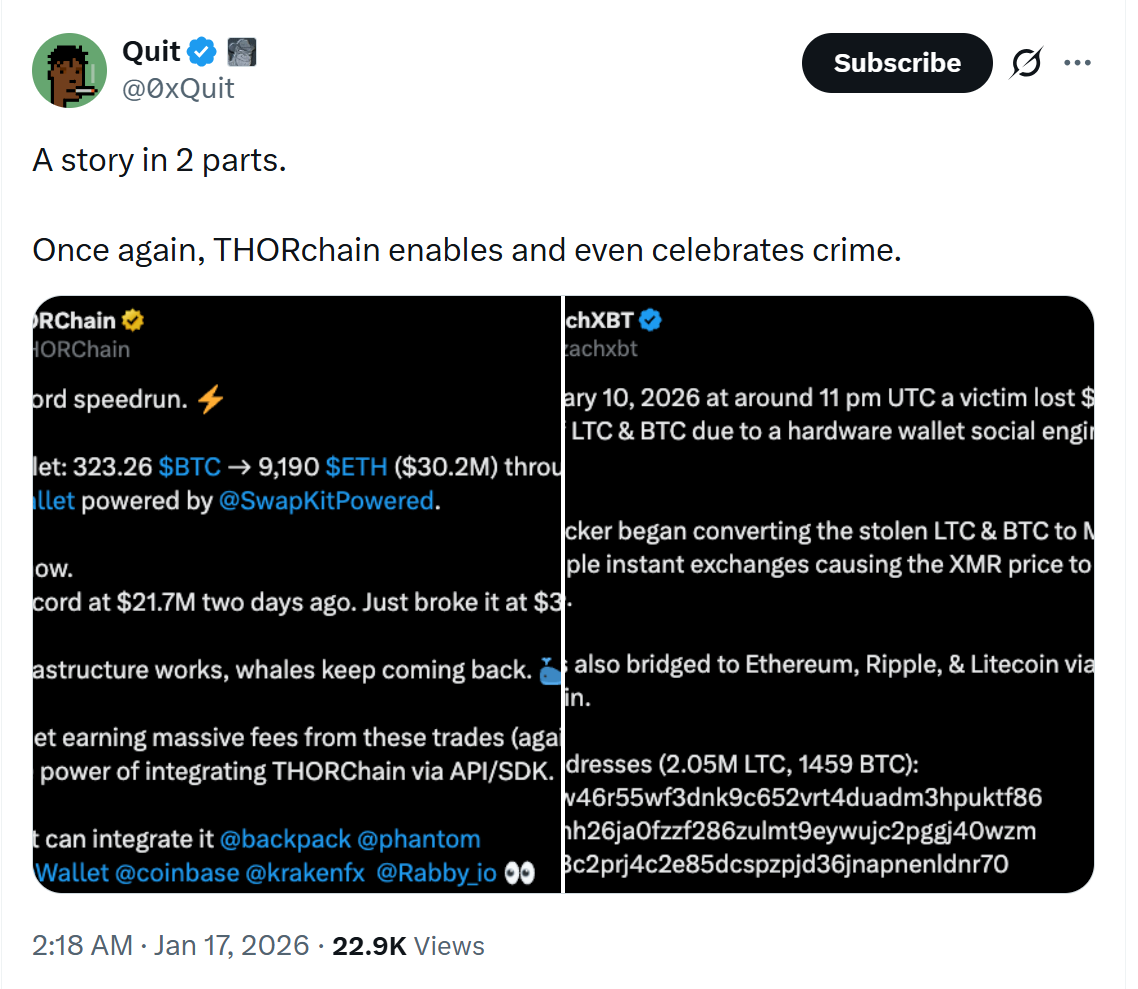
Users slam THORchain for allowing hacker to shift funds. Source: Quit
Related: Truebit exploit exposes smart-contract flaw behind $26M token mint
$700K of stolen funds frozen
In a Friday post on LinkedIn, security firm ZeroShadow said it was able to trace and flag parts of the stolen flow in real time after being alerted by blockchain monitoring teams. Within roughly 20 minutes, about $700,000 worth of funds were reportedly frozen before they could be fully swapped into privacy-focused assets.
ZeroShadow claimed it identified the victim as a Bitcoin address “belonging to an individual who had been tricked into sharing their seed phrase by an actor impersonating Trezor “Value Wallet” support.”
ZachXBT also rejected claims that the attack might be linked to a state-sponsored hacking group. “It’s not North Korea,” he wrote.
Related: The hidden risk of public WiFi: How a single approval wiped a crypto wallet
Elderly US Bitcoin holder loses $330 million
Last year, an elderly US individual reportedly fell victim to a $330 million Bitcoin theft in another major social engineering scam. The victim had held more than 3,000 $BTC since 2017 with little prior activity, according to blockchain data.
After the funds were moved, the attacker rapidly laundered the Bitcoin using peel chains and multiple instant exchanges, ultimately swapping much of the stolen $BTC into Monero to obscure its trail.
Magazine: How crypto laws changed in 2025 — and how they’ll change in 2026

 cointelegraph.com