The data shows that the small team of six North Korean IT workers shares at least 31 fake identities, obtaining everything from government IDs and phone numbers to purchasing LinkedIn and UpWork accounts to mask their true identities and land crypto jobs.
One of the workers supposedly interviewed for a full-stack engineer position at Polygon Labs, while other evidence showed scripted interview responses in which they claimed to have experience at NFT marketplace OpenSea and blockchain oracle provider Chainlink.
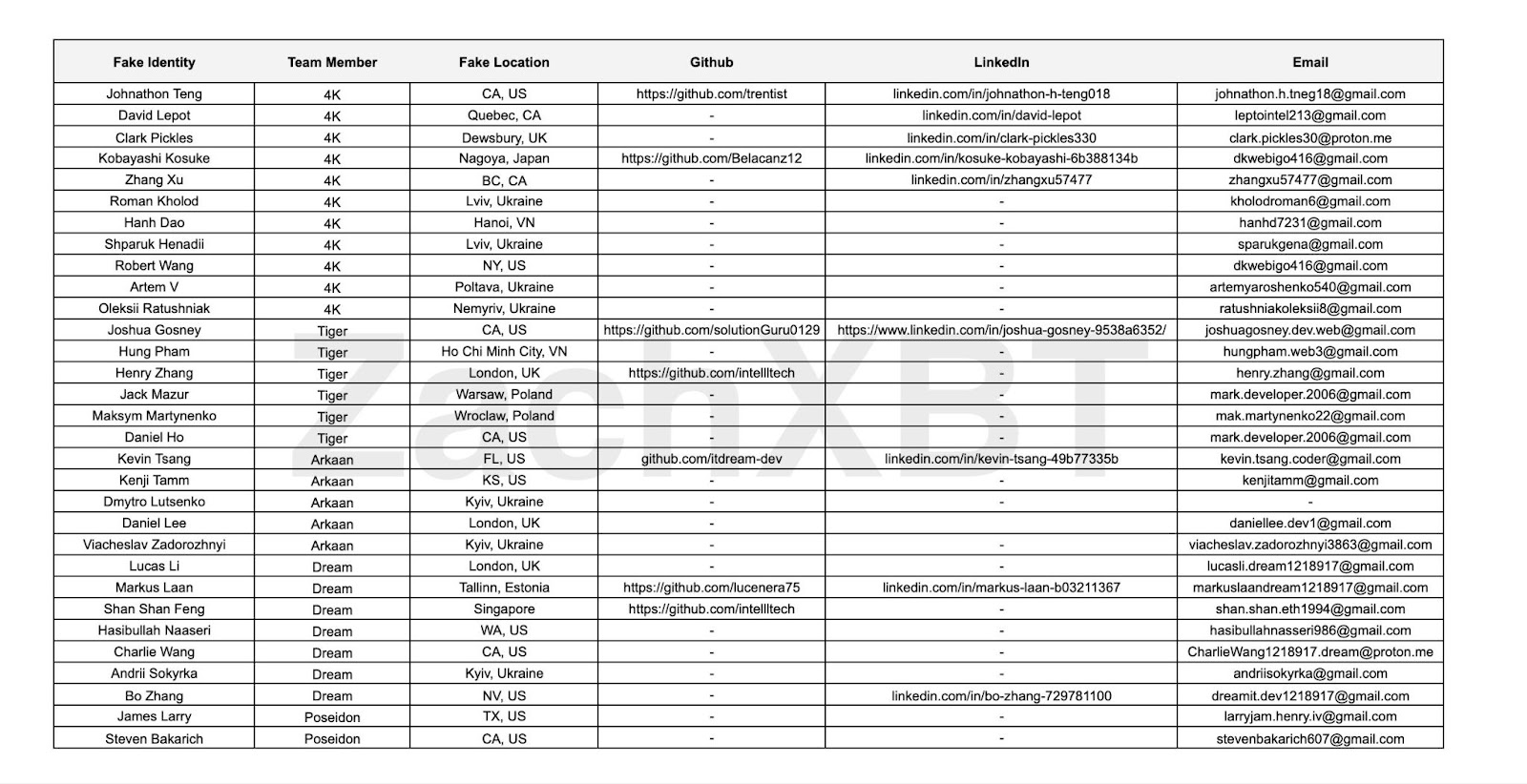
Fake list of identities involved in the North Korean IT scam operation. Source: ZachXBT
Google, remote working software
The leaked documents show the North Korean IT workers secured “blockchain developer” and “smart contract engineer” roles on freelance platforms like Upwork, then use remote access software like AnyDesk to carry out the work for unsuspecting employers. They also use VPNs to hide their true location.
Google Drive exports and Chrome profiles show they used Google tools to manage schedules, tasks and budgets, communicating mainly in English while using Google’s Korean-to-English translation tool.
One spreadsheet shows IT workers spent a combined $1,489.8 on expenses in May to carry out their operations.

Interview notes/preparation, likely intended to be referenced during an interview. Source: ZachXBT
North Korean IT workers tied to recent $680,000 crypto hack
The North Koreans often use Payoneer to convert fiat into crypto for their work, and one of those wallet addresses —“0x78e1a” — is “closely tied” to the $680,000 exploit on fan-token marketplace Favrr in June 2025, ZachXBT said.
Related: Crypto crime unit with $250M in seizures expands with Binance
At the time, ZachXBT alleged the project’s chief technology officer, known as “Alex Hong,” along with other developers, were actually DPRK workers in disguise.
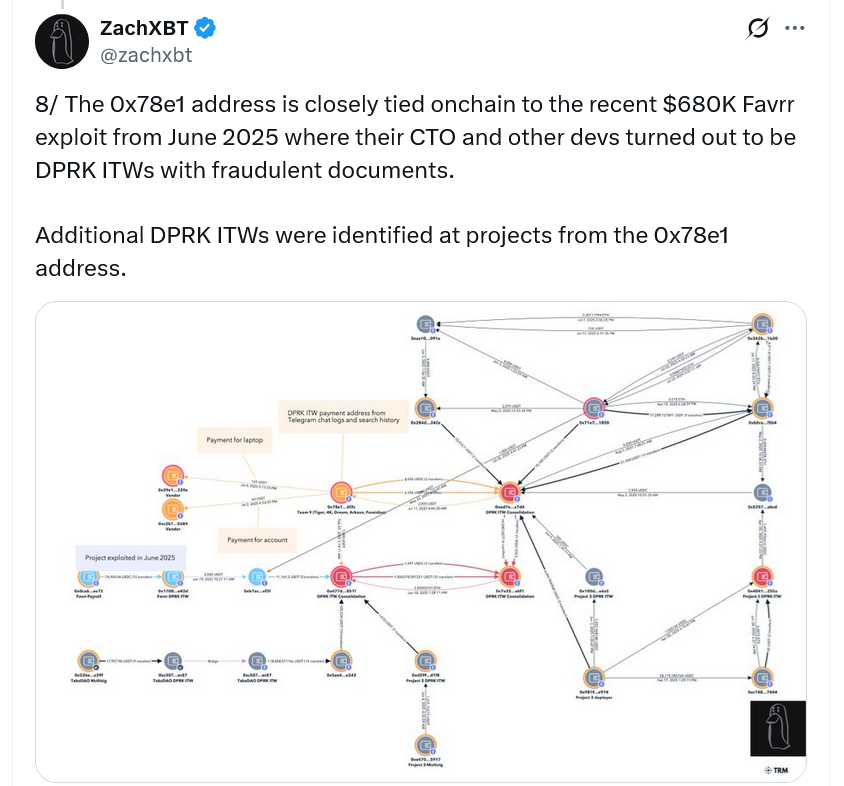
Source: ZachXBT
The evidence also provides insight into their areas of curiosity. One search asked whether ERC-20 tokens can be deployed on Solana, while another sought information on the top AI development companies in Europe.
Crypto firms need to do more due diligence
ZachXBT called on crypto and tech firms to do more homework on potential hirees — noting that many of these operations aren’t highly sophisticated, but the volume of applications often leads to hiring teams becoming negligent.
He added that a lack of collaboration between tech firms and freelance platforms further contributes to the problem.
Last month, the US Treasury took matters into its own hands, sanctioning two people and four entities involved in a North Korea-run IT worker ring infiltrating crypto firms.
Magazine: Altcoin season 2025 is almost here… but the rules have changed

 cointelegraph.com