Prior to the theft, the targeted wallet held $527,498 in $AAVE. By the time the hacker was done, the victim had only $197,755 left.
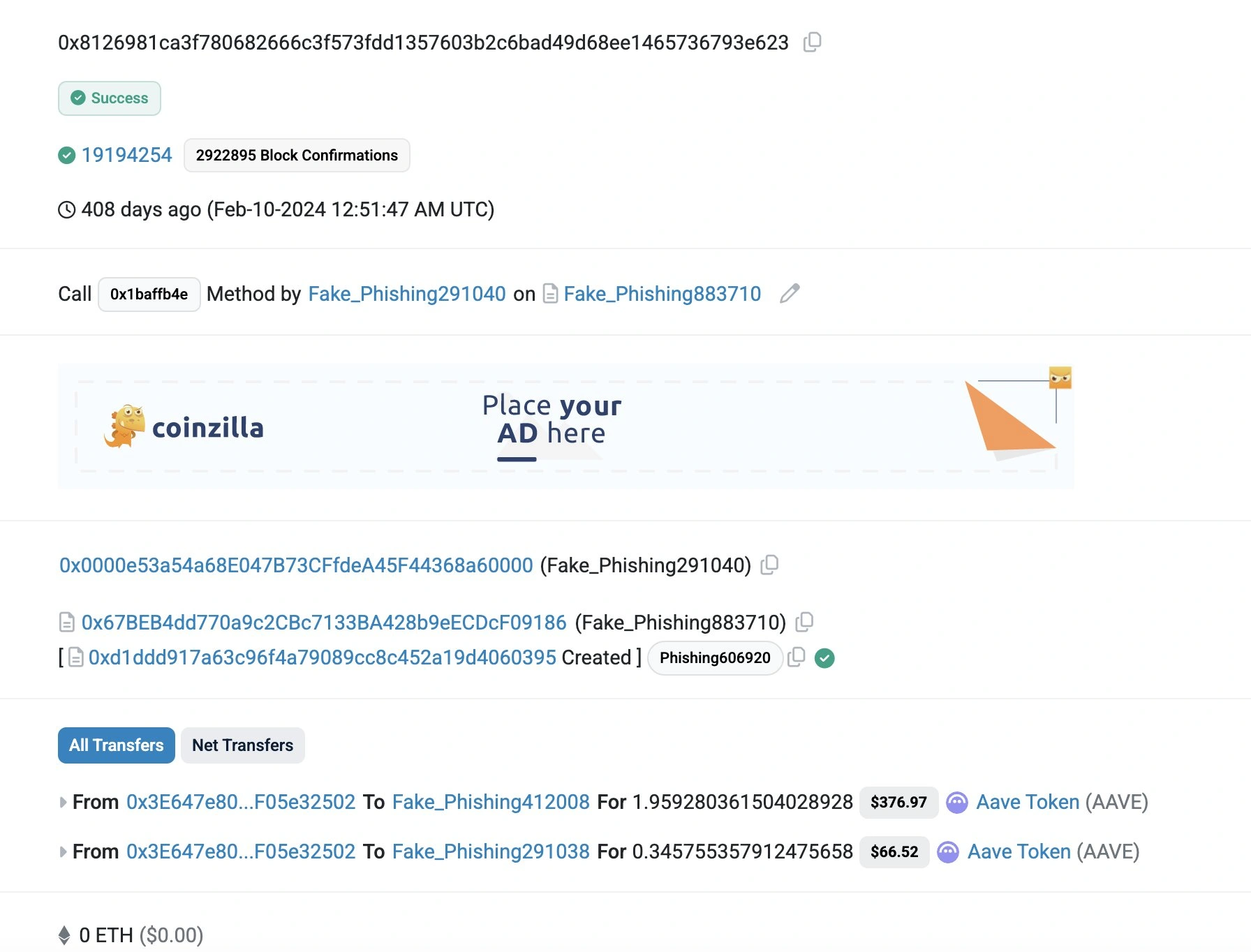
The victim signed the phishing approval signed 408 days ago. Source: Etherscan
The wallet contained other assets, including LPT. However, the hacker only moved the victim’s $AAVE tokens, as it was the only token targeted in the transfer.
The hacker is yet to be identified, and the victim has limited options to recover the stolen funds as of now.
Approval phishing scams are a serious threat to crypto holders
According to a report from Chainalysis, the crypto space has lost about $1 billion to approval phishing scams since May 2021, with $374 million lost in 2023 alone.
While approval phishing as a scamming tactic has been around for many years, scammers historically targeted crypto users via the spread of fake crypto apps. Their techniques have become even more effective as the space evolves.
Usually, scammers trick victims into sending them cryptocurrency via a phony investment opportunity or by impersonating somebody else. However, where approval phishing scam is concerned, the scammer tricks the user into signing a malicious blockchain transaction that gives the scammer’s address approval to spend specific tokens from the victim’s wallet. This gives the scammer access to drain the victim’s address of those tokens at will.
Generally, approval phishers send the victim’s funds to a separate wallet from the one granted approval to make transactions on the victim’s behalf. The on-chain pattern typically sees the victim address sign a transaction approving the second address to spend its funds, after which the second address, an approved spender address, executes the transaction to move the funds to a new destination address.
Principal security researcher for Metamask, Taylor Monahan (aka @tayvano_) is one of those tracking romance scam-style approval phishing with the custom Dune Analytics dashboard.
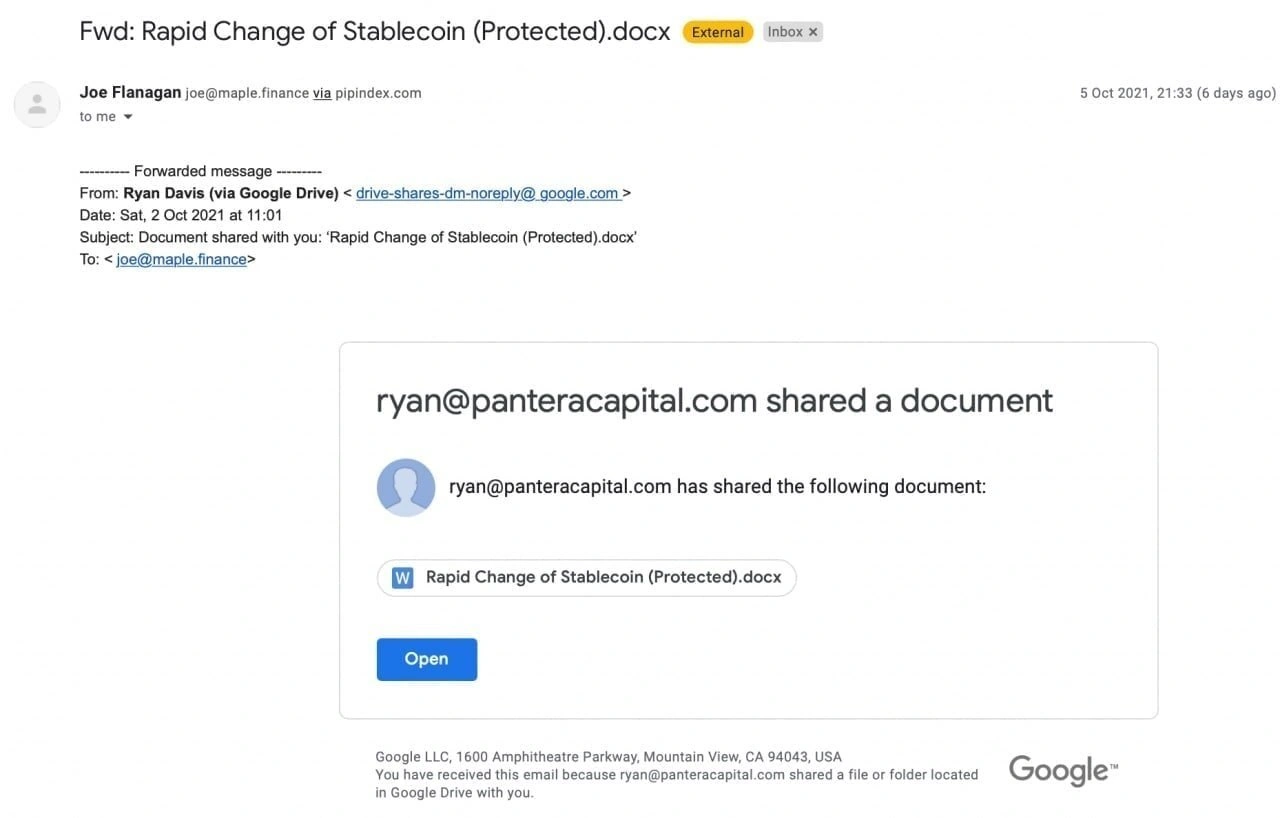
Taylor Monahan shared an example of a phishing email. Source: @tayvano_ (X/Twitter)
Victims of these romance scammers have reportedly lost approximately $1 billion to approval phishing scams since May 2021. It’s crucial to note that the $1 billion total is an estimate based on on-chain patterns. Some of it could represent the laundering of funds already controlled by the scammers.
This is because romance scams go notoriously underreported, and the analysis that yielded those results began from a limited set of reported instances.
It is believed that the vast majority of approval phishing scams are carried out by a few very successful actors, and addressing the problem can be done in various ways, from user education to employing pattern recognition tactics.

 cryptopolitan.com